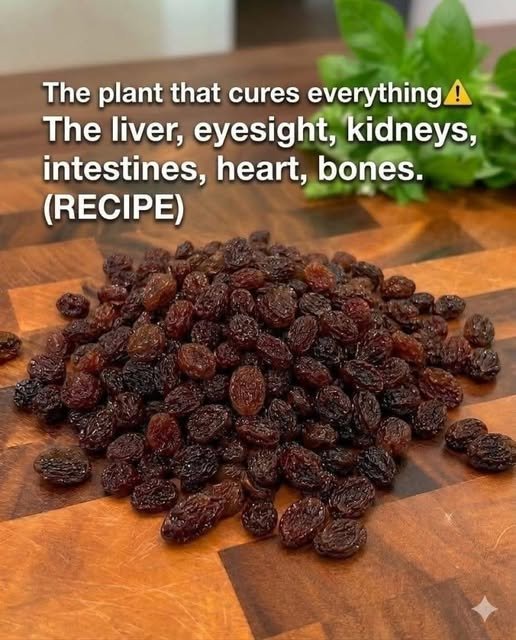
Black dried raisins are sometimes described online as a miracle food that can clean the liver, improve eyesight, repair the kidneys, cleanse the intestines, strengthen the heart, and rebuild the bones.
While raisins can certainly be part of a nutritious diet, the claim that they cure all of these conditions is not supported by medical evidence. No single food can cure diseases affecting multiple organs.
However, black raisins do contain several nutrients and plant compounds that can contribute to a healthy diet.
1. They Provide Antioxidants
Raisins contain naturally occurring polyphenols and other antioxidant compounds. Antioxidants help protect cells from oxidative damage.
This doesn’t mean raisins “detox” the body—the liver and kidneys already perform the body’s major waste-processing functions.
2. They Support Digestive Health
Raisins contain dietary fiber, which can help support regular bowel movements and overall digestive health.
Eating them alongside adequate water and other fiber-rich foods can be useful for maintaining a healthy digestive system.
3. They Provide Potassium
Potassium is an important mineral involved in normal muscle function, nerve signaling, and fluid balance.
Raisins are a concentrated source of potassium, although people with certain kidney conditions may need to limit potassium-rich foods rather than deliberately increasing them.
4. What About the Liver?
There is no good evidence that eating black raisins can “cleanse” or repair a damaged liver.
A healthy diet, maintaining an appropriate weight, regular physical activity, and limiting alcohol are much more important for liver health.
If someone has fatty liver, hepatitis, cirrhosis, or abnormal liver tests, raisins should not be used as a replacement for medical evaluation or treatment.
5. What About the Eyes?
Raisins contain antioxidants, but they are not a treatment for cataracts, glaucoma, macular degeneration, or other eye diseases.
For long-term eye health, a varied diet containing leafy greens, colorful vegetables, fruits, fish, nuts, and other nutrient-rich foods is a better approach.
6. What About the Kidneys?
This is particularly important: raisins aren’t a kidney cleanse.
Because raisins contain concentrated amounts of potassium and sugar, people with chronic kidney disease or certain blood-sugar problems may need individualized dietary advice.
If you have kidney disease, don’t assume that a food is safe simply because it is natural.
7. Can Raisins Strengthen Bones?
Raisins provide small amounts of minerals, but they aren’t a treatment for osteoporosis or weak bones.
Bone health depends on adequate nutrition—including calcium and vitamin D—along with resistance/weight-bearing exercise and other lifestyle factors.
8. Are Raisins Good for the Heart?
As part of an overall healthy diet, raisins can contribute fiber and minerals. Replacing highly processed snacks with fruit and other nutrient-dense foods may support cardiovascular health.
But raisins cannot unclog arteries, cure heart disease, or replace prescribed cardiovascular treatment.
A Simple Way to Eat Black Raisins
If you enjoy them, a reasonable portion can be added to:
- Oatmeal
- Plain yogurt
- Whole-grain cereal
- Salads
- Homemade energy bites
- Trail mix with unsalted nuts
Because dried fruit is concentrated, it’s easy to eat much more sugar and calories than you would from the equivalent amount of fresh fruit. A small handful is usually more sensible than eating large quantities throughout the day.
What About Soaking Raisins Overnight?
Soaking raisins overnight and eating them the next morning is a popular traditional practice. It can make them softer and easier to eat, but there is no strong evidence that soaking transforms raisins into a detoxifying or disease-curing remedy.
You can certainly soak them if you enjoy the texture, but don’t expect a special medical effect.
The Bottom Line
Black dried raisins can be a nutritious food when eaten in sensible portions, but calling them a plant that “cures everything” is misleading.
They may contribute useful fiber, potassium, and antioxidant compounds to your diet, but they cannot cure liver disease, kidney disease, eye disorders, heart disease, bone disease, or intestinal conditions.
For better long-term health, think of raisins as one small part of a balanced diet—not a miracle cure.