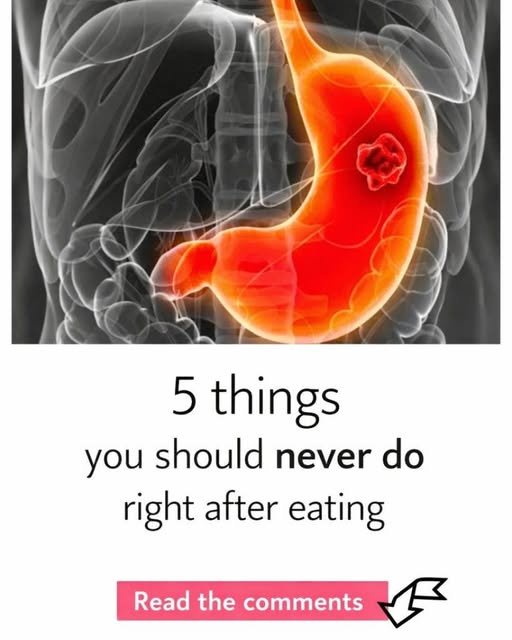
What you do after a meal can affect how comfortable you feel during the next few hours. Some habits may contribute to heartburn, bloating, sluggishness, or poor sleep, while others can support comfortable digestion and help you feel better after eating.
But not every popular warning about post-meal habits is actually true.
You don’t need to sit completely still for hours after eating, and you don’t need to follow complicated “digestion rules.” In fact, gentle movement after a meal can be beneficial for many people.
The key is knowing which habits are worth avoiding and what you can do instead.
Here are five common things you may want to reconsider immediately after eating.
1. Don’t Lie Down Immediately After a Large Meal
One of the most useful post-meal habits to change is lying down soon after eating, particularly after a large or fatty meal.
When you lie flat, stomach contents can more easily move upward into the esophagus. This can worsen heartburn and acid reflux, especially in people who already experience reflux.
You may notice:
- Burning in the chest
- Sour or bitter taste
- Regurgitation
- Burping
- Throat irritation
- Discomfort when lying down
What to Do Instead
Try to remain upright after eating.
A relaxed walk around the house or a gentle upright activity can be more comfortable than immediately lying on the sofa or bed.
If you regularly experience nighttime reflux, avoid eating a large meal immediately before going to bed and discuss persistent symptoms with a healthcare professional.
2. Don’t Immediately Do Intense Exercise
Exercise is generally excellent for your health, but jumping straight into a hard workout immediately after a large meal may leave you feeling uncomfortable.
Your body is digesting food while you’re asking your muscles and cardiovascular system to work harder.
Depending on the person and the meal, intense exercise may cause:
- Stomach cramps
- Nausea
- Bloating
- Reflux
- Feeling unusually heavy
This doesn’t mean you need to avoid movement after eating.
What to Do Instead
Choose gentle movement.
A relaxed walk can be an excellent option after a meal.
If you’re planning a demanding workout, give your body more time to digest, particularly after a large meal.
The ideal waiting period varies according to the size of the meal, the type of exercise, and your individual tolerance.
3. Don’t Smoke Right After Eating
Smoking is harmful regardless of when you do it, but some people have a particular habit of smoking immediately after meals.
Smoking can irritate the digestive system and is associated with numerous serious health risks, including cardiovascular disease, lung disease, and several cancers.
If you currently smoke, changing the post-meal cigarette habit can be a useful starting point—but the greatest health benefit comes from quitting altogether.
What to Do Instead
After eating, try replacing the smoking routine with another activity.
For example:
- Take a short walk
- Drink water
- Brush your teeth later
- Spend a few minutes outside without smoking
- Practice slow breathing
- Talk with family or friends
If you want to quit smoking, evidence-based cessation support and approved medications can substantially improve your chances of success.
4. Don’t Immediately Drink Large Amounts of Alcohol
Alcohol can irritate the digestive tract and may worsen reflux in susceptible people.
Drinking alcohol also carries broader health risks, and consuming it immediately after a meal isn’t necessary for digestion.
A common myth says that alcohol is needed to “help digest” a heavy meal. Your digestive system doesn’t require alcohol to do its job.
What to Do Instead
Choose water or another non-alcoholic drink.
If you’re having a social meal, enjoying food slowly and drinking water alongside it can be a simpler option.
For people who choose to drink alcohol, moderation and individual health circumstances matter.
5. Don’t Go Straight to Bed
Going to bed immediately after dinner combines two potential problems: lying flat soon after eating and consuming food too close to sleep.
A large meal before bedtime can make some people feel overly full or uncomfortable and may worsen nighttime reflux.
It can also interfere with sleep for some individuals.
What to Do Instead
Give yourself some time between dinner and bedtime when possible.
Stay upright, tidy the kitchen, read, talk with family, or take a gentle walk.
If you work unusual hours or have a different sleep schedule, focus on your own bedtime rather than following a fixed “never eat after 7 p.m.” rule.
What About Drinking Water After Eating?
You may have heard that drinking water immediately after eating “dilutes stomach acid” and prevents proper digestion.
For most healthy people, this is not a reason to avoid water.
Water is important for hydration, and drinking it with or after a meal is generally fine.
If large amounts of fluid make you feel overly full, simply drink smaller amounts according to your thirst.
What About Tea or Coffee After a Meal?
Tea and coffee aren’t automatically harmful after eating.
However, there are situations where timing matters.
For example, tea and coffee can affect iron absorption from plant-based foods because they contain compounds called polyphenols.
People who have iron deficiency or are at risk of it may be advised to separate tea or coffee from iron-rich meals.
Coffee also contains caffeine, which can interfere with sleep if consumed too late in the day.
Your individual diet and health situation matter more than a universal rule.
Is Walking After Eating Good?
For many people, yes.
A gentle post-meal walk can be a practical habit and may help with blood glucose management, particularly after carbohydrate-containing meals.
It doesn’t need to be a long workout.
Even a relaxed walk can get you moving instead of immediately sitting or lying down.
If you have a medical condition that limits exercise, follow your healthcare professional’s advice.
What Should You Do After Eating?
Instead of worrying about a long list of forbidden activities, focus on a few simple habits.
Stay Upright
Especially if you are prone to reflux.
Take a Gentle Walk
Light movement can be more comfortable than remaining completely sedentary.
Drink According to Thirst
Water is perfectly reasonable during or after a meal.
Give Your Body Time
Avoid immediately demanding intense physical effort after a large meal.
Practice Good Oral Hygiene
Wait an appropriate amount of time before brushing if you’ve consumed acidic foods or drinks, since brushing immediately after acid exposure can be harder on softened enamel.
Five Simple Post-Meal Habits at a Glance
| Instead of… | Try… |
|---|---|
| Lying down immediately | Stay upright |
| Intense exercise | Take a gentle walk |
| Smoking | Take a short walk or practice another relaxing habit |
| Large amounts of alcohol | Choose water or a non-alcoholic drink |
| Going straight to bed | Give yourself some upright time |
When Post-Meal Symptoms Shouldn’t Be Ignored
Occasional bloating or mild heartburn can happen to almost anyone.
But frequent or severe symptoms deserve attention.
Talk to a healthcare professional if you regularly experience:
- Persistent heartburn
- Difficulty swallowing
- Food getting stuck
- Repeated vomiting
- Unexplained weight loss
- Persistent abdominal pain
- Black or bloody stools
- Chest pain that is severe or unusual
Chest pain should never automatically be assumed to be indigestion. If chest discomfort is severe, persistent, or accompanied by shortness of breath, sweating, nausea, fainting, or pain spreading to the arm, jaw, back, or shoulder, seek emergency medical care.
Final Thoughts
You don’t need a complicated routine after every meal.
The most useful approach is surprisingly simple: stay upright, move gently, avoid smoking, don’t rush into intense exercise, and give your body some time before going to bed after a large meal.
And remember that individual tolerance matters. A habit that causes reflux for one person may not bother another.
Rather than believing every dramatic claim about what you “must never do” after eating, pay attention to how your body responds and focus on habits that are supported by good health principles.
A short walk, a glass of water, and a little time before lying down may be all you need to make your post-meal routine more comfortable.
SEO Title
5 Things You Should Never Do Right After Eating — And What to Do Instead
Meta Description
Discover five post-meal habits worth avoiding, including lying down, intense exercise, smoking, alcohol, and going straight to bed, plus healthier alternatives.