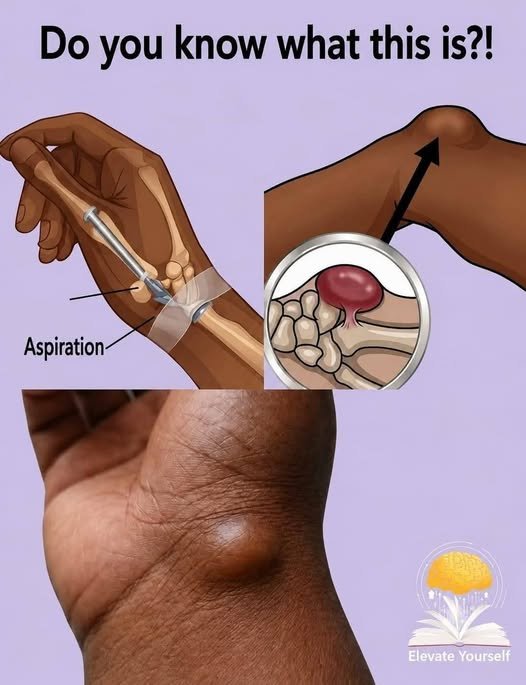
Finding a lump on your wrist can be worrying, especially if it suddenly appears or becomes noticeable when you move your hand. The good news is that many wrist lumps are harmless. However, you should avoid squeezing, puncturing, or trying to pop one yourself until you know what it is.
Here are five important things to know.
1. A Wrist Lump Can Have Several Causes
One of the most common causes is a ganglion cyst—a fluid-filled lump that often develops near a wrist joint or tendon. It may feel soft or firm and can sometimes change in size.
Other possibilities include a lipoma, tendon-related swelling, arthritis-related changes, or less commonly, other types of masses. You cannot reliably determine the cause simply by feeling the lump.
2. Don’t Try to Pop or Pierce It
It can be tempting to press, hit, or puncture a wrist lump to make it disappear. That’s not a good idea.
Trying to drain or rupture a lump yourself can cause infection, bleeding, nerve or tendon injury, or damage to nearby structures. Even when a lump is a ganglion cyst, it may return after being drained.
3. Pay Attention to Pain and Other Symptoms
A lump that isn’t painful and doesn’t interfere with movement may sometimes simply be monitored after a healthcare professional has assessed it.
However, seek medical advice if you notice:
- Increasing pain or tenderness
- Numbness or tingling
- Weakness in the hand or fingers
- Difficulty moving the wrist
- Rapid growth or a noticeable change in the lump
- Redness, warmth, or drainage
- A lump that feels unusually hard or fixed
4. Don’t Assume Every Lump Is a Ganglion Cyst
Because ganglion cysts are common around the wrist, it’s easy to assume that every bump is one. But a new or changing lump deserves proper evaluation, particularly if its appearance or symptoms are unusual.
A healthcare professional can examine the area and, when necessary, use imaging such as an ultrasound or X-ray to help determine what is causing the swelling.
5. Treatment Depends on the Cause
Not every wrist lump requires treatment. If a ganglion cyst isn’t causing problems, a doctor may recommend simply watching it over time.
If it causes persistent pain, limits movement, or presses on nearby nerves, treatment options may include aspiration or surgical removal, depending on the individual situation.
The Bottom Line
Don’t squeeze, puncture, or try to crush a lump on your wrist. Many wrist lumps are benign, but the appearance of a lump alone isn’t enough to determine its cause. If it is new, growing, painful, or associated with numbness or weakness, have it evaluated by a healthcare professional.
If you have a wrist lump right now, a photo can help me explain what features may be worth discussing with a doctor, although a photo cannot diagnose it.