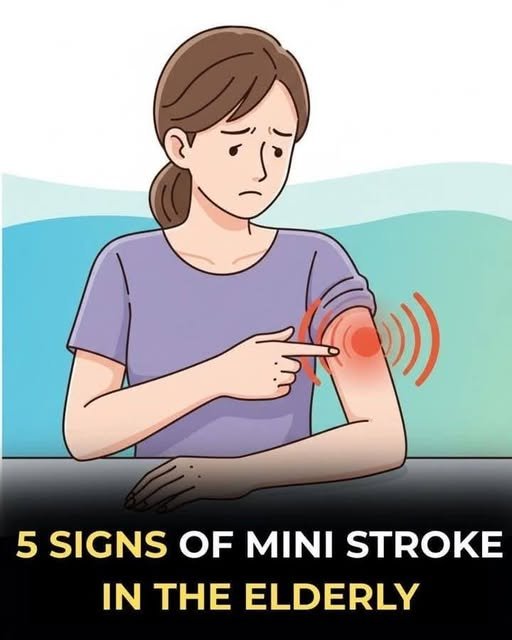
A sudden change in speech, vision, movement, or balance can be frightening—especially in an older adult. Sometimes these symptoms disappear within minutes or hours, leading people to assume that everything is fine.
But temporary stroke-like symptoms may be caused by a transient ischemic attack (TIA), commonly called a “mini stroke.” A TIA happens when blood flow to part of the brain is temporarily disrupted. Although symptoms may resolve, a TIA can be an important warning that a more serious stroke could occur.
1. Sudden Weakness or Numbness
One of the most recognizable warning signs is sudden weakness or numbness, particularly on one side of the body.
An older person may suddenly have difficulty lifting one arm, walking normally, gripping an object, or smiling evenly. The weakness may disappear, but that does not make it harmless.
2. Sudden Trouble Speaking or Understanding
A person experiencing a TIA may suddenly:
- Slur their words
- Struggle to find the right words
- Speak in an unusual or confused way
- Have difficulty understanding what others are saying
Sometimes the change is subtle and may initially appear to be ordinary confusion.
3. Sudden Vision Problems
Temporary vision changes can also occur. These may include blurred or double vision, loss of vision in one eye, or difficulty seeing normally.
Sudden vision loss should never simply be attributed to aging without medical evaluation.
4. Sudden Dizziness or Loss of Balance
A person may suddenly become extremely dizzy, unsteady, or unable to walk normally. They might stumble, have difficulty coordinating their movements, or suddenly lose their balance.
While dizziness has many possible causes, sudden and unexplained balance problems, particularly when accompanied by other neurological symptoms, can be a warning sign of stroke or TIA.
5. Sudden Severe Headache or Neurological Changes
A sudden, unusual, or extremely severe headache can sometimes accompany a stroke. Other sudden neurological changes may include confusion, difficulty coordinating movements, or unusual behavior.
A new severe headache—especially when it occurs suddenly or alongside weakness, speech problems, vision changes, or loss of consciousness—requires urgent medical attention.
Remember FAST
A simple way to recognize common stroke warning signs is FAST:
F — Face: Is one side of the face drooping?
A — Arms: Is one arm weak or numb?
S — Speech: Is speech slurred, strange, or difficult to understand?
T — Time: Call emergency medical services immediately if these symptoms appear.
Other symptoms, such as sudden vision problems, severe dizziness, or difficulty walking, can also occur.
Don’t Wait for Symptoms to Disappear
One of the biggest dangers of a TIA is assuming that the problem has passed once the symptoms disappear.
A TIA is a medical emergency. Stroke-like symptoms should be evaluated urgently because it is not possible to reliably determine at home whether the episode is a TIA or an ongoing stroke.
Do not wait for an appointment or drive the person yourself if emergency medical services are available. Note the time the symptoms began, because this information can be important for medical professionals.
Why Older Adults Should Take These Symptoms Seriously
The risk of stroke increases with age, and conditions such as high blood pressure, diabetes, high cholesterol, atrial fibrillation, and smoking can further increase risk.
A TIA does not necessarily mean that a stroke will happen, but it can be an important warning that requires evaluation and treatment of underlying risk factors.
Final Thoughts
Sudden weakness, speech difficulty, vision changes, loss of balance, or an unusual severe headache should never be dismissed as “just getting older.” Even when symptoms disappear, seek urgent medical evaluation.
Recognizing the warning signs and acting quickly can make a critical difference when a stroke is occurring.