Baking soda is one of those inexpensive pantry staples that can do much more than help cakes and cookies rise. Also known as sodium bicarbonate, it is mildly alkaline and has useful properties that make it handy for cleaning, deodorizing, cooking, and a few everyday household tasks.
You may already keep a box in your kitchen, but there are plenty of practical ways to put it to work around the house.
Of course, baking soda isn’t a miracle cleaner, and it cannot replace specialized products for every job. But when used correctly, this simple white powder can be surprisingly useful.
Here are 12 practical uses for baking soda you may not know about.
1. Deodorize Your Refrigerator
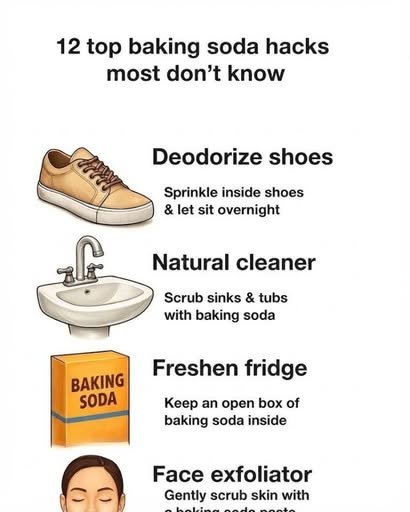
One of the easiest uses for baking soda is helping control unpleasant refrigerator odors.
Because baking soda can help neutralize some odor-causing acidic compounds, an open container can be useful for keeping the refrigerator smelling fresher.
How to Use It
Place a small, open bowl or container containing baking soda toward the back of your refrigerator.
Replace it periodically, particularly if your refrigerator develops noticeable odors.
Remember that baking soda won’t remove the source of a strong smell. Clean spills, spoiled food, and dirty shelves first.
2. Freshen Smelly Shoes
Shoes can develop unpleasant odors when sweat and moisture accumulate inside them.
Baking soda can help absorb moisture and reduce some odors.
How to Use It
Sprinkle a small amount inside dry shoes and leave it overnight.
Shake or vacuum out the powder before wearing the shoes again.
For delicate footwear, check the manufacturer’s care instructions first.
3. Clean a Stained Mug
Coffee and tea can leave stubborn brown stains inside cups and mugs.
Baking soda provides mild abrasive action that can help loosen these marks without requiring an aggressive cleaner.
Simple Method
- Add about 1 teaspoon of baking soda to the mug.
- Add a small amount of water.
- Mix into a paste.
- Rub gently with a sponge.
- Rinse thoroughly.
For particularly stubborn stains, allow the paste to sit for several minutes before scrubbing.
4. Help Clean a Greasy Pan
Baking soda can be useful for loosening certain greasy residues from cookware.
How to Use It
Sprinkle baking soda over the affected area.
Add enough warm water to form a paste or soak the pan, depending on the amount of residue.
Allow it to sit for several minutes before gently scrubbing.
For heavy, burned-on grease, you may need a dedicated cookware cleaner or another appropriate cleaning method.
Always check the care instructions for nonstick and specialty cookware.
5. Freshen Your Garbage Can
Even when you use garbage bags, unpleasant smells can build up inside the trash can.
A small amount of baking soda can help control odors.
Try This
After cleaning and drying the garbage can, sprinkle a thin layer of baking soda across the bottom before putting in a fresh bag.
You can also sprinkle a little into the bag beneath the garbage, provided the contents and bag material are compatible.
Cleaning the container regularly is still the most effective way to deal with persistent odors.
6. Clean a Cutting Board
Baking soda can provide gentle scrubbing action when cleaning certain cutting boards.
Method
Sprinkle baking soda over the board.
Add a little water and scrub gently with a clean sponge or brush.
Rinse thoroughly and allow the board to dry completely.
For raw meat preparation, proper washing and sanitizing practices are important. Baking soda should not be treated as a substitute for food-safety procedures.
7. Freshen Carpets
Carpets can sometimes hold everyday odors from food, pets, or general household use.
Baking soda can be used as a simple deodorizing treatment.
How to Use It
Lightly sprinkle baking soda over a dry carpet.
Leave it for several hours or overnight.
Vacuum thoroughly afterward.
Always test a small, inconspicuous area first, especially with delicate or dark carpeting.
8. Help Remove Crayon Marks From Some Surfaces
Children’s crayons can leave marks on walls and other hard surfaces.
A small amount of baking soda may help remove light marks because it provides gentle abrasion.
Method
Mix a little baking soda with water to create a soft paste.
Apply it carefully to the mark and rub gently with a damp cloth.
Wipe the area clean afterward.
Be careful with painted walls because aggressive scrubbing can remove or dull the paint.
9. Freshen a Sink Drain
Baking soda can help with everyday drain odors and light residue.
Simple Method
Pour approximately ½ cup of baking soda into the drain.
Follow it with warm water.
For routine odor control, this can be a simple maintenance step.
However, baking soda is not a reliable solution for serious blockages. If water is backing up or the drain is completely clogged, mechanical clearing or an appropriate drain-cleaning method may be necessary.
Important Safety Note
Never mix baking soda with commercial drain cleaners or other unknown cleaning chemicals.
10. Clean Some Kitchen Surfaces
Baking soda can work as a mild abrasive for certain hard, washable surfaces.
It can be particularly useful when you want to loosen food residue without using an extremely abrasive powder.
Mix baking soda with a little water to create a paste, apply it to the surface, scrub gently, and rinse.
Avoid using abrasive cleaning methods on surfaces that scratch easily.
11. Reduce Odors in Lunch Boxes and Food Containers
Plastic food containers can sometimes retain the smell of onions, garlic, spices, or other strongly scented foods.
Baking soda can help with odor control.
Method
Wash the container thoroughly first.
Then make a paste using baking soda and a little water.
Spread it inside the container and leave it for several hours.
Wash and rinse thoroughly before using the container again.
For persistent odors, allowing the container to air out completely can also help.
12. Add It to Certain Recipes
Of course, baking soda’s most famous job is in cooking and baking.
When combined with an acidic ingredient such as buttermilk, yogurt, lemon juice, vinegar, brown sugar, or natural cocoa powder, baking soda can produce carbon dioxide bubbles.
Those bubbles help certain baked goods rise.
It can also contribute to browning and texture in some recipes.
A Word of Caution
More baking soda does not automatically mean a better result.
Using too much can leave baked goods with a bitter, soapy, or unpleasant taste.
Follow the recipe’s recommended amount carefully.
Bonus: Baking Soda and Cleaning Myths
Baking soda is useful, but some internet claims go much further than the evidence supports.
It is often promoted as a universal solution for everything from serious plumbing problems to medical conditions.
That’s not how it works.
Baking soda can be a useful household ingredient, but it shouldn’t be treated as a cure-all.
For example, drinking large amounts of baking soda isn’t a harmless wellness practice. Sodium bicarbonate contains a substantial amount of sodium, and excessive ingestion can cause serious problems.
Similarly, baking soda shouldn’t be used as a substitute for appropriate medical treatment.
Baking Soda vs. Baking Powder
These two products are often confused.
Baking soda is primarily sodium bicarbonate. It generally needs an acidic ingredient to produce the desired leavening reaction in recipes.
Baking powder contains baking soda plus acids and other ingredients, allowing it to produce carbon dioxide when activated by moisture and heat.
They aren’t always interchangeable.
How to Store Baking Soda
Keep baking soda in a cool, dry place in a tightly closed container.
Because baking soda can absorb odors, an opened box kept in the refrigerator may eventually become less suitable for baking.
If you’re using it specifically for baking, keeping a separate sealed container in the pantry is a good idea.
Important Safety Tips
Baking soda is generally useful when handled appropriately, but more isn’t always better.
- Don’t deliberately consume large quantities.
- Keep it away from children and pets.
- Don’t mix it with unknown household chemicals.
- Don’t combine it with commercial drain cleaners.
- Test homemade cleaning pastes on an inconspicuous area first.
- Be cautious with delicate surfaces.
- Follow cookware manufacturers’ cleaning instructions.
- Rinse food-contact surfaces thoroughly after cleaning.
- Don’t use baking soda as a replacement for medical treatment.
Final Thoughts
Baking soda may be one of the simplest products in your kitchen, but its usefulness extends well beyond baking.
From helping control refrigerator and shoe odors to gently scrubbing stained mugs, freshening carpets, and assisting with everyday kitchen cleanup, it can be a convenient and inexpensive household helper.
The key is to use it for the jobs it is actually suited for rather than believing every viral claim about this familiar pantry staple.
Sometimes the simplest household ingredients really are the most useful—especially when you know how and when to use them properly.
SEO Title
12 Practical Uses for Baking Soda You May Not Know About
Meta Description
Discover 12 practical uses for baking soda around your home, from removing odors and cleaning mugs to freshening carpets and helping with everyday kitchen cleaning.