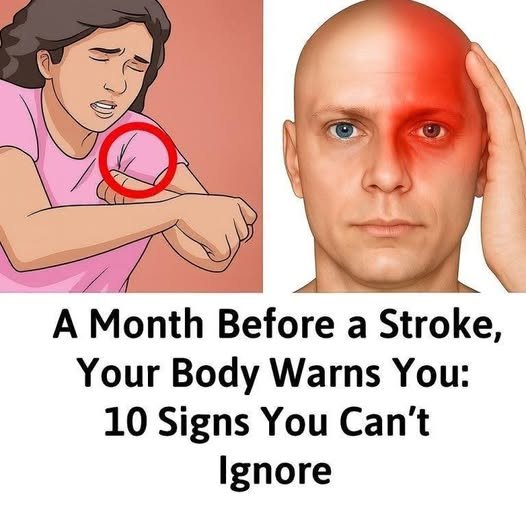
A stroke can happen suddenly, but some people experience temporary symptoms beforehand. These symptoms may be caused by a transient ischemic attack (TIA), sometimes called a “mini-stroke.” A TIA occurs when blood flow to part of the brain is temporarily interrupted.
A TIA is not harmless. It can be an important warning that a more serious stroke may occur, so sudden neurological symptoms should always be taken seriously.
There is no reliable set of symptoms that means a stroke is definitely going to happen one month later. However, knowing the warning signs can help you recognize an emergency quickly.
1. Sudden Weakness or Numbness
Sudden weakness, numbness, or loss of sensation—particularly on one side of the face, arm, or leg—is one of the most important stroke warning signs.
It may appear suddenly and may affect the entire side of the body or only one limb.
2. Sudden Trouble Speaking
A person having a stroke may suddenly have difficulty speaking clearly, finding words, understanding speech, or forming a normal sentence.
Temporary speech problems can also occur during a TIA and should not simply be dismissed because they disappear.
3. Sudden Facial Drooping
One side of the face may suddenly feel weak or appear to droop.
An easy way to check is to ask the person to smile. If one side of the mouth doesn’t move normally, seek emergency medical help immediately.
4. Sudden Vision Problems
Stroke or TIA can cause sudden blurred or double vision or loss of vision in one or both eyes.
Because sudden vision changes can have several serious causes, they require prompt medical assessment.
5. Sudden Severe Headache
A sudden, unusually severe headache—especially one that develops rapidly and has no obvious explanation—can be a sign of a serious neurological emergency.
It may occur with vomiting, dizziness, confusion, weakness, or loss of consciousness.
6. Sudden Dizziness or Loss of Balance
Sudden dizziness, difficulty walking, loss of coordination, or problems maintaining balance can occur with certain strokes, particularly those involving the back part of the brain.
Don’t assume sudden unexplained balance problems are simply tiredness or dehydration.
7. Sudden Confusion
A person may suddenly become confused, have difficulty understanding what others are saying, or behave unusually.
Sudden confusion can have many causes, but when it occurs with other neurological symptoms, stroke must be considered.
8. Sudden Difficulty Walking
A sudden change in the ability to walk normally, especially when accompanied by dizziness, weakness, or poor coordination, can be a warning sign.
If the change occurs abruptly, medical attention should be sought urgently.
9. Sudden Loss of Coordination
Difficulty controlling an arm or leg, dropping objects unexpectedly, or suddenly struggling with precise movements can indicate a neurological problem.
If this develops suddenly, don’t wait to see whether it goes away.
10. Symptoms That Disappear
This is one of the most important signs to understand.
Stroke-like symptoms that disappear after a few minutes or hours may indicate a TIA. Because the symptoms have gone away, someone may feel that everything is fine—but a TIA can signal an increased risk of a future stroke.
Temporary symptoms still require urgent medical evaluation.
Remember FAST
A simple way to recognize common stroke symptoms is FAST:
F — Face: Is one side of the face drooping?
A — Arms: Is one arm weak or numb?
S — Speech: Is speech slurred, strange, or difficult?
T — Time: Call emergency medical services immediately if these symptoms appear.
Every minute matters during a stroke because prompt treatment can reduce brain damage and disability.
What Should You Do?
If you or someone else suddenly develops possible stroke symptoms, do not wait for them to improve and do not try to treat the problem at home.
Call your local emergency medical service immediately and note the time the symptoms began. Even if the symptoms disappear, urgent medical assessment is still important because a TIA may have occurred.
Final Thoughts
There isn’t a reliable “one month before a stroke” checklist. The most important thing is recognizing sudden neurological changes and acting quickly.
Sudden weakness, facial drooping, speech difficulty, vision changes, severe unexplained headache, dizziness, confusion, or problems with balance can all require urgent medical attention. Recognizing these symptoms—and knowing when to call for emergency help—can make a critical difference.