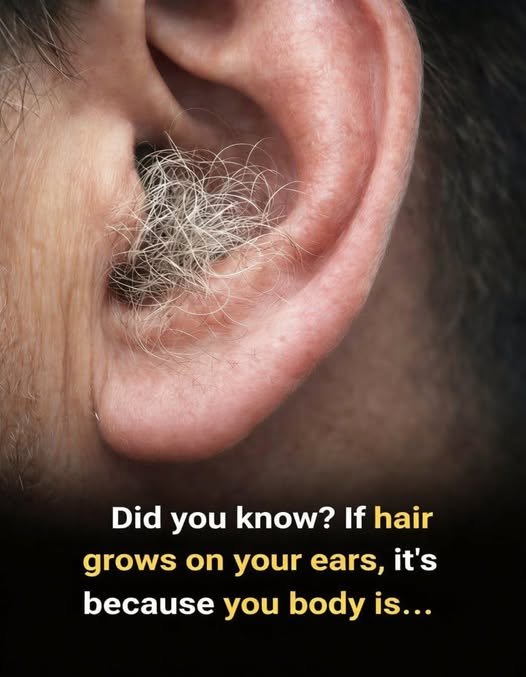
Have you ever noticed a few dark hairs growing around your ears or sticking out of your ear canals? You might have wondered why they suddenly seem more noticeable, especially as you get older. Although ear hair is often overlooked, it is a normal part of human biology and can offer an interesting look at how our bodies change with age and hormones.
The good news is that ear hair is usually harmless and does not automatically indicate an underlying health problem. Hair growth around the ears varies from person to person, and genetics, age, and hormonal influences can all play a role. However, excessive hair inside the ear canal may sometimes contribute to practical problems, particularly when earwax builds up or hearing aids become difficult to use. <Cite refs={[“turn371124search0″,”turn371124search3”]}/>
In this article, we’ll explore why ear hair develops, what it may tell you about your body, which health claims deserve caution, and how to manage unwanted ear hair safely.
What Is Ear Hair?
Ear hair refers to the fine or coarse hairs that grow on the outer ear, around the ear opening, and sometimes inside the ear canal. Everyone has hair follicles on their skin, but the thickness, color, and visibility of ear hair differ widely.
Some people have only fine, nearly invisible hairs, while others develop thicker, darker strands that become more noticeable with age.
Doctors may use the term auricular hypertrichosis to describe excessive hair growth on the visible ear or around the ear canal.
There are two main types of ear hair:
- Fine, soft hair: This is usually light and barely noticeable. It is part of normal body hair.
- Coarse, dark hair: These thicker hairs may become more prominent around the ear opening or on the outer ear.
Ear hair is not necessarily a sign of poor hygiene. It is a natural feature of the skin, and having more of it does not mean that someone is unhealthy. <Cite refs={[“turn371124search0″,”turn371124search1”]}/>
1. Ear Hair Can Become More Noticeable With Age
One of the most common reasons people notice more ear hair is aging.
As the body gets older, hair growth patterns can change. Some men develop thicker hairs around the ears and nose, even while the hair on their scalp becomes thinner.
This happens partly because different hair follicles respond differently to hormonal signals. Hair follicles in certain areas may gradually produce thicker, darker hairs, while follicles on the scalp may become less active or produce finer hair.
However, these changes are not identical for everyone. Genetics, individual hormone sensitivity, and family traits can influence how much ear hair develops. <Cite refs={[“turn371124search0″,”turn371124search4”]}/>
What does this mean for your health?
In most cases, gradually increasing ear hair is simply a normal physical change. It does not mean that your body is failing or that you have a serious disease.
If the hair is not causing discomfort or interfering with hearing devices, it generally does not require medical treatment.
2. Hormones May Influence Ear Hair Growth
Hormones help regulate many aspects of hair growth, including hair thickness, distribution, and growth cycles.
Androgens, a group of hormones that includes testosterone, influence the development of thicker hair in several areas of the body. Hair follicles do not all respond in the same way, which helps explain why one person may develop prominent ear hair while another does not.
Cleveland Clinic notes that changing testosterone levels may play a role in noticeable ear hair, although the precise reasons some people develop more ear hair than others are not fully understood. <Cite refs={[“turn371124search0″,”turn371124search1”]}/>
Does ear hair mean you have high testosterone?
Not necessarily.
The amount of visible ear hair cannot reliably tell you your testosterone level. A person with substantial ear hair may have normal hormone levels, while someone with very little ear hair may also have normal levels.
Doctors do not use ear hair alone to diagnose a hormone imbalance. If you have other concerning symptoms, such as unexplained changes in sexual function, unusual fatigue, or unexpected changes in body hair, a healthcare professional can determine whether an evaluation is appropriate.
3. Ear Hair Has a Protective Function
Body hair is not always something that needs to be removed. Hair around the ear opening can help trap some dust and debris before it travels farther into the ear canal.
The ear also has other natural protective mechanisms, including earwax, which helps lubricate the canal and trap small particles.
However, ear hair is only one part of this protective system. It does not completely prevent dust, water, or microorganisms from entering the ear. <Cite refs={[“turn371124search0″,”turn371124search1”]}/>
Should you remove all your ear hair?
No. There is generally no medical need to remove normal ear hair.
If you dislike visible hair, trimming the strands on the outer ear can be a reasonable cosmetic choice. Avoid trying to make the ear canal completely hair-free, because the skin inside it is delicate and easily injured.
4. Excessive Ear Hair May Contribute to Earwax Problems
Although ear hair is usually harmless, thick hair inside the ear canal may sometimes contribute to practical difficulties.
In some people, dense ear-canal hair can interfere with the movement of earwax outward. This may contribute to wax buildup, particularly when combined with naturally narrow ear canals or other factors.
Possible signs of earwax blockage include:
- A feeling of fullness in the ear
- Muffled hearing
- Ear discomfort
- Ringing or buzzing
- Occasionally, dizziness
These symptoms have several possible causes, so they should not automatically be blamed on ear hair.
If you experience persistent fullness or hearing changes, a healthcare professional can examine the ear and determine whether wax buildup or another problem is responsible. Do not push cotton swabs or other objects deep into the canal in an attempt to remove the wax.
5. Can Ear Hair Affect Hearing?
Ear hair on its own usually does not affect hearing. However, dense hair inside the canal may contribute to wax blockage or interfere with the fit and function of some hearing aids. <Cite refs={[“turn371124search0″,”turn371124search3”]}/>
If you use hearing aids, an audiologist or ear, nose, and throat specialist can advise you about managing excess hair around the opening.
Seek medical assessment if you notice sudden hearing loss, particularly if it develops over hours or a few days. Sudden hearing loss can be time-sensitive and should not be attributed to ear hair without an examination.
Other symptoms that deserve medical attention include persistent ear pain, discharge, bleeding, or recurring infections.
6. Is Ear Hair a Warning Sign of Heart Disease?
This is one of the most frequently discussed claims about ear hair, and it deserves a careful explanation.
Some medical studies have investigated whether ear-canal hair or a diagonal crease in the earlobe is associated with coronary artery disease. For example, a small study published in 2021 examined ear characteristics among patients being evaluated for coronary artery disease and reported an association in that particular group. Earlier research also explored a possible relationship. <Cite refs={[“turn371124search6″,”turn371124search7”]}/>
However, an association in a study does not prove that ear hair causes heart disease or that ear hair can reliably predict it.
Studies can be affected by factors such as age, the characteristics of the population being studied, and other cardiovascular risk factors. Findings from a selected group of patients also cannot automatically be applied to everyone.
There is not enough evidence to use ear hair alone as a dependable screening test for heart disease.
What should you do instead?
If you are concerned about heart health, focus on established risk factors and routine medical care, including:
- Checking blood pressure regularly
- Monitoring cholesterol when appropriate
- Screening for diabetes according to your healthcare professional’s advice
- Avoiding smoking and tobacco
- Staying physically active
- Eating a balanced diet
- Discussing family history and cardiovascular risk with your doctor
If you have ear hair but no other symptoms, there is no reason to assume that you have heart disease because of it.
7. When Should You Be Concerned About Ear Hair?
Most ear hair does not require medical attention. Nevertheless, certain changes or accompanying symptoms may deserve a closer look.
Consider speaking with a healthcare professional if:
- Hair growth changes suddenly and substantially.
- New hair growth occurs alongside other unexplained physical changes.
- You repeatedly develop earwax blockages.
- You notice persistent hearing difficulties.
- You experience ear pain, discharge, bleeding, or recurring infections.
- You are unsure how to remove hair safely from inside the ear canal.
A doctor can examine the outer ear and canal, assess any symptoms, and recommend an appropriate treatment if needed.
The key distinction is between ordinary, gradual hair growth and a change accompanied by other symptoms. The hair itself is usually not the main medical concern.
8. Safe Ways to Remove Unwanted Ear Hair
If visible ear hair bothers you, several options are available. The safest choice depends on where the hair grows and how sensitive your skin is.
Use an Electric Ear-Hair Trimmer
A purpose-designed electric trimmer can shorten visible hair around the outer ear and near the entrance to the canal.
Choose a device with a protective guard, follow the manufacturer’s instructions, and avoid pushing it deeply into the ear.
Use Small Safety-Tip Scissors
Small scissors designed for grooming may be suitable for trimming clearly visible hairs on the outer ear.
Use good lighting, keep the blades away from the canal, and avoid trimming if you cannot see the hair clearly.
Ask a Professional for Help
If the hair is deep inside the canal or difficult to reach, consult an ear, nose, and throat specialist. A qualified professional can assess whether trimming is necessary and perform it safely.
Be Careful With Waxing and Hair-Removal Creams
Waxing can irritate delicate skin, while ordinary depilatory creams may cause chemical burns if used in or near the ear canal.
Do not put hair-removal creams inside the canal. Avoid plucking deep ear hairs, as this can injure the skin and increase the risk of irritation or infection. <Cite refs={[“turn371124search0″,”turn371124search3”]}/>
9. Common Myths About Ear Hair
Myth 1: Ear Hair Always Means You Are Getting Old
Fact: Ear hair can become more noticeable with age, but genetics and individual hair-follicle sensitivity also influence its growth. People vary considerably.
Myth 2: Ear Hair Means You Have High Testosterone
Fact: Hair growth cannot reliably measure hormone levels. A medical evaluation is needed if there are other symptoms suggesting a hormonal problem.
Myth 3: Ear Hair Is a Definite Sign of Heart Disease
Fact: Some studies have investigated a possible association, but ear hair alone is not a reliable diagnostic or screening tool for cardiovascular disease.
Myth 4: Removing Ear Hair Improves Hearing
Fact: Removing ordinary outer-ear hair does not generally improve hearing. If hearing is affected, earwax blockage or another condition should be assessed.
Myth 5: Ear Hair Means Your Ears Are Dirty
Fact: Ear hair is a natural body feature, not a measure of cleanliness. Excessive cleaning can actually irritate the ear canal and interfere with its protective mechanisms.
10. Everyday Habits That Support Ear Health
Although there is no need to eliminate normal ear hair, you can take simple steps to protect your ears.
Avoid inserting objects into the ear canal. Cotton swabs, hairpins, and other objects can injure the canal or push wax deeper.
Protect your hearing. Keep headphone volume at a reasonable level and use appropriate hearing protection around loud machinery or other noisy environments.
Do not ignore persistent symptoms. Hearing changes, pain, discharge, and recurring infections deserve medical attention.
Use earwax treatments appropriately. If you suspect a blockage, ask a pharmacist or healthcare professional about suitable options, especially if you have a history of ear surgery, a perforated eardrum, or ear tubes.
Trim only what you can safely see. If excess hair inside the canal is causing difficulties, professional care is preferable to aggressive home removal.
These habits help protect ear health regardless of how much hair grows around your ears.
Frequently Asked Questions
Is it normal to have hair growing inside your ears?
Yes. Some hair growth inside or around the entrance to the ear canal is normal. The amount and thickness vary between individuals, and thicker hairs may become more noticeable with age.
Why am I suddenly noticing more ear hair?
You may be noticing gradual changes in hair thickness or color, or you may simply be paying closer attention. Age, genetics, and hormonal influences can contribute to changes. If the change is dramatic or accompanied by other symptoms, seek medical advice.
Does ear hair mean my testosterone is increasing?
Not necessarily. Visible ear hair cannot tell you whether your testosterone is high, low, or normal. Hair follicles respond differently to hormones, and genetics also plays a role.
Can ear hair cause an ear infection?
Hair itself does not automatically cause infection. However, dense hair that retains moisture or contributes to wax buildup may be a factor in some people. Pain, discharge, swelling, or recurring infections should be assessed by a healthcare professional.
Should I pluck hairs from inside my ears?
It is better not to pluck hairs deep inside the ear canal. Plucking can damage sensitive skin and cause irritation or infection. If the hair is troublesome, ask a healthcare professional about safe trimming.
Does ear hair predict a heart attack?
No reliable conclusion can be drawn from ear hair alone. Although some research has examined possible associations with coronary artery disease, ear hair is not an established stand-alone test for predicting a heart attack.
Can ear hair affect hearing aids?
In some cases, thick hair around the canal opening may interfere with hearing-aid fit or contribute to wax-related difficulties. An audiologist or ear specialist can recommend suitable management.
At what age does ear hair usually increase?
There is no single age when this happens. Some people notice thicker ear hair in adulthood, while others experience little change throughout life. Genetics and individual hormone sensitivity influence the pattern.
Final Thoughts
Ear hair may seem like a minor detail, but understanding it can help separate normal body changes from genuine health concerns.
For most people, ear hair is a harmless feature influenced by genetics, age, and hormonal factors. It may occasionally contribute to practical problems when dense growth interferes with earwax movement or hearing aids, but it does not automatically indicate a hormone disorder or heart disease.
The best approach is simple: avoid unsafe hair-removal methods, protect your hearing, and seek medical advice if you experience persistent ear symptoms or unexplained changes.
Remember, one physical feature rarely tells the whole story about your health. Rather than worrying about ear hair alone, pay attention to your overall health, established risk factors, and any symptoms that genuinely need medical assessment.
SEO Details
SEO Title: Ear Hair and Your Health: What Doctors Say
Focus Keyphrase: Ear Hair and Your Health
URL Slug: ear-hair-and-your-health
Meta Description: Discover why ear hair grows, how age and hormones may affect it, whether it signals health problems, and the safest ways to manage unwanted ear hair.
Suggested Tags: Ear Hair, Ear Health, Body Hair Changes, Aging and Health, Hormones and Hair Growth, Earwax Buildup, Heart Health Myths, Healthy Aging
Health Disclaimer: This article is for educational purposes only and is not a substitute for professional medical advice, diagnosis, or treatment.