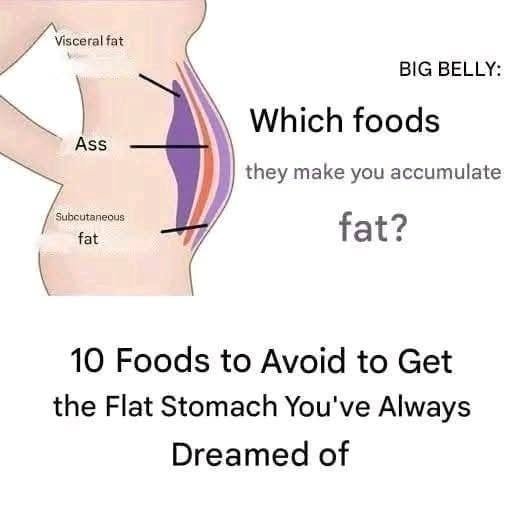
If you’re working toward a flatter-looking stomach, cutting out every carbohydrate or following an extreme diet isn’t necessary. A better approach is to focus on overall eating habits, portion sizes, regular physical activity, sleep, and foods that may contribute to bloating, water retention, or excess calorie intake.
Some foods are particularly easy to overeat or may leave you feeling uncomfortably bloated. Limiting them can make it easier to maintain a healthy weight and may help your stomach feel lighter.
It’s also important to remember that you cannot selectively burn belly fat by avoiding one particular food. Where your body stores and loses fat is influenced by genetics, hormones, age, activity level, and overall energy balance.
Here are 10 foods and drinks worth limiting if your goal is a healthier diet and a flatter-looking midsection.
1. Sugary Soft Drinks
Regular sodas, sweetened fizzy drinks, and other sugar-sweetened beverages can add a significant amount of sugar and calories without making you feel as full as solid food.
Because drinks are easy to consume quickly, it’s possible to take in a substantial amount without realizing it.
Better Choices
Try:
- Water
- Sparkling water without added sugar
- Unsweetened tea
- Lemon or cucumber-infused water
- Unsweetened coffee
Reducing sugary drinks can be one of the simplest changes to make when trying to improve your overall diet.
2. Highly Processed Snack Foods
Chips, packaged crackers, cheese-flavored snacks, and similar foods can be high in calories, refined carbohydrates, sodium, and added fats.
They’re also easy to eat in large portions, particularly when you’re distracted or eating directly from the package.
Better Choices
Choose snacks such as:
- Fresh fruit
- Plain yogurt
- A small handful of nuts
- Boiled eggs
- Carrot and cucumber sticks
- Air-popped popcorn
You don’t have to completely eliminate processed snacks. The key is keeping portions reasonable and choosing them less frequently.
3. Doughnuts, Pastries, and Sweet Baked Goods
Doughnuts, cakes, pastries, muffins, and similar treats can contain substantial amounts of added sugar and fat.
Eating them occasionally can fit into a balanced diet, but having them frequently can make it harder to maintain an appropriate calorie intake.
Try This Instead
For a satisfying sweet option, consider:
- Fresh berries with plain Greek yogurt
- Fruit with a small amount of nut butter
- Homemade oatmeal
- A small piece of dark chocolate
4. Processed Meats
Bacon, sausages, hot dogs, salami, and other processed meats can be high in sodium and saturated fat.
High-sodium foods may also contribute to temporary water retention, which can make some people feel more bloated.
Better Choices
Consider replacing processed meats with:
- Eggs
- Chicken
- Fish
- Beans
- Lentils
- Freshly prepared lean meat
These options can provide protein while helping you build a more balanced meal.
5. Deep-Fried Foods
French fries, fried chicken, onion rings, and other deep-fried foods can be very calorie-dense.
Because fried foods are often high in fat and easy to overeat, eating them frequently may work against a weight-management goal.
Better Cooking Methods
Try:
- Baking
- Grilling
- Roasting
- Air frying
- Steaming
You can still enjoy crispy food without making deep-fried foods a daily habit.
6. Refined White Bread and Other Refined Carbohydrates
White bread, many packaged baked goods, and other refined grain products can be less filling than higher-fiber whole-grain alternatives.
This doesn’t mean carbohydrates are inherently bad. Carbohydrates can absolutely be part of a healthy diet.
Better Choices
Choose more often:
- Whole-grain bread
- Oats
- Brown rice
- Barley
- Quinoa
- Whole-grain pasta
The goal is not to eliminate carbohydrates but to prioritize more nutritious, fiber-rich sources.
7. Candy and Other High-Sugar Treats
Candy, chocolate bars, gummies, and similar sweets can provide plenty of calories while offering relatively little protein or fiber.
Eating them frequently can make it more difficult to maintain a calorie intake that supports your weight goals.
A Smarter Approach
You don’t necessarily need to ban sweets completely. Instead, enjoy smaller portions occasionally and focus most of your diet on nutrient-rich foods.
8. Alcoholic Drinks
Alcohol can contribute calories while providing relatively little nutritional value. Some cocktails can contain particularly large amounts of added sugar.
Alcohol may also make it easier to overeat or choose less nutritious foods.
If you drink alcohol, moderation is important. For people who don’t drink, there’s no health reason to start.
9. Very Salty Foods
Foods such as instant noodles, packaged soups, salty chips, processed meats, and some ready-made meals can contain substantial amounts of sodium.
Eating a lot of sodium can cause temporary water retention in some people, potentially making you feel puffy or bloated.
Better Choices
Try seasoning food with:
- Lemon juice
- Garlic
- Black pepper
- Paprika
- Fresh herbs
- Ginger
- Spices
These can add plenty of flavor without relying heavily on salt.
10. Foods That Trigger Your Personal Bloating
Not everyone reacts to foods in the same way.
Some people experience bloating after eating certain foods, particularly large portions of beans, some dairy products, carbonated drinks, or certain high-fiber foods.
That doesn’t mean these foods are unhealthy. In fact, many are highly nutritious.
Instead of unnecessarily eliminating entire food groups, pay attention to your individual response.
Keep a Simple Food Journal
For a week or two, record:
- What you eat
- Portion sizes
- When you experience bloating
- How long the symptoms last
- Any other noticeable digestive symptoms
This can help you identify patterns.
What Should You Eat Instead?
If your goal is a flatter-looking stomach and better overall health, don’t focus only on foods to avoid. What you add to your diet matters just as much.
Build meals around:
Protein
Examples include:
- Eggs
- Chicken
- Fish
- Greek yogurt
- Cottage cheese
- Beans
- Lentils
Protein can help you feel satisfied and supports muscle maintenance.
Fiber-Rich Foods
Include:
- Vegetables
- Fruits
- Oats
- Beans
- Lentils
- Whole grains
- Nuts and seeds
Increase fiber gradually and drink enough fluids, because suddenly eating a lot more fiber can temporarily cause digestive discomfort.
Healthy Fats
Good options include:
- Avocado
- Nuts
- Seeds
- Olive oil
- Fatty fish
Healthy fats are nutritious and can make meals more satisfying, but they are still calorie-dense, so portion sizes matter.
Don’t Forget About Bloating
A flatter stomach isn’t always about body fat.
Your abdomen can temporarily appear larger because of:
- Gas
- Constipation
- Food volume
- Water retention
- Hormonal changes
- Eating very large meals
- Certain food intolerances
This is why your stomach can look different from one day to another even when your body fat hasn’t changed.
Simple Habits for a Healthier Midsection
Instead of following a restrictive diet, try these sustainable habits:
- Drink water regularly.
- Eat plenty of vegetables and fruit.
- Include protein with your meals.
- Choose whole grains more often.
- Limit sugary beverages.
- Keep highly processed foods occasional.
- Watch portion sizes.
- Eat slowly and mindfully.
- Stay physically active.
- Get adequate sleep.
- Manage stress.
- Give your body time to adapt to healthier habits.
Can Avoiding These Foods Give You a Flat Stomach?
Not necessarily.
No specific food list can guarantee a flat stomach. Your appearance depends on many factors, including body composition, genetics, digestion, posture, and how much food or fluid is currently in your digestive system.
However, reducing excess sugary drinks, highly processed foods, oversized portions, and foods that personally trigger bloating can support a healthier overall eating pattern.
If fat loss is your goal, a sustainable calorie deficit combined with regular physical activity is generally more useful than completely banning individual foods.
Final Thoughts
Getting a flatter-looking stomach doesn’t require starving yourself or following an extreme diet.
Instead of thinking about foods as completely “good” or “bad,” focus on how often you eat them, how much you eat, and what your overall diet looks like.
Limiting sugary drinks, highly processed snacks, deep-fried foods, processed meats, excessive sweets, and very salty foods can be a useful starting point. At the same time, build your meals around protein, vegetables, fruits, whole grains, and healthy fats.
Most importantly, give yourself realistic expectations. A healthy body doesn’t need to look perfectly flat all day, and temporary bloating is a normal part of digestion.
SEO Details
SEO Title: 10 Foods to Limit for a Flatter Stomach and Healthier Diet
Meta Description: Discover 10 foods to limit if you want a healthier, flatter-looking stomach, plus nutritious alternatives and simple habits that support healthy weight management.
Focus Keyword: foods to avoid for a flat stomach
Secondary Keywords: foods to limit for belly fat, foods that cause bloating, healthy flat stomach diet, foods for a flatter stomach, healthy weight loss foods, foods to avoid for bloating
Suggested URL Slug:
foods-to-avoid-for-flat-stomach
Excerpt:
Want a flatter-looking stomach? Learn which 10 foods and drinks are worth limiting, what to eat instead, and simple habits that can support healthy weight management and reduce bloating.