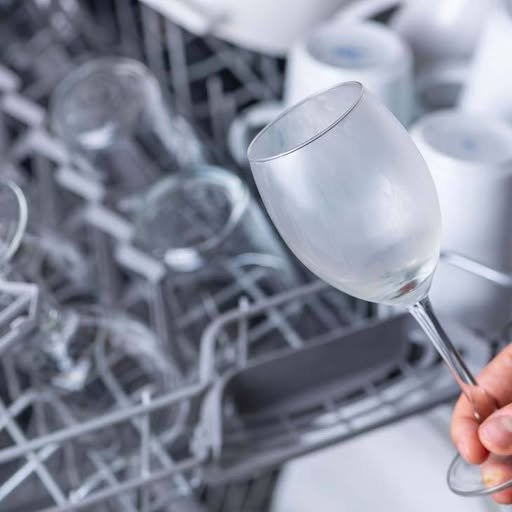
Have your drinking glasses started looking cloudy, dull, or covered with a stubborn white film even though you wash them regularly?
That hazy appearance is often caused by hard-water mineral deposits, detergent residue, or a combination of both. The good news is that you can often improve the appearance of cloudy glasses with a few simple household ingredients.
Before throwing them away, try this easy cleaning method.
What Causes the White Film on Glasses?
The white or chalky coating is commonly associated with minerals in hard water, particularly calcium and magnesium. When water evaporates from the surface of a glass, these minerals can remain behind.
Dishwasher detergent residue can also contribute to a cloudy appearance.
However, there’s an important distinction: some glasses develop permanent glass corrosion or etching after repeated dishwasher cycles. In that case, cleaning products may not be able to restore the original shine.
The Simple Vinegar Trick
White vinegar is mildly acidic, which makes it useful for loosening many mineral deposits.
You’ll Need
- 1 cup white vinegar
- 1 cup warm water
- A soft sponge or microfiber cloth
- A clean dish towel
- A bowl or basin large enough for the glasses
Step 1: Prepare the Solution
Mix equal parts white vinegar and warm water in a bowl or basin.
Avoid using boiling water, especially with cold glass, because sudden temperature changes can cause glass to crack.
Step 2: Soak the Glasses
Place the cloudy glasses into the solution.
Let them soak for approximately 15–30 minutes.
For heavier mineral buildup, you can allow them to soak a little longer, checking periodically.
Step 3: Gently Wipe
Remove one glass at a time and gently wipe the cloudy areas with a soft sponge or microfiber cloth.
You don’t need aggressive scrubbing. Let the acidic solution do most of the work.
Step 4: Rinse Thoroughly
Rinse each glass thoroughly with clean water to remove loosened minerals and vinegar residue.
Step 5: Dry Immediately
Dry the glasses with a clean, lint-free towel.
Allowing water droplets to air-dry can leave another layer of mineral spots behind, especially in hard-water areas.
A Stronger Option for Stubborn Deposits
If vinegar doesn’t completely remove the white film, try making a gentle paste with:
- 1 tablespoon baking soda
- A small amount of water
Apply a small amount to the affected area and gently rub with a soft cloth.
Important: Don’t combine large amounts of vinegar and baking soda in the same container expecting a stronger cleaner. They react with each other and largely neutralize one another.
If you use both methods, use them separately and rinse the glass thoroughly between treatments.
What If the Cloudiness Doesn’t Come Off?
If you’ve soaked and gently cleaned the glass but the cloudy appearance remains, the glass may be etched rather than simply coated with mineral deposits.
Glass etching is permanent surface damage caused by chemical or mechanical processes, and ordinary household cleaners generally cannot reverse it.
A simple test is to place a little white vinegar on a cloudy area and wipe it after several minutes. If the film noticeably improves, mineral deposits are likely contributing to the appearance. If there is essentially no change, etching may be involved.
This isn’t a definitive test, but it can help distinguish removable buildup from permanent damage.
How to Keep Glasses Shiny
Once you’ve cleaned your glasses, prevention is easier than repeatedly removing buildup.
1. Don’t Overuse Dishwasher Detergent
Using more detergent than recommended doesn’t necessarily make dishes cleaner and can contribute to residue.
2. Use the Correct Dishwasher Settings
If your dishwasher has a rinse-aid setting or hard-water adjustment, using the manufacturer’s recommended settings can help reduce spotting.
3. Don’t Leave Glasses Wet
If you’re washing glasses by hand, rinse them well and dry them promptly.
4. Clean the Dishwasher
Mineral buildup and residue inside the dishwasher can contribute to spots on glassware. Regularly cleaning the dishwasher according to its manufacturer’s instructions can help.
5. Use a Water Softener if Needed
If your home has particularly hard water, addressing the water itself can reduce mineral deposits throughout the kitchen and bathroom.
Can Lemon Juice Work?
Yes, lemon juice contains citric acid and may help loosen some mineral deposits.
For a small amount of buildup, rub fresh lemon over the affected area, allow it to sit briefly, then rinse and dry.
For heavier deposits, a properly diluted commercial descaling product designed for the intended surface may be more consistent.
Important Safety Tips
- Never mix vinegar with bleach or bleach-containing cleaners.
- Avoid abrasive scouring pads that can scratch delicate glass.
- Don’t use boiling water on cold glass.
- Check manufacturer instructions before using acidic cleaners on decorated, coated, or delicate glassware.
- Rinse drinking glasses thoroughly after cleaning.
Final Thoughts
That annoying white patina on your glasses doesn’t necessarily mean they’re permanently ruined. If hard-water minerals or detergent residue are responsible, a simple white vinegar and warm-water soak can often help restore clarity.
If the haze remains after cleaning, however, the glass may have permanent etching. In that case, prevention is more useful than repeatedly trying stronger cleaning products.
SEO Details
SEO Title: How to Remove White Patina from Glasses and Make Them Shine
Meta Description: Learn how to remove cloudy white mineral deposits from drinking glasses using a simple vinegar cleaning trick and discover how to prevent them.
Focus Keyword: remove white patina from glasses
Slug: remove-white-patina-from-glasses
Category: Cleaning Tips
Tags: Glass Cleaning, Cloudy Glasses, Hard Water Stains, Cleaning Hacks, Kitchen Cleaning, Household Tips, Vinegar Cleaning