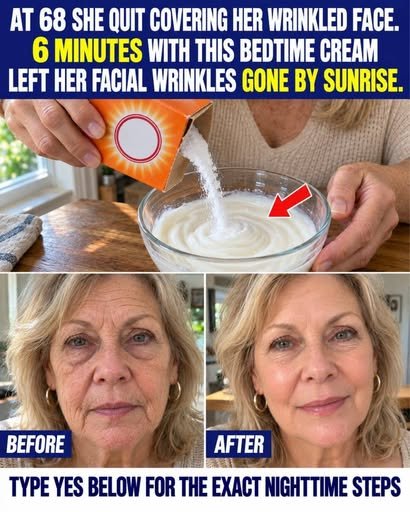
Looking in the mirror and noticing deeper lines, dry skin, or a loss of firmness can be frustrating, especially as we get older. But healthy-looking skin doesn’t have to require a complicated 10-step routine.
A simple six-minute bedtime moisturizing routine can leave mature skin feeling softer and more hydrated by morning. While it won’t erase wrinkles overnight, keeping the skin moisturized can temporarily make some fine lines look less noticeable by increasing the skin’s water content. Dermatologists recommend moisturizing as one of the basic ways to reduce the visible signs of aging.
The key is choosing gentle ingredients and using them consistently.
Why Wrinkles Become More Noticeable With Age
Wrinkles are a natural part of aging.
As we grow older, skin gradually becomes thinner and drier, while collagen and elastin changes contribute to loss of firmness. Years of sun exposure can accelerate this process, causing what dermatologists call photoaging.
Dryness can make fine lines look more prominent because dehydrated skin has a rougher, less plump appearance.
That’s where a good moisturizer can help.
The Simple Bedtime Cream
Instead of a complicated homemade mixture, use a fragrance-free facial moisturizer formulated for mature or dry skin.
Look for ingredients such as:
- Ceramides – help support the skin barrier
- Hyaluronic acid – helps attract and retain moisture
- Glycerin – helps hydrate the skin
- Petrolatum or other occlusive ingredients – help reduce moisture loss
The American Academy of Dermatology notes that people over 50 often benefit from cream-based moisturizers, particularly when skin becomes drier with age.
The 6-Minute Bedtime Routine
Minute 1: Gently Clean Your Face
Wash your face with lukewarm water and a gentle cleanser.
Avoid vigorous scrubbing. Mature skin can become more easily irritated, and irritation can make the appearance of aging more noticeable.
Pat your skin dry rather than rubbing it aggressively.
Minute 2: Leave the Skin Slightly Damp
Don’t wait until your skin is completely dry before moisturizing.
Applying moisturizer while the skin is slightly damp can help trap water in the skin.
Minutes 3–4: Apply Your Moisturizer
Take a small amount of your facial moisturizer and gently spread it across:
- Forehead
- Cheeks
- Around the mouth
- Chin
- Jawline
- Neck
Use gentle upward and outward movements without pulling or stretching the skin.
You don’t need a thick layer. More product doesn’t necessarily mean better results.
Minute 5: Give Extra Attention to Dry Areas
If certain areas are particularly dry, apply a small additional amount of moisturizer.
Common areas include the cheeks, around the mouth, and the sides of the nose.
If your skin tolerates it, a thin layer of a bland occlusive moisturizer can be applied over very dry areas to reduce overnight moisture loss.
Minute 6: Leave It Alone
Once the cream has been applied, allow it to remain on the skin overnight.
Avoid repeatedly touching, rubbing, or massaging your face.
The goal isn’t to aggressively manipulate the skin—it’s simply to keep it hydrated and supported while you sleep.
Can This Make Wrinkles Disappear by Morning?
No cream can realistically erase established facial wrinkles in six minutes.
However, there is an important reason someone might notice smoother-looking skin the next morning.
Moisturizer can temporarily plump the outer layers of the skin, making some fine lines appear less noticeable. The American Academy of Dermatology specifically notes that moisturizing can immediately make some fine lines appear less visible.
This is different from actually reversing the structural changes responsible for wrinkles.
So if your skin looks smoother after using a moisturizer overnight, that’s a hydration effect—not evidence that the wrinkles have permanently disappeared.
What About Retinol?
If you’re looking for an ingredient with more evidence for improving the appearance of fine lines over time, retinoids are worth discussing with a dermatologist.
Retinoids are vitamin A derivatives, and some can improve fine lines, wrinkles, skin texture, and pigmentation.
But they are not overnight treatments.
The American Academy of Dermatology notes that most anti-aging products require at least several weeks to show noticeable results, and sometimes several months.
Retinoids can also cause dryness and irritation, so they should be introduced carefully and according to product or medical guidance.
Don’t Forget the Most Important Anti-Aging Step
Your nighttime moisturizer is only part of the picture.
Sun protection during the day is essential.
Repeated ultraviolet exposure accelerates skin aging and contributes to wrinkles, age spots, and loss of firmness. Dermatologists recommend a broad-spectrum, water-resistant sunscreen with SPF 30 or higher.
A simple routine could look like this:
Morning
- Gentle cleanser
- Moisturizer
- Broad-spectrum SPF 30+ sunscreen
Night
- Gentle cleanser
- Appropriate anti-aging treatment if desired
- Moisturizer
Consistency matters much more than finding a miracle cream.
Ingredients to Be Careful With
Mature or sensitive skin may react badly to aggressive DIY treatments.
Avoid putting things such as lemon juice, baking soda, toothpaste, undiluted essential oils, or harsh scrubs directly on your face.
“Natural” doesn’t automatically mean gentle. Irritation can leave skin red, dry, and uncomfortable.
If a product burns or stings significantly, stop using it unless it has been specifically recommended by your dermatologist.
How Long Before You See Results?
You may notice softer, more hydrated skin after the first few applications of a good moisturizer.
But reducing the appearance of established wrinkles takes longer.
A realistic timeline is:
Overnight: Skin may feel softer and look more hydrated.
Several days: Dryness may improve with consistent moisturizing.
Several weeks: Some properly chosen skincare products may begin showing more noticeable changes.
Several months: Ingredients such as retinoids may provide more meaningful improvement when tolerated and used consistently.
The exact result depends on your skin, genetics, sun exposure, product formulation, and consistency.
A Simple Recipe for Healthier-Looking Mature Skin
You don’t need an expensive collection of products.
Focus on these basics:
- Gentle cleansing
- Daily moisturizing
- Broad-spectrum SPF 30+ sunscreen
- Adequate sleep
- Not smoking
- A balanced diet
- Staying physically active
- Avoiding unnecessary skin irritation
These habits can support healthier-looking skin far more reliably than a viral overnight “wrinkle eraser.”
When to See a Dermatologist
Consider professional advice if you have persistent redness, itching, burning, unexplained changes in pigmentation, rapidly changing skin lesions, or a skin problem that doesn’t improve with basic care.
A dermatologist can also help you choose an anti-aging routine based on your skin type and concerns.
Final Thoughts
At 68, wrinkles are a completely natural part of aging—and there’s no need to promise that a miracle cream will erase them overnight.
But a simple six-minute bedtime routine can make a real difference in how hydrated, comfortable, and smooth-looking mature skin appears.
Use a gentle moisturizer, protect your skin from the sun every day, and give evidence-based anti-aging ingredients enough time to work.
The goal isn’t to erase your age. It’s to keep your skin healthy and looking its best at every age.
SEO Details
SEO Title: 6-Minute Bedtime Cream Routine for Wrinkles After 60
Meta Description: Discover a simple six-minute bedtime skincare routine that can hydrate mature skin and temporarily make fine lines look less noticeable.
Focus Keyword: bedtime cream for wrinkles
Slug: bedtime-cream-for-wrinkles
Category: Beauty & Skincare
Tags: Wrinkles, Mature Skin, Anti-Aging Skincare, Night Cream, Moisturizer, Skincare After 60, Healthy Skin