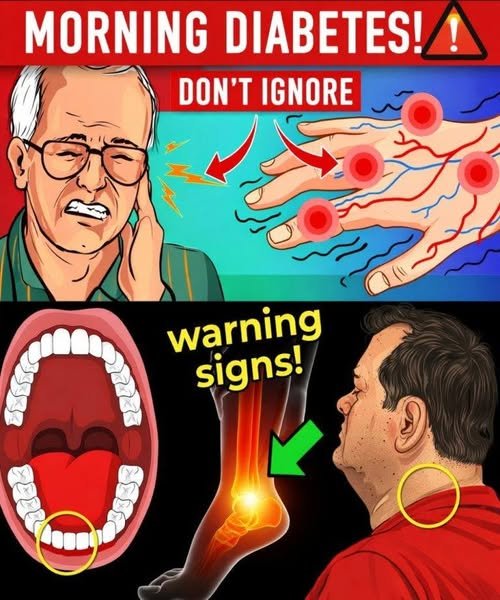
Waking up feeling unusually thirsty, exhausted, or needing to rush to the bathroom may seem like an ordinary part of starting the day. But when these symptoms happen repeatedly—especially in someone with diabetes—they can sometimes be associated with elevated blood glucose.
Morning blood sugar can be affected by several factors, including medication timing, food, illness, stress, sleep, dehydration, and the dawn phenomenon, a natural early-morning rise in hormones that can increase blood glucose in people with diabetes.
Importantly, a symptom by itself does not prove that blood sugar is high. The most useful way to understand your glucose pattern is to monitor your levels as recommended by your healthcare professional.
Here are seven morning warning signs worth paying attention to.
1. You Wake Up Extremely Thirsty
If you regularly wake up with an unusually dry mouth and a strong desire to drink water, elevated blood glucose may be one possible explanation.
When blood glucose becomes high, the kidneys try to remove excess glucose through urine. This can increase fluid loss and contribute to thirst and dehydration.
Occasional morning thirst isn’t necessarily a sign of diabetes. A warm bedroom, salty food, alcohol, mouth breathing, or simply not drinking enough water can also leave you thirsty.
But persistent excessive thirst deserves attention—particularly when it occurs alongside other symptoms.
2. You Need to Urinate Frequently
Frequent urination is another classic symptom associated with high blood glucose.
When glucose levels are sufficiently elevated, the kidneys may excrete more glucose into the urine. Water follows the glucose, increasing urine production.
You may notice that you:
- Wake during the night to urinate
- Need to urinate soon after waking
- Urinate much more frequently than usual
- Feel unusually thirsty afterward
Frequent urination can have many other causes, however, including urinary infections, medications, increased fluid intake, and prostate or bladder problems.
3. You Wake Up Feeling Extremely Tired
Poorly controlled blood glucose can be associated with fatigue.
When glucose isn’t being used effectively by the body’s cells, a person may feel tired or lacking in energy. Sleep disruption from frequent nighttime urination can also contribute to morning exhaustion.
Fatigue is very nonspecific, though. Poor sleep, stress, anemia, thyroid problems, infections, and many other conditions can cause the same symptom.
That’s why persistent fatigue should not automatically be blamed on blood sugar.
4. Your Vision Seems Blurry
Temporary blurry vision can occur when blood glucose levels become elevated.
Changes in blood glucose can affect the fluid balance in the eye and temporarily alter vision. The CDC lists blurred vision among the possible symptoms of diabetes.
If you repeatedly wake up with blurry vision—especially if you already have diabetes—checking your glucose and discussing the pattern with your healthcare professional may be appropriate.
Sudden or severe vision changes require prompt medical attention.
5. You Have a Dry Mouth
A persistently dry mouth in the morning can accompany dehydration, which may occur when high blood glucose causes increased urination.
However, dry mouth has many possible causes, including:
- Sleeping with your mouth open
- Nasal congestion
- Certain medications
- Dehydration
- Alcohol
- Dry indoor air
Therefore, dry mouth alone isn’t enough to conclude that blood sugar is elevated.
When it appears together with excessive thirst and frequent urination, however, it is worth paying closer attention.
6. You Wake Up With a Headache or Feel Weak
Headaches and weakness can occur for many different reasons, including poor sleep, dehydration, illness, stress, and changes in blood glucose.
High blood glucose can be associated with symptoms such as weakness and headache, particularly when glucose levels are significantly elevated.
But there’s an important point: morning headaches and weakness can also occur with low blood sugar.
Low blood glucose—generally below 70 mg/dL—is particularly important for people taking insulin or certain glucose-lowering medications. Symptoms can include sweating, shaking, dizziness, hunger, irritability, and confusion.
So don’t assume that every uncomfortable morning symptom means your blood sugar is high. Testing can help distinguish between high and low glucose.
7. Your Morning Glucose Readings Are Repeatedly High
This is more informative than any individual symptom.
If you have diabetes and repeatedly find that your glucose is above your personal target when you wake up, discuss the pattern with your healthcare team.
For many nonpregnant adults with diabetes, the CDC lists 80–130 mg/dL before a meal as a typical target, but individual targets can differ based on age, health conditions, medications, pregnancy status, and other factors.
Don’t change your insulin or other diabetes medication simply because of a few high morning readings. Your healthcare professional can help determine what’s causing the pattern.
Why Is Blood Sugar Sometimes Higher in the Morning?
One common explanation is the dawn phenomenon.
During the early morning hours, hormones such as cortisol and growth hormone rise and signal the liver to release glucose. In people with diabetes, the body may not produce enough insulin or may not respond to insulin effectively enough to keep glucose within the desired range.
Another possibility is that the effect of overnight medication is wearing off.
There is also a less common phenomenon called the Somogyi effect, in which nighttime hypoglycemia is followed by a rise in blood glucose. Determining which pattern is occurring may require checking glucose at different times overnight or using a continuous glucose monitor.
What Can Cause High Morning Blood Sugar?
Morning glucose can be influenced by numerous factors, including:
- Large or carbohydrate-heavy evening meals
- Late-night snacks
- Insufficient or mistimed medication
- Dawn phenomenon
- Illness or infection
- Stress
- Poor sleep
- Dehydration
- Reduced physical activity
- Certain medications
The CDC also notes that sleep loss, dehydration, illness, stress, and the dawn phenomenon can affect blood glucose.
How Can You Better Understand Your Morning Glucose?
If you’re repeatedly experiencing morning highs, keeping a record can be extremely useful.
Depending on your treatment plan, your healthcare professional may ask you to monitor glucose:
- Before bed
- During the night
- Immediately after waking
- Before meals
- After meals
This information can reveal whether glucose is already high at bedtime, rises during the night, or increases primarily during the early morning hours.
A continuous glucose monitor can also provide a more detailed picture of overnight glucose patterns for people who use one.
Don’t Automatically Skip Breakfast or Change Medication
If your morning glucose is high, it may be tempting to skip breakfast or drastically reduce your food intake.
That isn’t necessarily the solution.
Similarly, don’t increase or decrease insulin or other diabetes medication without guidance from your healthcare professional.
The correct approach depends on why your glucose is elevated.
When Is High Blood Sugar an Emergency?
Very high blood glucose can sometimes lead to diabetic ketoacidosis (DKA), a potentially life-threatening emergency.
Warning signs can include:
- Nausea or vomiting
- Abdominal pain
- Very dry mouth
- Extreme thirst
- Rapid or heavy breathing
- Fruity-smelling breath
- Severe fatigue
- Confusion
DKA requires immediate medical care.
If you have diabetes and are sick or have significantly elevated glucose, follow the sick-day and ketone-testing instructions provided by your healthcare team. The ADA recommends checking ketones when appropriate, particularly during illness or significant hyperglycemia.
The Bottom Line
Waking up thirsty, tired, or needing to urinate frequently doesn’t automatically mean your blood sugar is dangerously high. But repeated symptoms combined with consistently elevated glucose readings deserve attention.
Morning highs can have several causes, including the dawn phenomenon, medication timing, food, stress, illness, dehydration, and sleep problems.
Rather than relying on symptoms alone, monitor your glucose according to your treatment plan and discuss persistent patterns with a healthcare professional. With the right information, the underlying cause can often be identified and addressed safely.
SEO Details
SEO Title: 7 Warning Signs Your Morning Blood Sugar May Be Too High
Focus Keyword: morning blood sugar
Meta Description: Waking up thirsty, tired, or needing to urinate? Learn seven possible warning signs of high morning blood sugar and when you should seek medical advice.
Suggested URL Slug: morning-signs-high-blood-sugar
Keywords: morning blood sugar, high morning blood sugar, signs of high blood sugar, high blood glucose symptoms, diabetes symptoms, dawn phenomenon, morning glucose levels, blood sugar warning signs