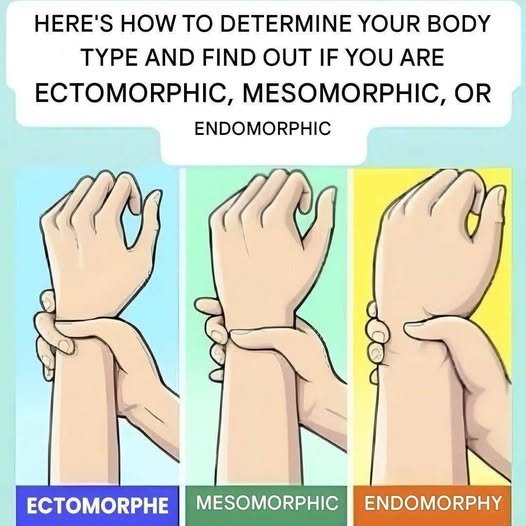
Have you ever wondered why some people seem naturally lean, others build muscle quickly, while some tend to gain weight more easily?
You may have heard these people described as ectomorphs, mesomorphs, or endomorphs.
These three categories come from the traditional somatotype system, which classifies body shapes into three broad groups:
- Ectomorph: traditionally described as lean and slender
- Mesomorph: traditionally described as muscular and athletic
- Endomorph: traditionally described as having a softer, rounder build
The idea is popular in fitness and wellness discussions, but there’s an important point to understand: your body isn’t necessarily one fixed type.
Modern science doesn’t consider the ectomorph-mesomorph-endomorph system a precise way to determine your metabolism, nutritional needs, or the best exercise program for you.
Your genetics, hormones, age, activity level, diet, sleep, medical conditions, medications, and environment all influence your body composition.
Still, the framework can be an interesting way to think about your current build and fitness goals.
What Is a Somatotype?
The somatotype system was developed in the 20th century by American psychologist William Sheldon.
Sheldon proposed three basic body types, although real people don’t always fit neatly into one category.
In practice, most people have characteristics that overlap between categories.
For example, someone might have a naturally slender frame but also develop muscle relatively easily through resistance training.
Another person might have a broader frame with substantial muscle but also tend to store more body fat.
So rather than asking, “Which one am I?”, it can be more useful to ask:
“What does my current body composition look like, and what are my health and fitness goals?”
1. Ectomorph: The Naturally Lean Build
The traditional ectomorph description is someone with a relatively slender frame, narrower shoulders or hips, and less visible body fat and muscle mass.
They may appear naturally thin even without following a specific diet.
Common characteristics traditionally associated with ectomorphs
- Slim or slender appearance
- Narrower frame
- Relatively low body fat
- Difficulty gaining body weight
- Less visible muscle mass
- Long-looking limbs
However, being naturally thin doesn’t automatically mean that someone has a “fast metabolism.”
Metabolism is much more complicated than body shape.
Two people with similar body types can have very different energy requirements.
If You Have a Lean Build
If your goal is to gain muscle or healthy weight, focus on the fundamentals rather than trying to follow a special “ectomorph diet.”
Prioritize:
Protein: Include adequate protein from foods such as eggs, fish, chicken, dairy products, beans, lentils, and other protein-rich foods.
Calories: If you’re trying to gain weight, you generally need enough energy to support weight gain.
Strength training: Progressive resistance training provides the stimulus needed to build muscle.
Recovery: Muscles need adequate recovery and sleep.
Good foods for increasing calorie intake can include nuts, seeds, yogurt, eggs, olive oil, whole grains, avocado, and other nutrient-dense foods.
2. Mesomorph: The Muscular or Athletic Build
The traditional mesomorph is described as naturally muscular, broad-shouldered, and athletic.
People in this category are often portrayed as gaining muscle relatively easily.
Characteristics traditionally associated with mesomorphs
- Naturally muscular appearance
- Broader shoulders
- Moderate body fat
- Athletic-looking build
- Potentially responsive to resistance training
But again, these descriptions aren’t a scientific rulebook.
Having a muscular appearance can be influenced by genetics, training history, nutrition, hormones, occupation, and many other factors.
If You Have a Naturally Muscular Build
Your training can focus on whichever physical qualities you want to develop.
For example:
Want more muscle?
Use progressive resistance training and consume sufficient protein and calories.
Want better endurance?
Include activities such as:
- Walking
- Jogging
- Cycling
- Swimming
- Running
Want general fitness?
Combine strength training with cardiovascular exercise and mobility work.
There’s no reason to restrict yourself to exercises associated with a particular “body type.”
3. Endomorph: The Fuller or Rounder Build
The traditional endomorph description refers to people with a softer or rounder body shape who may carry more body fat.
They may also have a broader waist or hips.
Characteristics traditionally associated with endomorphs
- Fuller body shape
- Greater tendency to store body fat
- Wider waist or hips
- Less naturally defined musculature
- Weight gain may occur relatively easily
But describing someone as an “endomorph” doesn’t explain why they gain weight.
Body weight and fat distribution are influenced by numerous factors, including genetics, energy intake, physical activity, sleep, medications, hormones, age, and health conditions.
If You Have a Fuller Build
You don’t need to eliminate carbohydrates or follow an extreme diet.
A sustainable approach generally works better.
Focus on:
- Adequate protein
- Plenty of vegetables
- Fruit
- Whole grains
- Legumes
- Appropriate portions
- Regular physical activity
- Resistance training
- Adequate sleep
If weight loss is your goal, a sustainable calorie deficit can help reduce body weight over time.
Can Your Body Type Change?
Your underlying skeletal structure and genetics don’t completely change, but your body composition can change dramatically.
You can gain muscle.
You can lose body fat.
You can become stronger.
You can improve cardiovascular fitness.
You can change how your body looks without changing your basic skeletal structure.
Someone who appears “ectomorphic” in their early 20s may look significantly more muscular after years of resistance training.
Likewise, someone who previously carried more body fat can become leaner and more muscular.
That’s why your current body composition is more useful than assigning yourself a permanent label.
Body Type Doesn’t Determine Your Diet
One of the biggest misconceptions surrounding somatotypes is that each body type requires a completely different diet.
There isn’t strong scientific evidence that everyone classified as an ectomorph, mesomorph, or endomorph needs a specific macronutrient ratio.
Instead, nutrition should reflect your:
- Health status
- Age
- Activity level
- Body composition
- Fitness goals
- Food preferences
- Cultural eating habits
- Medical needs
For example, someone trying to gain muscle will generally have different calorie and protein needs from someone trying to lose body fat.
That difference is related to the goal, not simply the body-type label.
How to Determine Your Body Type
Look at your overall body structure rather than focusing on one feature.
Ask yourself:
Do you naturally have a slender frame?
You may have characteristics traditionally associated with an ectomorph.
Do you naturally have a muscular or athletic build?
You may have characteristics traditionally associated with a mesomorph.
Do you naturally have a broader or rounder build?
You may have characteristics traditionally associated with an endomorph.
But don’t worry if you don’t fit neatly into one category.
Most people are somewhere in between.
A Better Way to Understand Your Body
Instead of relying only on somatotypes, consider measurements and outcomes that provide more useful information.
Body composition
Body-fat percentage and lean mass can provide more information than simply calling yourself an ectomorph or endomorph.
Waist circumference
Waist circumference can provide useful information about abdominal fat and certain health risks.
Strength
Tracking your strength over time can show whether your resistance-training program is working.
Fitness
Measures such as walking pace, cardiovascular endurance, and exercise capacity can provide useful information about physical fitness.
Progress photos and measurements
If your goal is body recomposition, consistent measurements and photos can help you monitor changes over time.
How to Make the Most of Your Body
Whatever your natural build, the basic principles remain surprisingly similar.
Eat Mostly Nutrient-Dense Foods
Build your meals around foods such as vegetables, fruits, whole grains, legumes, nuts, seeds, dairy or suitable alternatives, and quality protein sources.
Strength Train
Resistance training can help build and maintain muscle at almost any body type.
Move Regularly
You don’t have to spend hours in a gym.
Walking, cycling, swimming, sports, and other physical activities all count.
Get Enough Protein
Protein supports muscle maintenance and growth when combined with appropriate resistance training.
Individual protein requirements vary depending on body size, activity, age, and health status.
Prioritize Sleep
Poor sleep can affect energy, appetite, recovery, and overall well-being.
Aim for a consistent sleep schedule and adequate sleep.
Be Patient
Your body won’t transform in a few days.
Meaningful changes in body composition generally require consistent habits over weeks and months.
The Biggest Mistake: Blaming Your Body Type
It’s easy to think:
“I’m an endomorph, so I’ll always struggle with my weight.”
Or:
“I’m an ectomorph, so I’ll never build muscle.”
Neither conclusion is necessary.
Your body type isn’t a destiny.
Your genetics influence your starting point, but your body composition can respond significantly to nutrition, exercise, sleep, and lifestyle.
Quick Body-Type Guide
| Traditional Type | Common Description | Useful Fitness Focus |
|---|---|---|
| Ectomorph | Slender or lean build | Strength training and adequate nutrition if gaining muscle |
| Mesomorph | Naturally muscular or athletic appearance | Balanced strength and cardiovascular training |
| Endomorph | Fuller or rounder build | Strength training, regular activity, and sustainable nutrition |
| Combination | Characteristics of multiple types | Customize training and nutrition to your goals |
Remember that this table describes the traditional somatotype concept, not a medically validated system for prescribing diets or exercise.
Frequently Asked Questions
Can an ectomorph become muscular?
Absolutely. A naturally slender person can gain substantial muscle through progressive resistance training, adequate nutrition, and consistent recovery.
Can an endomorph become lean?
Yes. Body fat can be reduced through sustainable changes in energy intake, physical activity, and resistance training when appropriate.
Are mesomorphs naturally healthier?
Not necessarily. Body shape alone doesn’t determine overall health.
Does body type determine metabolism?
No. Metabolic rate depends on many factors, including body size and composition, age, sex, activity level, and other physiological factors.
Can I be a combination of body types?
Yes. Most people don’t fit perfectly into one traditional category.
Which body type is best?
There isn’t a “best” body type. Each person’s body composition is influenced by genetics and life circumstances, and health isn’t determined by a somatotype label.
Final Thoughts
Ectomorph, mesomorph, and endomorph are familiar terms in fitness culture, but they shouldn’t define what you believe your body can achieve.
Your body can adapt.
You can build muscle, improve strength, increase endurance, reduce excess body fat, and improve your overall fitness regardless of which traditional category you resemble.
Instead of asking, “What body type am I?”, a more useful question is:
“What are my current health and fitness goals, and what habits will help me reach them?”
That’s where your attention is likely to produce the greatest long-term benefit.
SEO Details
SEO Title: Ectomorph, Mesomorph or Endomorph? Discover Your Body Type
Meta Description: Are you an ectomorph, mesomorph, or endomorph? Learn what the traditional body types mean, their limitations, and how to build a fitness plan around your goals.
Focus Keyphrase: ectomorph mesomorph endomorph
Related Keywords: body types, somatotype, ectomorph body type, mesomorph body type, endomorph body type, body type and fitness, body composition, fitness tips
Suggested URL Slug: ectomorph-mesomorph-endomorph-body-types
Featured Image Alt Text: Illustration showing the three traditional body types ectomorph mesomorph and endomorph
Category: Health & Fitness
Tags: Body Types, Fitness, Body Composition, Exercise, Healthy Lifestyle, Weight Management