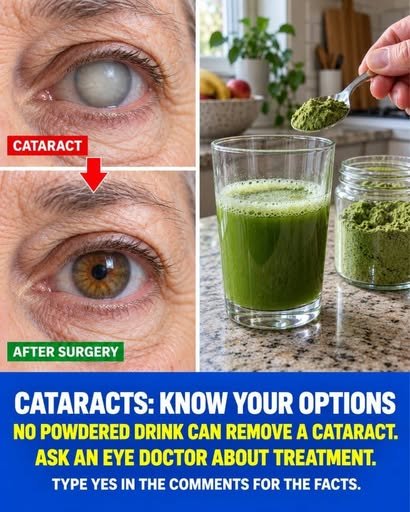
Moringa powder has become popular as a natural wellness ingredient, and it is often promoted online for everything from general nutrition to eye health. One particularly dramatic claim suggests that mixing moringa powder with a few household ingredients can clear cataracts and restore cloudy vision without surgery.
It sounds appealing, especially for anyone who would prefer a natural approach.
But there is an important distinction between supporting overall eye health through good nutrition and actually removing an established cataract.
A cataract is a clouding of the eye’s natural lens. As it develops, vision may become blurry or hazy, colors can appear faded, and bright lights may produce more glare. According to the National Eye Institute, surgery is currently the only treatment that removes an existing cataract.
So while moringa can be part of a nutritious diet, there is no good clinical evidence that a homemade moringa powder mixture can dissolve, reverse, or clear an existing cataract.
What Exactly Is a Cataract?
A cataract develops when the normally clear lens inside the eye becomes cloudy.
The lens sits behind the iris and helps focus light onto the retina. As proteins and structures within the lens change over time, the lens can gradually become less transparent.
This can cause symptoms such as:
- Blurry or hazy vision
- Faded or less vivid colors
- Increased sensitivity to bright lights
- Glare from headlights at night
- Difficulty seeing in low light
- Halos around lights
- Double vision in some cases
- Frequent changes in glasses prescriptions
Cataracts are particularly common with aging, although they can also occur after eye injuries, certain medical conditions, or prolonged exposure to certain risk factors.
Can Moringa Powder Remove a Cataract?
There is currently no established evidence that eating moringa powder or mixing it into a homemade drink can remove an existing cataract.
Moringa leaves contain various nutrients and plant compounds, which is one reason the plant has attracted interest as a food. But nutritional value should not be confused with a proven treatment for a structural change in the eye’s lens.
Once a cataract has become significant enough to interfere with vision, simply consuming a particular food or powder cannot be expected to physically remove the cloudy lens.
The American Academy of Ophthalmology likewise states that cataracts can be removed only with surgery.
Why Do Natural Cataract Remedies Become So Popular?
The idea of treating cataracts naturally is understandable.
People may be concerned about surgery, anesthesia, recovery time, cost, or simply prefer natural remedies. Social media can also make traditional recipes appear more medically proven than they actually are.
Another reason is that foods rich in antioxidants are often associated with eye health. This creates an easy—but incorrect—jump from:
“This food contains nutrients that may support health”
to:
“This food can dissolve cataracts.”
Those are very different claims.
Can a Healthy Diet Support Your Eyes?
Yes, nutrition still matters.
Eating a varied diet containing vegetables, fruits, legumes, whole grains, fish, eggs, nuts, and other nutrient-rich foods can contribute to overall health, including the health of the eyes.
But a healthy diet should be considered part of general eye-health care, not a replacement for an eye examination or appropriate cataract treatment.
The American Academy of Ophthalmology recommends measures such as protecting the eyes from ultraviolet light, avoiding smoking, and maintaining healthy lifestyle habits as ways that may help reduce cataract risk or delay progression.
What Happens If You Have an Early Cataract?
Not every cataract requires immediate surgery.
If a cataract is mild and does not interfere significantly with everyday activities, an eye doctor may recommend monitoring it and correcting vision with glasses or other measures.
Brighter lighting, anti-glare sunglasses, magnification, and an updated glasses prescription may help some people manage early symptoms.
The important point is that watching a mild cataract is different from trying to cure it with a homemade remedy.
When Is Cataract Surgery Considered?
Cataract surgery is generally considered when the cataract begins interfering with normal activities such as:
- Reading
- Driving
- Watching television
- Working
- Recognizing faces
- Walking safely
- Performing everyday household tasks
During cataract surgery, the cloudy natural lens is removed and replaced with an artificial lens called an intraocular lens, or IOL. The National Eye Institute reports that about 9 out of 10 people who undergo cataract surgery see better afterward.
You also do not necessarily have to rush into surgery immediately after being diagnosed. The timing depends on how much the cataract is affecting your vision and daily life.
Is There Any Harm in Taking Moringa?
Moringa as a food ingredient may be perfectly reasonable for many people, but concentrated powders and supplements are not automatically risk-free.
If you take prescription medications, have a chronic medical condition, are pregnant, or are considering large amounts of a supplement, discuss it with a healthcare professional.
Most importantly, do not put moringa powder, herbal mixtures, oils, or homemade preparations directly into your eyes.
The eye is extremely sensitive, and non-sterile substances can cause irritation, infection, or injury.
What About Cataract-Dissolving Eye Drops?
Researchers are actively investigating possible nonsurgical treatments for cataracts. For example, National Eye Institute-supported research has identified biological mechanisms that could potentially lead to future cataract treatments, but these findings are still part of scientific research rather than an established home treatment.
That distinction matters.
A promising laboratory discovery is not the same as a proven treatment that people can safely prepare in their kitchen.
Simple Ways to Protect Your Eye Health
While there is no homemade mixture proven to remove cataracts, you can take practical steps to support your eyes.
Protect Your Eyes From UV Light
Regular exposure to ultraviolet radiation can contribute to eye damage. Sunglasses that provide appropriate UV protection and a wide-brimmed hat can help reduce exposure.
Don’t Smoke
Smoking is associated with an increased risk of several eye problems, including cataracts.
Control Blood Sugar
If you have diabetes, keeping blood glucose within the range recommended by your healthcare professional is important for protecting your eyes.
Eat a Balanced Diet
Rather than relying on one “miracle” ingredient, build meals around a variety of nutrient-rich foods.
Have Regular Eye Examinations
An eye examination can identify cataracts and distinguish them from other causes of blurry vision.
This is particularly important because blurry vision does not automatically mean you have a cataract.
The Bottom Line
Moringa is a nutritious plant and can be included in a balanced diet, but there is no reliable evidence that a homemade moringa powder mixture can clear an existing cataract.
A cataract is a physical clouding of the eye’s natural lens. When it becomes significant enough to affect vision, cataract surgery is the established treatment for removing the cloudy lens.
That does not mean everyone diagnosed with a cataract needs surgery immediately. Mild cataracts can often be monitored, and glasses or changes in lighting may temporarily improve everyday vision.
The safest approach is to have an eye professional determine what is causing your vision changes and discuss the appropriate options.
Natural foods can support overall health—but they should not be presented as a substitute for proven treatment when a cataract is affecting your sight.
SEO Title
Moringa Powder for Cataracts: Can It Really Clear Cloudy Vision?
Meta Description
Can moringa powder clear cataracts naturally? Learn what the evidence says about moringa, cataracts, eye health, and when cataract surgery may be needed.