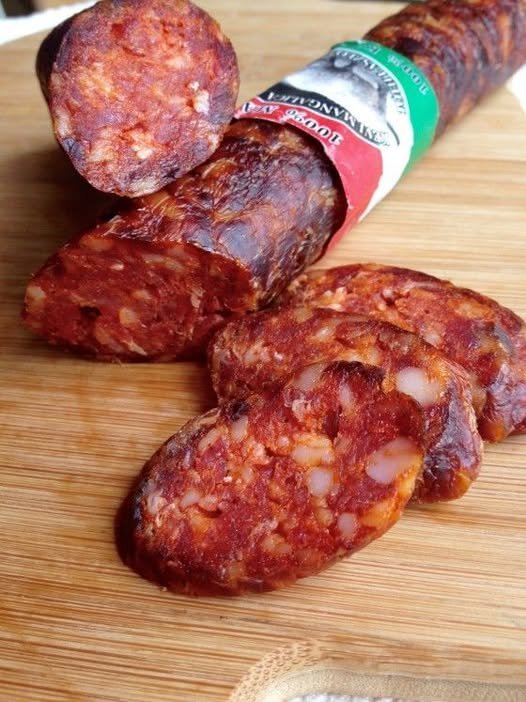
Hungarian dried smoked sausage, commonly known as kolbász, is one of the most recognizable specialties of Hungarian cuisine. Traditionally made from seasoned pork, the sausage is flavored generously with Hungarian paprika, garlic, salt, and spices before being smoked and carefully dried.
The result is a firm, deeply flavored sausage with a beautiful red color and an intense smoky, garlicky aroma. Thinly sliced, it makes an excellent addition to a charcuterie board, sandwiches, rustic breakfasts, or traditional Hungarian meals.
This recipe is designed as a home-style fresh sausage mixture with instructions for smoking and drying. Because traditional dry-cured sausage requires carefully controlled temperature, humidity, curing salt, and drying conditions, food safety is particularly important.
Why You’ll Love Hungarian Kolbász
- Deep smoky paprika flavor
- Rich garlic and spice aroma
- Firm, sliceable texture
- Excellent for sandwiches and appetizers
- Delicious with cheese and pickles
- A classic Hungarian-style specialty
- Can be made mild or spicy
Ingredients
For Approximately 2 kg of Sausage
- 2 kg pork shoulder, well chilled
- 400 g pork back fat, well chilled
- 35–40 g salt
- 35–45 g Hungarian sweet paprika
- 5–10 g hot Hungarian paprika, according to taste
- 15–20 g freshly minced garlic
- 5 g ground black pepper
- 3–5 g caraway seeds, lightly crushed
- 100–150 ml ice-cold water, as needed
- Natural hog casings, prepared according to package directions
Important Curing Note
Traditional dry sausage recipes commonly use measured curing salt containing sodium nitrite/nitrate as part of a controlled curing process. The exact amount depends on the specific curing product and its concentration.
Do not substitute ordinary table salt by guesswork or use curing salt without following the manufacturer’s precise dosing instructions. For a true shelf-stable dried sausage, use a tested curing recipe and appropriate curing equipment and conditions.
How to Make Hungarian Dried Smoked Sausage
1. Chill Everything Thoroughly
Keep the pork and fat very cold before grinding.
Cut the meat and fat into chunks small enough for your grinder.
Place them in the refrigerator or freezer briefly until they are very firm but not frozen solid.
Keeping the fat cold helps it remain distinct instead of smearing into the meat.
2. Grind the Meat
Grind the pork and fat through a medium-coarse grinder plate.
A relatively coarse texture works particularly well for traditional-style kolbász.
Transfer the mixture to a large chilled bowl.
3. Add the Seasonings
Add the salt, sweet paprika, hot paprika, garlic, black pepper, and caraway.
If your tested curing formula calls for curing salt, add the exact measured quantity specified by that formula or the product manufacturer.
Add a small amount of ice-cold water if needed.
4. Mix Thoroughly
Mix the sausage mixture by hand or with a suitable mixer until the seasonings are evenly distributed and the meat becomes slightly sticky.
This helps the sausage bind together properly.
Avoid allowing the mixture to become warm.
5. Test the Seasoning
Before stuffing the entire batch, cook a small piece of the mixture thoroughly in a skillet.
Taste it and adjust the seasoning if necessary.
This is much easier than discovering after stuffing and drying that the sausage needs more paprika, garlic, or salt.
6. Prepare the Casings
Rinse and prepare the natural casings according to their package instructions.
Soaking and rinsing them properly helps remove excess salt and makes them easier to fill.
Keep the casings moist while working.
7. Stuff the Sausage
Fill the casings with the seasoned meat mixture using a sausage stuffer.
Avoid packing them excessively tight because the casings need some flexibility and overly tight sausages can split.
Form individual links according to your preferred size.
Prick visible air pockets with a clean sausage pricker or sterilized needle.
8. Cure and Dry Before Smoking
This stage is particularly important for traditional dry sausage.
Hang the sausages in a clean, controlled environment according to a validated dry-curing process.
Temperature, humidity, curing time, acidity, and weight loss all matter.
For a shelf-stable product, simply hanging sausages in a normal kitchen or pantry is not a safe substitute for controlled curing.
9. Smoke the Sausage
Traditional Hungarian kolbász is commonly cold-smoked over suitable hardwood.
Use a smoker designed for food smoking and follow its operating instructions.
Keep the smoking conditions appropriate for the particular curing process being used.
Avoid using resinous woods or unknown wood sources.
The sausage should develop a rich smoky aroma and attractive reddish-brown exterior.
10. Dry and Mature
After smoking, the sausages are traditionally dried under controlled temperature and humidity.
During drying, they gradually lose moisture and develop their characteristic firm texture and concentrated flavor.
For a shelf-stable sausage, do not rely solely on appearance or firmness to determine safety. A validated recipe/process and appropriate measurements are necessary.
How to Serve Hungarian Dried Smoked Sausage
Once properly cured and ready to eat, slice the sausage thinly.
Serve it with:
- Fresh crusty bread
- Hungarian pickles
- Mustard
- Sliced onions
- Hard cheese
- Tomatoes
- Sweet peppers
- Pickled peppers
It also works beautifully on a rustic charcuterie board.
Ways to Use Kolbász in Cooking
Hungarian dried sausage is incredibly versatile.
Slice it into:
- Potato dishes
- Bean soups
- Goulash
- Casseroles
- Egg dishes
- Stews
- Rice dishes
- Sandwiches
Its paprika-rich flavor can season an entire dish, so additional salt and paprika may need to be reduced.
Mild vs. Spicy Hungarian Kolbász
The amount and type of paprika can be adjusted according to taste.
Mild Version
Use mostly sweet Hungarian paprika with only a small amount of hot paprika.
Spicy Version
Increase the hot Hungarian paprika for a stronger chili character.
The exact balance varies among Hungarian regional and family recipes.
Tips for Better Sausage
Keep the meat cold
Warm meat and fat can produce a greasy, poorly textured sausage.
Use quality paprika
Paprika is one of the defining flavors, so fresh Hungarian paprika makes a noticeable difference.
Don’t overstuff the casings
Overfilled casings can split during linking, smoking, or drying.
Balance the garlic
Garlic should be noticeable without completely overpowering the paprika.
Use proper curing procedures
Dry-cured sausage is very different from ordinary fresh sausage. Safe production requires controlled curing and drying rather than simply leaving sausage to hang at room temperature.
Frequently Asked Questions
What is Hungarian dried sausage called?
One of the most common terms is kolbász. Hungary has many regional and specialty sausage varieties, so recipes and preparation methods can vary.
Is Hungarian kolbász always spicy?
No. Some varieties are quite mild and paprika-forward, while others contain significantly more hot paprika.
What gives Hungarian sausage its red color?
Hungarian paprika contributes much of the characteristic red color along with its distinctive aroma and flavor.
Can I make this without smoking?
Yes, you can make a fresh Hungarian-style sausage using the same flavor profile and cook it thoroughly. However, that is not the same product as traditional dried smoked kolbász.
Can I make true shelf-stable sausage at home?
It is possible with appropriate equipment, tested formulations, curing agents, controlled fermentation/drying conditions, and careful food-safety practices. It should not be improvised from a fresh-sausage recipe.
Recipe at a Glance
Prep Time: About 1 hour
Smoking/Drying: Varies according to the validated curing process
Yield: Approximately 2.5 kg before moisture loss
Cuisine: Hungarian
Category: Sausage, Charcuterie, Traditional Food
Final Thoughts
Hungarian Dried Smoked Sausage (Kolbász) is all about the combination of rich pork, fragrant garlic, sweet Hungarian paprika, gentle heat, and a deep smoky character.
While the seasoning and stuffing are straightforward, traditional dried sausage requires considerably more care than an ordinary fresh sausage. Proper curing, smoking, fermentation when applicable, and controlled drying are essential for producing a safe shelf-stable product.
For a simpler home version, you can make the same paprika-and-garlic sausage mixture, keep it refrigerated, and cook it thoroughly rather than attempting uncontrolled drying.
SEO Title: Hungarian Dried Smoked Sausage (Kolbász) – Paprika & Garlic Recipe
Meta Description: Learn about Hungarian-style dried smoked sausage with pork, Hungarian paprika, garlic, caraway, and traditional smoking and drying methods, with important food-safety guidance.