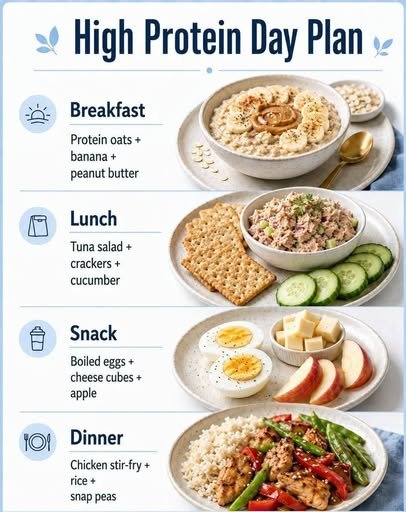
Getting enough protein throughout the day can make meals more satisfying and can help support muscle maintenance, recovery, and overall nutrition. Instead of trying to eat a huge amount of protein in one meal, it is often easier to spread protein-rich foods across breakfast, lunch, snacks, and dinner.
This simple high-protein meal plan uses familiar foods such as eggs, chicken, yogurt, lentils, beans, fish, milk, and nuts. Portions can be adjusted according to your appetite, activity level, and individual nutritional needs.
Breakfast: Protein-Packed Egg & Yogurt Plate
Ingredients
- 3 eggs
- ½ cup plain Greek yogurt or thick plain yogurt
- 1 slice whole-grain bread
- 1 small tomato, sliced
- ½ cucumber, sliced
- Black pepper, to taste
- A pinch of salt
- 1 teaspoon olive oil, optional
Directions
- Boil or scramble the eggs according to your preference.
- Season lightly with salt and black pepper.
- Serve the eggs with yogurt, whole-grain bread, cucumber, and tomato.
- Add a little olive oil to the vegetables if desired.
Protein Boost
For an even higher-protein breakfast, add a small serving of cottage cheese or another egg.
Approximate protein: 25–30 g, depending on portions and yogurt type.
Lunch: Grilled Chicken Rice Bowl
Ingredients
- 150–180 g cooked chicken breast
- 1 cup cooked brown or white rice
- ½ cup cooked vegetables
- ½ cup cucumber and tomato
- 2 tablespoons plain yogurt
- Lemon juice
- Black pepper
- Paprika
- Garlic powder
- Small amount of cooking oil
Directions
- Season the chicken with paprika, garlic powder, black pepper, and a little salt.
- Grill or pan-cook until completely cooked through.
- Slice the chicken into bite-sized pieces.
- Place cooked rice in a bowl.
- Add the chicken and vegetables.
- Serve with yogurt mixed with a little lemon juice.
This meal provides a combination of protein, carbohydrates, vegetables, and healthy fats.
Approximate protein: 40–50 g.
Snack: Greek Yogurt, Nuts & Fruit
Ingredients
- ¾–1 cup Greek yogurt or thick plain yogurt
- 1 tablespoon almonds or walnuts
- 1 small banana, apple, or handful of berries
- 1 teaspoon chia seeds, optional
Directions
Add the yogurt to a bowl and top with fruit, nuts, and chia seeds.
For a sweeter option, cinnamon can be added without needing much additional sugar.
Approximate protein: 18–25 g, depending on the yogurt.
Other High-Protein Snack Options
You can alternate the yogurt snack with:
- 2 boiled eggs
- Cottage cheese with fruit
- Roasted chickpeas
- Milk with a handful of nuts
- Tuna with whole-grain crackers
- Homemade hummus with vegetables
Dinner: Chicken, Lentil & Vegetable Plate
Ingredients
- 120–150 g grilled chicken
- ½–¾ cup cooked lentils
- 1–2 cups mixed vegetables
- Small serving of whole-grain roti or rice, optional
- Lemon juice
- Black pepper
- Herbs or spices of your choice
Directions
- Grill or bake the chicken with your preferred herbs and spices.
- Cook the lentils until tender.
- Steam, roast, or lightly sauté the vegetables.
- Serve the chicken alongside the lentils and vegetables.
- Add lemon juice and herbs for extra flavor.
Approximate protein: 40–50 g.
A Simple Full-Day High-Protein Schedule
| Meal | Example | Approx. Protein |
|---|---|---|
| Breakfast | Eggs + Greek yogurt + whole-grain bread | 25–30 g |
| Lunch | Grilled chicken rice bowl | 40–50 g |
| Snack | Greek yogurt + nuts + fruit | 18–25 g |
| Dinner | Chicken + lentils + vegetables | 40–50 g |
| Daily total | 123–155 g |
The actual protein content will vary considerably with portion sizes and the specific foods used.
High-Protein Foods to Keep at Home
Having convenient protein sources available makes it easier to follow a high-protein eating pattern.
Animal-Based Protein
- Eggs
- Chicken breast
- Fish
- Tuna
- Lean beef
- Turkey
- Milk
- Greek yogurt
- Cottage cheese
Plant-Based Protein
- Lentils
- Chickpeas
- Kidney beans
- Black beans
- Soy foods
- Peanuts
- Almonds
- Pumpkin seeds
- Chia seeds
How to Build Your Own High-Protein Plate
A simple formula is:
Protein + vegetables + high-fiber carbohydrate + healthy fat
For example:
Chicken + vegetables + rice + yogurt
or
Fish + salad + potatoes + olive oil
or
Lentils + vegetables + whole-grain roti + yogurt
This approach makes the diet easier to maintain because you don’t have to eat the same meal every day.
Tips for Eating More Protein
Start With Protein
When preparing a meal, decide on the main protein source first. Then add vegetables and carbohydrates around it.
Keep Easy Options Available
Boiled eggs, yogurt, cooked chicken, lentils, and canned tuna can make quick meals much easier.
Don’t Depend Only on Protein Shakes
Protein powder can be convenient, but you can obtain protein from many ordinary foods. Whole foods also provide other nutrients.
Spread Protein Throughout the Day
Instead of eating most of your protein at dinner, include a protein source at every major meal and snack.
Drink Enough Fluids
Adequate hydration is important, particularly when increasing protein and fiber intake.
Important Note About Protein Needs
There is no single protein target that is appropriate for everyone.
Protein requirements depend on factors such as body size, age, activity level, training goals, and health conditions.
Someone trying to build muscle may have different requirements from someone simply trying to maintain a balanced diet.
People with kidney disease or certain other medical conditions may need individualized protein recommendations from a healthcare professional rather than simply following a high-protein diet.
Final Thoughts
A high-protein diet doesn’t have to mean eating chicken at every meal or relying on expensive supplements.
A balanced day can include eggs and yogurt at breakfast, chicken at lunch, yogurt and nuts as a snack, and chicken or lentils at dinner.
The most important thing is consistency, variety, appropriate portions, and choosing nutritious protein sources alongside vegetables, whole grains or other high-fiber carbohydrates, and healthy fats.
SEO Title: High-Protein Meal Plan – Breakfast, Lunch, Snack & Dinner
Meta Description: Try this simple high-protein meal plan with nutritious ideas for breakfast, lunch, snacks, and dinner using eggs, chicken, yogurt, lentils, vegetables, and more.