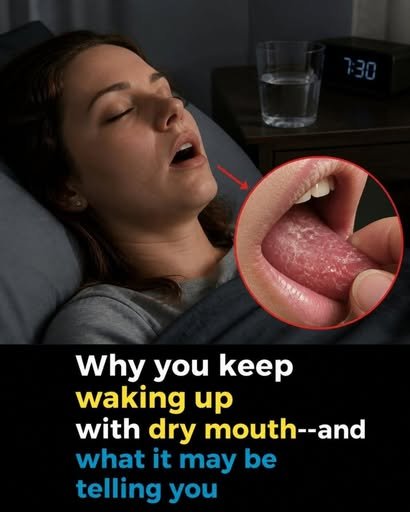
You wake up, take your first breath of the morning, and notice that your mouth feels unusually dry. Your tongue may feel sticky, your throat might be scratchy, and you may immediately reach for a glass of water.
Occasionally waking up with a dry mouth is usually not something to worry about. Overnight, saliva production naturally decreases, and certain everyday habits can make the sensation more noticeable.
But if you wake up with a dry mouth most mornings, especially when it is accompanied by loud snoring, excessive thirst, bad breath, frequent urination, or difficulty swallowing, it may be worth paying attention to the bigger picture.
Dry mouth is often called xerostomia, and it can have many possible causes.
What Does Dry Mouth Actually Mean?
Dry mouth occurs when your mouth does not have enough saliva to keep the tissues comfortably moist.
Saliva does much more than simply keep your mouth wet. It helps:
- Lubricate the mouth and throat
- Make swallowing easier
- Begin the digestion of food
- Protect teeth from acids
- Limit the growth of certain harmful microorganisms
- Maintain a healthy oral environment
When saliva production is reduced, your mouth can feel sticky, dry, or uncomfortable.
1. You May Be Sleeping With Your Mouth Open
One of the simplest explanations for morning dry mouth is mouth breathing.
If you breathe through your mouth while sleeping, air continuously passes over the tongue and oral tissues. This can leave your mouth noticeably dry when you wake up.
Mouth breathing may occur because of:
- Nasal congestion
- Allergies
- A stuffy nose
- Deviated nasal structures
- Enlarged tonsils or other airway issues
- Habitual mouth breathing
- Sleep-disordered breathing
If you consistently wake up with a dry mouth and someone tells you that you snore loudly, the combination deserves attention.
2. Snoring Could Be Part of the Problem
Snoring often goes together with mouth breathing.
During sleep, narrowing of the upper airway can cause air to move noisily through the tissues. Some people naturally open their mouths to breathe more easily.
If your dry mouth is accompanied by loud snoring, gasping, choking sounds, morning headaches, or significant daytime sleepiness, talk with a healthcare professional about whether sleep apnea should be evaluated.
Dry mouth by itself does not diagnose sleep apnea, but the combination of symptoms can be a reason to investigate.
3. You May Simply Be Dehydrated
Not drinking enough fluids during the day can contribute to a dry mouth.
Your body loses water naturally through breathing, sweating, and urination. If you go to bed already somewhat dehydrated, the sensation may be more noticeable in the morning.
Other possible signs of dehydration include:
- Darker urine
- Thirst
- Fatigue
- Headache
- Dizziness
- Dry lips
Rather than drinking huge amounts of water immediately before bed, focus on maintaining reasonable hydration throughout the day.
4. Your Bedroom Environment May Be Too Dry
The air around you can influence how dry your mouth feels.
Air conditioning, heating systems, fans, and naturally dry indoor environments may reduce moisture around the mouth and nose.
If your symptoms are worse during certain seasons or when sleeping in a particular room, environmental dryness could be contributing.
Keeping the bedroom at a comfortable temperature and using appropriate humidity control may help some people.
5. Certain Medications Can Cause Dry Mouth
Dry mouth is a known side effect of many medications.
Depending on the medicine, reduced saliva production may occur with some:
- Antihistamines
- Decongestants
- Antidepressants
- Certain blood-pressure medications
- Some pain medicines
- Medications used for bladder problems
- Certain medications for anxiety or sleep
This doesn’t mean you should stop taking a medication because of dry mouth.
If the problem began after starting a new medicine or changing your dose, discuss it with your doctor or pharmacist. They can determine whether the medication could be contributing and whether another option is appropriate.
6. Alcohol and Tobacco Can Make It Worse
Alcohol can contribute to dehydration, while smoking and other tobacco use can irritate oral tissues and contribute to an uncomfortable dry-mouth sensation.
If you notice that morning dryness is worse after drinking alcohol or using tobacco, that pattern is worth noticing.
Reducing these exposures can benefit oral and overall health for many reasons beyond dry mouth.
7. Your Blood Sugar May Need Attention
Persistent dry mouth can sometimes occur alongside conditions that increase thirst or urination.
For example, diabetes can cause increased thirst and dehydration when blood glucose remains elevated.
However, dry mouth alone does not mean you have diabetes.
If dry mouth is accompanied by symptoms such as unusually frequent urination, excessive thirst, unexplained weight loss, blurred vision, or persistent fatigue, discuss the symptoms with a healthcare professional.
A simple blood glucose test can help determine whether blood sugar is playing a role.
8. Stress and Anxiety Can Affect Your Mouth
Stress can change many normal body functions, including saliva production.
Some people notice a dry mouth before an important event, during periods of anxiety, or when they are under prolonged stress.
If the dryness comes and goes depending on your stress level, that may provide a useful clue.
However, persistent dry mouth should not automatically be blamed on anxiety. Other possible causes should still be considered.
9. Your Oral Health May Be Suffering
Long-lasting dry mouth can create problems beyond morning discomfort.
Saliva helps protect the teeth and oral tissues. When there is consistently less saliva, the risk of certain oral problems can increase.
These may include:
- Tooth decay
- Gum problems
- Bad breath
- Mouth irritation
- Difficulty swallowing
- Changes in taste
- Mouth sores
This is one reason persistent dry mouth deserves attention rather than being treated as merely an inconvenience.
10. Aging Can Play a Role—But Don’t Blame Everything on Age
Older adults may experience dry mouth more frequently, particularly because they are more likely to take medications that can reduce saliva production.
But aging itself shouldn’t automatically be considered the explanation.
If someone develops persistent dry mouth, it is worth reviewing medications, hydration, oral health, sleep habits, and underlying medical conditions.
What Can You Do About Morning Dry Mouth?
A few simple habits may help:
Drink Enough Fluids During the Day
Keep yourself reasonably hydrated rather than trying to compensate by drinking excessive amounts immediately before sleep.
Address Nasal Congestion
If you regularly have a blocked nose, allergies, or chronic nasal congestion, treating the underlying problem may reduce nighttime mouth breathing.
Practice Good Oral Hygiene
Brush twice daily with fluoride toothpaste and clean between your teeth regularly.
Regular dental examinations are particularly important when dry mouth persists.
Consider Your Medications
If you suspect a medication is responsible, speak with a healthcare professional rather than stopping it yourself.
Limit Alcohol and Tobacco
Both can contribute to oral dryness and other oral-health problems.
Try Sugar-Free Gum During the Day
Chewing sugar-free gum can stimulate saliva production and may provide temporary relief for some people.
Avoid using sugary candy frequently as a solution because repeated sugar exposure can increase the risk of tooth decay.
When Should You See a Doctor or Dentist?
Occasional morning dryness is usually less concerning than persistent symptoms.
Make an appointment if:
- Your mouth is dry almost every morning
- You have difficulty swallowing
- You develop frequent cavities
- Your mouth burns or becomes sore
- You have persistent bad breath
- Your sense of taste changes
- You have persistent thirst or frequent urination
- You recently started a medication and symptoms appeared afterward
- You snore heavily or wake up gasping
- You experience significant daytime sleepiness
A dentist can assess your oral health, while a doctor can investigate possible medical, medication-related, or sleep-related causes.
When Dry Mouth Shouldn’t Be Ignored
A dry mouth becomes more important when it appears alongside other symptoms.
For example, loud snoring and gasping during sleep may warrant assessment for sleep apnea.
Dry mouth combined with persistent excessive thirst and frequent urination may warrant evaluation of blood glucose and other causes.
And dry mouth accompanied by significant difficulty swallowing, unexplained weight loss, severe weakness, or other concerning symptoms should be discussed with a healthcare professional.
The Bottom Line
Waking up with a dry mouth doesn’t necessarily mean that something is seriously wrong with your body.
Sometimes the explanation is simple: you slept with your mouth open, the room was dry, you were mildly dehydrated, or a medication contributed to the problem.
But if dry mouth happens regularly, your body may be giving you a reason to look more closely at your hydration, medications, oral health, nasal breathing, sleep quality, and general health.
The key isn’t to panic over an occasional dry mouth. It’s to recognize when a small morning symptom becomes a persistent pattern that deserves an explanation.
SEO Title
Waking Up With a Dry Mouth? 10 Possible Reasons and What to Do
Meta Description
Waking up with a dry mouth every morning? Learn common causes including mouth breathing, dehydration, medications, snoring, and possible health conditions.