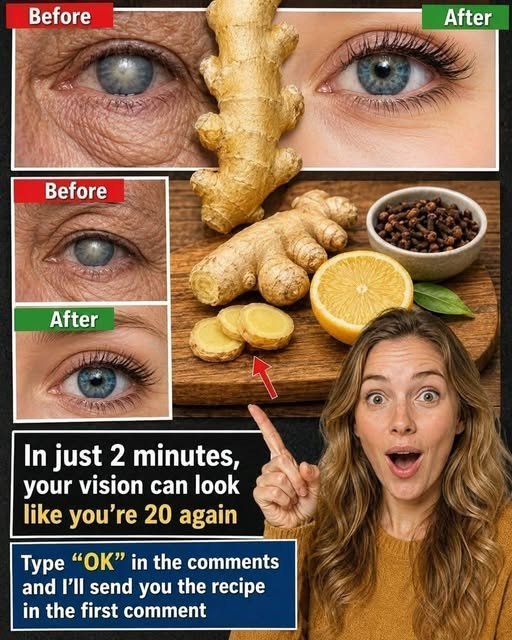
What if two minutes a day could make your eyes feel more comfortable, less strained, and easier to use?
That sounds appealing—especially if you have noticed that small print is becoming harder to read, your eyes feel tired after screen time, or you need brighter light than you used to.
But there is an important distinction between supporting comfortable vision and actually restoring the eyes to the way they worked at age 20.
There is no proven two-minute exercise that can reverse normal age-related changes in the eye or restore youthful vision in everyone. Presbyopia, for example, is a normal age-related focusing problem that usually begins after about age 45. The eye’s natural lens becomes less flexible, making it harder to focus on nearby objects.
That doesn’t mean a short daily routine is useless. Simple habits can reduce visual discomfort and encourage healthier eye-care routines.
Here’s what you can realistically do in two minutes a day.
Why Vision Changes With Age
Your vision depends on several parts of the eye working together, including the cornea, lens, retina, and optic nerve.
As you get older, the natural lens inside the eye becomes less flexible. This makes it increasingly difficult to focus on nearby objects.
This condition is called presbyopia.
Common symptoms include:
- Difficulty reading small print
- Holding books or phones farther away
- Eye strain while reading
- Headaches after close-up work
- Needing brighter lighting
- Difficulty changing focus between near and far objects
Presbyopia isn’t a disease or a sign that you have done something wrong. It is a normal part of aging.
The 2-Minute Eye Comfort Routine
Instead of promising to restore 20-year-old eyesight, think of these two minutes as a simple eye-comfort break.
Minute 1: Look Away From Your Screen
If you’ve been looking at a phone, computer, or television, stop staring at the screen.
Look toward something several meters away.
Allow your eyes to relax rather than concentrating intensely on small text.
After about 30 seconds, slowly look at something closer, then back at the distant object.
Repeat this comfortably for another 30 seconds.
The goal isn’t to strengthen your eyes like a muscle workout. It is simply to interrupt prolonged close-up viewing.
Minute 2: Relax and Blink Normally
Close your eyes gently for several seconds.
Then open them and blink slowly several times.
Avoid squeezing your eyelids tightly.
If your eyes feel dry or irritated, give them a longer break from screens rather than forcing yourself to continue an exercise.
This simple routine can become a reminder to take regular breaks during prolonged visual tasks.
Can Eye Exercises Restore 20-Year-Old Vision?
This is where viral claims often go too far.
There is no simple two-minute exercise that has been established as a way to reverse presbyopia and restore the focusing ability of a 20-year-old.
Presbyopia occurs because the natural lens becomes harder and less flexible with age. Eventually, many people need reading glasses, prescription glasses, or contact lenses to see nearby objects clearly.
So if someone claims that an exercise, eye massage, or particular movement will permanently eliminate the need for reading glasses, be cautious.
A short eye routine may be useful for comfort, but it should not replace appropriate vision correction or an eye examination.
What About Blurry Vision?
Blurred vision can have many causes.
Sometimes the problem is simply an outdated glasses prescription.
Other possibilities include:
- Nearsightedness
- Farsightedness
- Astigmatism
- Presbyopia
- Dry eye
- Cataracts
- Glaucoma
- Retinal conditions
- Diabetes-related eye disease
- Other eye disorders
Because the causes are so different, treating all blurry vision with the same home exercise doesn’t make sense.
An eye examination can help determine what is actually causing the change.
What If You Have Cataracts?
Cataracts are different from ordinary eye fatigue.
A cataract occurs when the eye’s natural lens becomes cloudy. It can cause blurry or hazy vision, faded colors, glare, difficulty seeing at night, and sometimes double vision.
No two-minute exercise can remove a cataract.
The National Eye Institute states that surgery is the treatment that removes a cataract. However, surgery isn’t necessarily required immediately; treatment decisions depend on how much the cataract interferes with everyday activities.
That is why persistent or worsening vision changes deserve proper evaluation rather than a viral home remedy.
Five Habits That Matter More Than a “Miracle” Exercise
If you want to protect your vision as you age, focus on habits with a more realistic foundation.
1. Have Regular Eye Exams
An eye examination can identify refractive errors and detect eye conditions before they cause significant symptoms.
This becomes particularly important as you get older or if you have diabetes, high blood pressure, a family history of eye disease, or other risk factors.
2. Protect Your Eyes From UV Exposure
Long-term ultraviolet exposure is one factor associated with cataract development.
When outdoors in strong sunlight, consider UV-protective sunglasses and a hat with a brim.
3. Give Your Eyes Regular Breaks
If you spend hours reading or looking at screens, periodically look away and allow your eyes to relax.
You don’t have to wait until your eyes hurt before taking a break.
4. Eat a Balanced Diet
A varied diet containing vegetables, fruits, leafy greens, nuts, whole grains, and other nutrient-rich foods supports overall health, including eye health.
However, no particular food should be described as a cure for age-related vision loss.
5. Don’t Smoke
Smoking is associated with an increased risk of several health problems, including eye conditions such as cataracts.
If you smoke, quitting is one of the most meaningful steps you can take for your overall health.
Can Better Lighting Make Vision Feel Younger?
Sometimes the simplest change can make reading considerably easier.
If small print has become difficult, try:
- Increasing the brightness of your reading area
- Increasing the font size on your phone
- Using larger-print books
- Reducing glare
- Keeping reading material at a comfortable distance
The National Eye Institute specifically recommends brighter reading light and larger print as useful adjustments for people experiencing presbyopia.
These changes don’t reverse aging of the eye, but they can make everyday tasks much easier.
What About Reading Glasses?
There’s no reason to feel embarrassed about using reading glasses.
If presbyopia is making close-up work difficult, appropriate glasses can make reading, sewing, using a phone, or working on a computer much easier.
Using reading glasses does not mean your eyes are becoming weaker because of the glasses.
They simply provide the optical correction your eyes need to focus comfortably at close distances.
When You Shouldn’t Rely on a Home Routine
Sudden changes in vision deserve medical attention.
Seek urgent professional evaluation if you experience symptoms such as:
- Sudden loss of vision
- A sudden shower of new floaters
- Flashes of light
- A dark curtain or shadow across your vision
- Significant eye pain
- Sudden double vision
- A sudden major change in one eye
These symptoms can sometimes indicate serious eye problems and shouldn’t be treated as ordinary eye strain.
A Better Way to Think About “2 Minutes a Day”
Two minutes won’t turn a 60-year-old eye into a 20-year-old eye.
But two minutes can become a useful reminder to take care of your vision.
Use those two minutes to step away from the screen, relax your eyes, blink normally, look into the distance, and reset your visual focus.
Then build the bigger habits around that routine: appropriate glasses, regular eye examinations, UV protection, healthy nutrition, smoking avoidance, and prompt attention to unusual vision changes.
The Bottom Line
There is no scientifically established two-minute exercise that can restore everyone’s eyesight to what it was at age 20.
Age-related changes such as presbyopia are normal and often require practical solutions such as better lighting, larger print, reading glasses, contact lenses, or other vision correction.
If cloudy or increasingly blurry vision is caused by cataracts, exercises cannot remove the cloudy lens. Cataract surgery is the established treatment when cataracts significantly interfere with daily life.
So keep the two-minute routine—but think of it as an eye-care habit, not a miracle cure.
Your goal shouldn’t be to make your eyes exactly like they were at 20. The real goal is to keep your vision as clear, comfortable, and healthy as possible at every age.
Frequently Asked Questions
Can two minutes of eye exercises improve eyesight?
A short routine may provide a break from prolonged close-up viewing and help with visual comfort, but there is no established two-minute exercise that restores age-related vision loss.
Can eye exercises cure presbyopia?
No. Presbyopia occurs because the eye’s natural lens becomes less flexible with age. Glasses, contacts, and other appropriate treatments can help people see clearly.
Can eye exercises remove cataracts?
No. A cataract is clouding of the eye’s natural lens. When treatment is necessary, cataract surgery removes the cloudy lens and replaces it with an artificial lens.
Is blurry vision always caused by aging?
No. Blurry vision can have many causes, including refractive errors, dry eye, cataracts, retinal conditions, and other eye disorders.
What is the best daily habit for comfortable vision?
Take regular breaks during prolonged close-up work, use appropriate lighting, keep your vision prescription up to date, and have eye examinations when recommended.
Can healthy food restore eyesight?
Healthy nutrition supports overall and eye health, but food cannot reliably reverse conditions such as presbyopia or cataracts.
SEO Details
SEO Title: 2 Minutes a Day for Better Vision? What Eye Experts Really Recommend
Meta Description: Can two minutes a day restore vision like you had at 20? Learn what simple eye-care habits can realistically do, what causes age-related vision changes, and when to see an eye doctor.
Suggested Focus Keyword: 2 minutes a day for better vision
Suggested Secondary Keywords: eye exercises for better vision, improve eyesight naturally, vision after 40, presbyopia, eye health, healthy vision habits, blurry vision causes