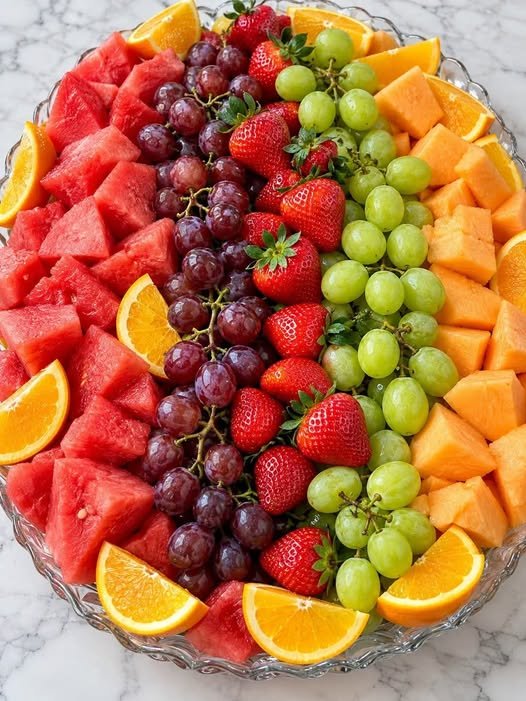
An Abundant Fresh Fruit Platter is one of the easiest ways to turn fresh, everyday fruit into a beautiful centerpiece. With a colorful mixture of juicy berries, tropical fruit, melon, grapes, citrus, and stone fruit, this platter looks impressive without requiring complicated cooking or elaborate preparation.
The secret to a beautiful fruit platter isn’t simply using as many fruits as possible. It’s about combining different colors, shapes, textures, and flavors so every section of the platter feels inviting.
Sweet strawberries pair beautifully with tart kiwi, juicy watermelon contrasts with crisp apples, and grapes and berries fill the smaller spaces between larger pieces of fruit. A little fresh mint adds an elegant finishing touch.
Whether you’re preparing breakfast for guests, setting up a brunch table, hosting a birthday celebration, or simply want a healthy snack for the family, this fruit platter is easy to customize according to the season and what’s available.
Ingredients
For a large platter serving approximately 8–10 people:
Fresh Fruit
- 2 cups strawberries, hulled
- 1 1/2 cups blueberries
- 1 1/2 cups seedless grapes
- 2 kiwis, peeled and sliced
- 2 oranges, peeled and separated into segments
- 2 cups watermelon, cut into cubes or triangles
- 1 1/2 cups pineapple chunks
- 2 mangoes, peeled and sliced
- 2 apples, thinly sliced
- 1 cup raspberries
- 1 cup blackberries
- 2 peaches or nectarines, sliced
- 1/2 cup pomegranate seeds
Optional Garnishes
- Fresh mint leaves
- Fresh basil leaves
- Shredded coconut
- Lime or lemon wedges
- Edible flowers for decoration
Optional Fruit Dip
- 1 cup plain or vanilla Greek yogurt
- 2 tablespoons honey
- 1/2 teaspoon vanilla extract
- 1 teaspoon fresh lemon or lime juice
How to Prepare an Abundant Fresh Fruit Platter
Step 1: Wash the Fruit
Wash all fruit thoroughly under cool running water before cutting.
Drain and dry the fruit carefully.
This is especially important for berries because excess water can make them soft and cause them to spoil more quickly.
Pat strawberries, blueberries, raspberries, blackberries, grapes, and other delicate fruit dry with clean paper towels or a kitchen towel.
Step 2: Prepare the Large Fruits
Cut the watermelon into attractive cubes, triangles, or small balls.
Peel and cut the pineapple into bite-sized pieces.
Peel the mangoes and slice them into thin strips or cubes.
Peel the kiwis and cut them into rounds or half-moons.
Separate the orange into individual segments.
For a more elegant presentation, remove excess white pith from the oranges where practical.
Step 3: Prepare the Apples
Apples can brown after being cut.
To keep the slices looking fresh, toss them very lightly with fresh lemon juice.
Don’t soak them in lemon juice because too much acidity can overpower their natural sweetness.
Step 4: Prepare the Berries and Grapes
Leave smaller fruits such as blueberries, raspberries, and blackberries whole.
Keep the grapes whole or separate them into small clusters.
Whole fruit gives the platter a fuller, more abundant appearance and reduces preparation time.
Step 5: Choose Your Platter
Use a large serving platter, wooden board, shallow tray, or large round plate.
The larger the surface, the easier it will be to create an abundant presentation.
White or neutral-colored serving dishes work particularly well because the natural colors of the fruit stand out.
Step 6: Start With the Largest Fruits
Place the watermelon, pineapple, mango, and larger orange sections around the platter.
Don’t arrange everything in perfectly straight lines.
A slightly relaxed arrangement looks more generous and natural.
Step 7: Add Medium-Sized Fruits
Fill the spaces between the larger pieces with:
- Kiwi
- Apples
- Peaches
- Nectarines
- Grapes
Try to distribute different colors throughout the platter rather than placing all of one fruit together.
For example, place bright green kiwi near red strawberries and yellow pineapple.
Step 8: Fill the Small Gaps
Now add the berries and pomegranate seeds.
These smaller ingredients are excellent for filling empty spaces and making the platter look full.
Scatter blueberries, raspberries, blackberries, and pomegranate seeds throughout the arrangement.
Avoid making the platter too uniform. The goal is a natural abundance of fruit.
Step 9: Add the Finishing Touches
Place fresh mint leaves between clusters of fruit.
You can also add small lime wedges or a few coconut flakes.
If you’re serving the platter at a special occasion, edible flowers can provide an elegant finishing touch.
How to Make a Simple Fruit Dip
A creamy fruit dip makes an excellent accompaniment.
Combine:
- 1 cup Greek yogurt
- 2 tablespoons honey
- 1/2 teaspoon vanilla extract
- 1 teaspoon lemon or lime juice
Stir until smooth.
Transfer the dip to a small bowl and place it in the center or alongside the fruit platter.
For a sweeter dip, add another teaspoon of honey.
How to Arrange the Platter Beautifully
A few simple presentation tricks can make a major difference.
Use Color Contrast
Place brightly colored fruits next to contrasting colors.
For example:
- Red strawberries beside green kiwi
- Yellow pineapple beside blueberries
- Orange segments beside blackberries
- Green grapes beside raspberries
Create Small Clusters
Instead of scattering every fruit randomly, create small clusters.
A cluster of strawberries, followed by blueberries, followed by kiwi, can create a visually pleasing rhythm.
Vary the Shapes
Use different cuts.
Try:
- Watermelon triangles
- Mango strips
- Kiwi rounds
- Apple fans
- Pineapple chunks
- Orange segments
- Melon balls
Different shapes make the platter look more abundant.
Leave Some Fruit Whole
Whole strawberries, grapes, berries, and small citrus fruits add height and dimension.
They also make the platter feel less like a bowl of cut fruit.
Seasonal Fruit Ideas
The best fruit platter changes with the season.
Spring
Try:
- Strawberries
- Cherries
- Kiwi
- Pineapple
- Blueberries
- Apricots
Summer
Summer is perfect for:
- Watermelon
- Peaches
- Nectarines
- Mangoes
- Pineapple
- Melons
- Berries
Autumn
Consider:
- Apples
- Pears
- Grapes
- Pomegranate
- Figs
- Persimmons
Winter
Try:
- Oranges
- Grapefruit
- Kiwi
- Pomegranate
- Apples
- Pears
- Pineapple
Using seasonal fruit can make the platter more flavorful while also keeping the ingredient list flexible.
Fruits You Can Add or Substitute
You don’t need to use every fruit listed in this recipe.
Other excellent choices include:
- Cantaloupe
- Honeydew melon
- Pears
- Cherries
- Figs
- Papaya
- Dragon fruit
- Passion fruit
- Plums
- Apricots
- Guava
- Mandarins
Choose fruits based on availability, season, budget, and personal preference.
How to Prevent the Platter From Becoming Watery
Some fruits release much more juice than others.
Watermelon, oranges, pineapple, and very ripe melons can make nearby fruit wet.
For the best texture:
- Cut juicy fruits shortly before serving.
- Drain excess juice before arranging.
- Keep very juicy fruits toward the edges when possible.
- Don’t prepare the platter too far in advance.
- Keep berries dry after washing.
These small steps can make the platter look fresher for longer.
Can You Prepare a Fruit Platter Ahead of Time?
Yes, but timing matters.
Most fruit can be prepared several hours ahead and refrigerated in covered containers.
For the freshest presentation, assemble the platter approximately 1–3 hours before serving.
Keep delicate berries and highly juicy fruits separate until closer to serving when possible.
Add mint and other garnishes shortly before placing the platter on the table.
How to Store Leftovers
Transfer leftover fruit to airtight containers and refrigerate promptly.
Because cut fruit deteriorates faster than whole fruit, it’s best enjoyed as soon as possible.
Keep fruit that has been cut and served chilled rather than leaving it at room temperature for extended periods.
Make It a Breakfast Platter
For breakfast or brunch, serve the fruit alongside:
- Scrambled eggs
- Omelets
- Pancakes
- Waffles
- French toast
- Greek yogurt
- Granola
- Toast
- Muffins
A bowl of yogurt placed beside the platter can turn the fruit into a simple breakfast station.
Make It a Party Platter
For parties, consider making several smaller platters instead of one enormous platter.
This allows guests to access the fruit from different areas of the table.
You can also create a small dessert-style station with:
- Greek yogurt dip
- Honey
- Shredded coconut
- Granola
- Chopped nuts
- Dark chocolate pieces
Guests can build their own combinations.
Kid-Friendly Fruit Platter
For children, cut larger fruits into easy-to-handle pieces.
You can also use cookie cutters to create fun shapes from:
- Watermelon
- Pineapple
- Melon
- Mango
Keep whole grapes and other round foods appropriately prepared for young children because they can present a choking hazard.
Frequently Asked Questions
What is the best fruit for a fruit platter?
There isn’t one perfect fruit. The best platter combines several colors, textures, and flavors. Strawberries, grapes, berries, pineapple, watermelon, kiwi, mango, and oranges are particularly attractive together.
How do I keep apples from turning brown?
Lightly toss apple slices with lemon juice. Use only enough to coat them because excessive lemon can make them sour.
Can I use frozen fruit?
Fresh fruit is generally better for a platter because frozen fruit becomes softer as it thaws. Frozen berries are better suited to smoothies, sauces, or desserts.
Can I add cheese?
Absolutely. Cheese can turn a fruit platter into a more substantial snack board. Mild cheeses such as cheddar, mozzarella, brie, or gouda can pair nicely with grapes, apples, pears, and berries.
Can I add nuts?
Yes. Almonds, walnuts, pecans, and pistachios can add crunch. If serving guests, keep nuts separate or clearly identified in case anyone has a nut allergy.
Can I make this fruit platter without a dip?
Of course. The fruit is delicious on its own. The yogurt dip is simply an optional accompaniment.
Recipe at a Glance
Recipe: Abundant Fresh Fruit Platter
Prep Time: 25–35 minutes
Cook Time: None
Total Time: About 30 minutes
Servings: 8–10
Category: Breakfast, Brunch, Snack, Party
Cuisine: International
Final Thoughts
An Abundant Fresh Fruit Platter is proof that beautiful food doesn’t have to be complicated. With a generous selection of fresh fruit and a little attention to color and arrangement, you can create a centerpiece that looks special while requiring almost no cooking.
The most important thing is to use fruit that is fresh, ripe, colorful, and varied. Mix soft and crisp textures, combine sweet and slightly tart flavors, and use small berries and pomegranate seeds to fill the spaces.
Whether you’re serving it at a weekend brunch, holiday gathering, family breakfast, birthday party, or simply preparing something special for your table, this platter is an easy way to make fresh fruit the star of the meal.
SEO Title
Abundant Fresh Fruit Platter – Colorful, Easy & Beautiful Fruit Tray
Meta Description
Create an abundant fresh fruit platter with strawberries, berries, mango, pineapple, watermelon, kiwi, grapes, and more. Perfect for breakfast, brunch, parties, and gatherings.