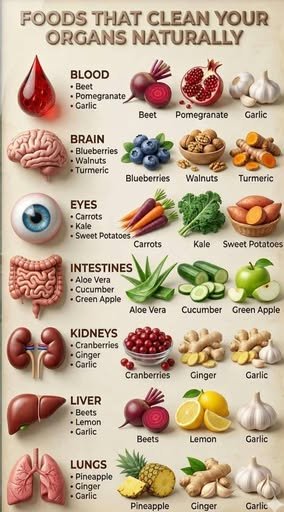
The idea of “detoxing” the body with a special food or drink is everywhere. From lemon water and green juices to herbal teas and restrictive cleanses, many products promise to flush toxins from your organs in just a few days.
But your body already has sophisticated systems for processing and removing waste. The liver, kidneys, digestive tract, lungs, and skin all play roles in maintaining the body’s internal balance.
Rather than looking for one food that “cleans” an organ, a better approach is to regularly eat a varied diet rich in vegetables, fruits, whole grains, legumes, nuts, seeds, and other minimally processed foods.
Here are several foods that can support the normal functions of your body’s organs and overall health.
1. Leafy Green Vegetables
Spinach, kale, Swiss chard, lettuce, and other leafy greens are packed with nutrients and plant compounds.
They provide fiber, folate, vitamin K, carotenoids, and other beneficial compounds. Their fiber content can support healthy digestion, while their overall nutrient density makes them a valuable part of a balanced diet.
Try adding leafy greens to:
- Salads
- Soups
- Omelets
- Sandwiches
- Smoothies
- Stir-fries
2. Berries
Blueberries, strawberries, raspberries, and blackberries provide fiber and a variety of antioxidant plant compounds.
Eating whole berries is preferable to relying on highly sweetened berry drinks or juices. Their combination of fiber and naturally occurring plant compounds makes them an excellent addition to a heart-healthy eating pattern.
Add a handful to oatmeal, yogurt, or a fruit bowl.
3. Garlic
Garlic contains sulfur-containing compounds and has been extensively studied as part of a healthy diet.
Research suggests that garlic may have modest effects on certain cardiovascular risk factors in some people, although it should not be considered a treatment for blocked arteries, high blood pressure, or other medical conditions.
Fresh garlic can easily be incorporated into vegetables, soups, beans, sauces, and whole-grain dishes.
4. Cruciferous Vegetables
Broccoli, cauliflower, cabbage, Brussels sprouts, and similar vegetables contain fiber and naturally occurring plant compounds.
These vegetables are particularly valuable because they provide a wide range of nutrients while being relatively low in calories.
You don’t need to eat huge quantities to benefit. Including different vegetables throughout the week is more useful than focusing on one supposed “detox food.”
5. Citrus Fruits
Oranges, grapefruit, lemons, and other citrus fruits provide vitamin C, water, and plant compounds.
Whole citrus fruits also provide fiber that is largely lost when fruit is turned into juice.
A squeeze of lemon in water can make water more appealing and help some people drink more, but lemon water should not be described as a substance that “flushes toxins” from the kidneys or liver.
6. Apples
Apples are a convenient source of fiber, particularly when eaten with their skin.
Fiber supports normal bowel function and contributes to a healthy gut environment. Apples can also help replace highly processed snacks with a naturally sweet whole-food option.
Try pairing an apple with a small serving of nuts or plain yogurt for a more satisfying snack.
7. Oats and Other Whole Grains
Oats, barley, brown rice, and other whole grains provide dietary fiber and important nutrients.
Some types of soluble fiber can help support healthy cholesterol levels as part of an overall healthy eating pattern.
Starting the morning with oatmeal topped with berries and nuts is an easy way to combine several nutrient-rich foods in one meal.
8. Beans and Lentils
Beans, chickpeas, peas, and lentils are excellent sources of fiber and plant-based protein.
Their fiber can support regular bowel movements and a healthy gut environment. They can also be useful replacements for some highly processed or high-saturated-fat foods.
Add them to soups, salads, curries, stews, or grain bowls.
9. Nuts and Seeds
Walnuts, almonds, chia seeds, flaxseeds, and pumpkin seeds provide healthy fats, fiber, protein, vitamins, and minerals.
Because nuts and seeds are calorie-dense, portions matter. A small handful can be enough for a snack.
Ground flaxseed and chia seeds can also be added to oatmeal or yogurt.
10. Fatty Fish
Salmon, sardines, trout, and other oily fish provide omega-3 fatty acids as well as high-quality protein.
Including fish as part of a balanced diet can support cardiovascular health. Many dietary patterns recommend regularly choosing fish in place of foods high in saturated fat.
Bake, grill, or steam fish rather than deep-frying it.
11. Avocado
Avocados provide fiber and predominantly unsaturated fats, along with several vitamins and minerals.
Replacing some foods high in saturated fat with sources of unsaturated fat can be part of a heart-healthy eating pattern.
Try adding avocado to whole-grain toast, salads, or bean bowls.
12. Plain Yogurt and Fermented Foods
Plain yogurt containing live cultures can provide beneficial microorganisms along with protein and calcium.
Other fermented foods can also be incorporated into a varied diet, depending on individual tolerance and dietary preferences.
Remember that fermented foods are not magical “gut cleansers.” Gut health depends on the overall dietary pattern, including adequate fiber.
What Actually Helps Your Organs Do Their Jobs?
Food is only one part of the picture.
Your organs work continuously, and several everyday habits can support normal health:
Stay Hydrated
Adequate fluid intake helps the kidneys perform their normal functions. Individual fluid requirements vary depending on body size, climate, activity, medical conditions, and medications.
People with certain kidney or heart conditions may have specific fluid restrictions, so more water is not always better.
Limit Highly Processed Foods
Regularly eating large amounts of foods high in added sugars, sodium, refined carbohydrates, and unhealthy fats can make a healthy eating pattern more difficult.
Focus more often on whole or minimally processed foods.
Don’t Smoke
Smoking damages blood vessels and affects many organs throughout the body. Avoiding tobacco is one of the most important steps for protecting long-term health.
Exercise Regularly
Physical activity supports cardiovascular health, metabolic health, muscle function, and overall well-being.
You don’t need a complicated workout program to become more active. Walking, cycling, swimming, strength training, and other enjoyable activities can all contribute to a healthy lifestyle.
Get Enough Sleep
Sleep gives the body time to perform important maintenance and regulatory processes. Consistently poor sleep can affect metabolic, cardiovascular, and mental health.
Foods That Are Not Magic Detoxifiers
Be cautious of claims that a particular food or drink can:
- “Flush toxins” from the liver overnight
- Clean your kidneys in 24 hours
- Melt fat from your organs
- Remove all harmful substances from your blood
- Repair a damaged organ in a few days
- Replace prescribed medication
These claims generally oversimplify how the human body works.
Your liver chemically processes many substances, while your kidneys filter the blood and regulate fluid, electrolytes, and waste products. No single food can take over these functions.
A Simple Organ-Supporting Daily Meal Pattern
Instead of following a restrictive detox diet, try building balanced meals.
Breakfast:
Oatmeal with berries, chia seeds, and plain yogurt.
Lunch:
A large vegetable and bean salad with whole grains and avocado.
Snack:
An apple with a small handful of unsalted nuts.
Dinner:
Baked salmon with broccoli, leafy greens, and brown rice.
Drinks:
Water, unsweetened tea, or other low-sugar beverages.
This type of pattern provides fiber, protein, healthy fats, vitamins, minerals, and a variety of plant compounds without relying on a “detox” product.
When to Talk to a Doctor
If you’re concerned that your liver, kidneys, or another organ isn’t functioning normally, don’t rely on a detox diet.
Symptoms such as yellowing of the skin or eyes, blood in the urine, persistent swelling, unexplained weight loss, severe abdominal pain, persistent vomiting, significant changes in urination, or ongoing fatigue deserve medical evaluation.
People with diagnosed kidney, liver, heart, or other chronic diseases may also need individualized dietary advice. Some foods that are healthy for the general population may need to be limited in certain medical conditions.
Final Thoughts
There is no single food that can literally “clean” your organs. Fortunately, you don’t need one.
Your body already has specialized systems for processing waste and maintaining internal balance. The most helpful approach is to support those systems with a varied, nutrient-rich diet, adequate hydration, regular physical activity, sufficient sleep, and avoidance of tobacco.
Leafy greens, berries, garlic, cruciferous vegetables, citrus fruits, apples, whole grains, beans, nuts, seeds, fatty fish, and other minimally processed foods can all have a place in a healthy eating pattern.
Think less about a quick detox and more about feeding your body well every day.
SEO Details
SEO Title: Foods That Support Your Body’s Natural Detox and Organ Health
Meta Description: Discover foods that support healthy liver, kidney, digestive, and overall organ function, plus practical habits for a balanced and nutritious diet.
Suggested URL Slug: foods-that-support-natural-detox-organ-health