If you naturally fall asleep on your right side every night, you may have come across alarming claims suggesting that this sleeping position can damage your heart, interfere with digestion, or cause serious health problems.
The reality is much less dramatic.
For most healthy adults, sleeping on the right side is not considered dangerous. Sleep position can influence certain symptoms, however, particularly acid reflux, snoring, sleep apnea, pregnancy-related discomfort, and some types of pain.
Rather than worrying about one “perfect” sleeping position, it is more useful to understand how different positions affect your body and when a change may actually help.
Is Sleeping on Your Right Side Bad for Your Heart?
For most people, there is no good reason to believe that routinely sleeping on the right side damages a healthy heart.
The heart sits slightly toward the left side of the chest, which has led to many internet claims that sleeping on the right side somehow “protects” the heart while sleeping on the left side puts pressure on it.
Your body is much more adaptable than these claims suggest.
Some people with certain heart conditions may find one position more comfortable than another, but there is no universal rule that healthy people should avoid sleeping on their right side because of their heart.
If you have known heart disease and notice chest discomfort, breathlessness, palpitations, or other symptoms in a particular sleeping position, discuss that pattern with your healthcare professional.
Right-Side Sleeping and Acid Reflux
This is one area where sleeping position can genuinely make a difference.
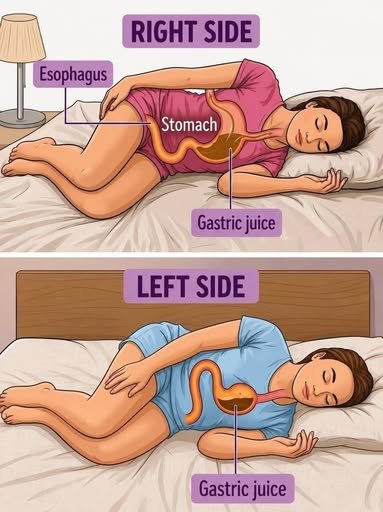
For people who experience gastroesophageal reflux disease (GERD) or nighttime heartburn, lying on the right side may make reflux symptoms worse.
The reason is related to the position of the stomach and the esophagus. Depending on body position, stomach contents can more easily move toward the esophagus.
Sleeping on the left side is often associated with less nighttime reflux for people who experience GERD.
If heartburn frequently wakes you at night, changing sleeping position may be worth trying.
What About Digestion?
You may see claims online that sleeping on the right side either dramatically improves or severely harms digestion.
Neither extreme is a good summary of the evidence.
Your digestive system continues functioning while you sleep regardless of which side you choose.
However, body position can affect symptoms such as reflux and abdominal discomfort.
If you regularly experience bloating, heartburn, nausea, abdominal pain, or other digestive symptoms at night, the underlying problem matters more than simply blaming your sleeping position.
Right-Side Sleeping During Pregnancy
Pregnancy is another situation in which sleep position receives a lot of attention.
Pregnant people often find side sleeping more comfortable as pregnancy progresses.
The left side is sometimes recommended because it can be comfortable and may help circulation, but sleeping on the right side is not automatically dangerous.
During pregnancy, comfort and individual medical circumstances matter. If a pregnant person has been given specific positioning advice by an obstetrician or midwife, that personalized advice should take priority over general internet recommendations.
What If You Snore?
Your sleeping position can affect snoring.
For some people, sleeping on the back allows the tongue and soft tissues in the throat to move backward and narrow the airway.
Side sleeping can help keep the airway more open in some people.
So if you snore heavily, simply changing from back sleeping to side sleeping may sometimes help.
However, persistent loud snoring—especially when accompanied by gasping, choking, witnessed pauses in breathing, morning headaches, or excessive daytime sleepiness—can be a sign of obstructive sleep apnea.
In that situation, changing sides isn’t a substitute for medical evaluation.
Can Right-Side Sleeping Cause Shoulder Pain?
It can if you put prolonged pressure on a painful shoulder.
If your right shoulder is already irritated, lying directly on it for several hours may make the discomfort worse.
You can experiment with:
- Sleeping on the opposite side
- Hugging a pillow for support
- Placing a pillow between your knees
- Keeping your neck in a neutral position
- Using a mattress and pillow that provide appropriate support
If shoulder pain persists during the day or interferes with sleep despite changing positions, it may need further evaluation.
Neck and Back Alignment Matters
Your sleeping position is only one part of sleep posture.
A pillow that is too high or too low can place the neck in an awkward position for hours.
When side sleeping, your pillow should generally help keep your head and neck aligned rather than allowing your head to tilt sharply toward the mattress.
A pillow between the knees can also help some side sleepers feel more comfortable.
Who May Benefit From Changing Sleeping Position?
Changing your sleeping position may be worth considering if you experience:
- Nighttime acid reflux
- Frequent snoring
- Suspected sleep apnea
- Shoulder pain on the side you sleep on
- Neck discomfort
- Back pain that changes with position
- Pregnancy-related discomfort
But the ideal position varies from person to person.
What About Sleeping on the Left Side?
The left side is sometimes particularly helpful for people with nighttime reflux.
It may also be recommended in certain medical circumstances, including some pregnancy situations.
However, that doesn’t mean everyone needs to sleep exclusively on the left side.
If you sleep comfortably on your right side, breathe normally, don’t experience significant reflux, and wake feeling rested, there may be no medical reason to force yourself into another position.
Is Back Sleeping Better?
Back sleeping has advantages and disadvantages.
It can help some people maintain a neutral spine position and may reduce pressure on certain joints.
However, it can worsen snoring and obstructive sleep apnea in susceptible individuals.
Therefore, there isn’t one sleeping position that is universally healthiest.
What Matters More Than Which Side You Sleep On?
One of the biggest mistakes people make is becoming so focused on sleeping position that they overlook the fundamentals of good sleep.
Pay attention to:
Sleep Duration
Most adults need around 7–9 hours of sleep per night, although individual needs vary.
Consistent Schedule
Going to bed and waking up at relatively consistent times can support a healthy sleep-wake rhythm.
Comfortable Environment
Keep your bedroom dark, quiet, and comfortably cool.
Limit Stimulants
Caffeine, particularly later in the day, can interfere with sleep in some people.
Manage Evening Meals
If you suffer from reflux, large meals close to bedtime may make symptoms worse.
Choose Supportive Bedding
Your mattress and pillow should allow you to sleep comfortably without persistent pressure or awkward neck positioning.
When Should You Talk to a Doctor?
Don’t assume that every nighttime symptom is simply caused by sleeping on the “wrong” side.
Talk to a healthcare professional if you regularly experience:
- Chest pain or pressure
- Significant shortness of breath
- Repeated nighttime choking or gasping
- Long pauses in breathing during sleep
- Persistent severe heartburn
- Difficulty swallowing
- Unexplained weight loss
- Severe or persistent abdominal pain
- Pain that repeatedly wakes you from sleep
Sudden chest pain, severe breathing difficulty, fainting, or other potentially serious symptoms require urgent medical attention.
The Bottom Line
Sleeping on your right side is not inherently dangerous for most healthy adults.
The position can influence certain symptoms, especially nighttime reflux, snoring, and pressure-related aches. For some people, sleeping on the left side may be more comfortable, while others naturally sleep better on the right.
The goal isn’t to find a magical sleeping position.
The goal is to find a position that allows you to breathe comfortably, remain pain-free, and get sufficient, restorative sleep.
If you regularly experience symptoms at night, focus on identifying the underlying cause rather than assuming that your sleeping side is the problem.
SEO Title
Doctors Warn: Is Sleeping on Your Right Side Bad for You?
Meta Description
Is sleeping on your right side dangerous? Learn how right-side sleeping may affect acid reflux, snoring, pregnancy, shoulder pain, and overall sleep comfort.