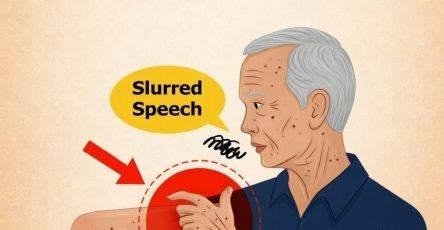
A person suddenly has trouble speaking. One side of their face looks different. Their arm feels weak. A few minutes later, everything seems normal again.
It can be tempting to dismiss an episode like this because the symptoms disappeared.
That can be a dangerous mistake.
A transient ischemic attack (TIA) is sometimes called a “mini-stroke,” but health professionals often describe it as a warning stroke. It happens when blood flow to part of the brain is temporarily blocked, producing stroke-like symptoms. Unlike many strokes, the symptoms may disappear after a short period.
The fact that the symptoms disappear does not mean the event is harmless. There is no reliable way to know at home whether symptoms are caused by a TIA or an actual stroke, so sudden stroke-like symptoms require emergency medical evaluation.
Here are five important warning signs to know.
1. Sudden Weakness or Numbness on One Side
One of the classic warning signs is sudden weakness, numbness, or loss of movement involving the face, arm, or leg—particularly on one side of the body.
For example, an older adult may suddenly:
- Drop something from one hand
- Have difficulty lifting one arm
- Feel numbness in one side of the face
- Drag one leg while walking
- Have difficulty standing normally
The symptom may improve or disappear, but that doesn’t make it safe to ignore.
Sudden one-sided weakness or numbness is a major stroke warning sign and should be treated as an emergency.
2. Sudden Trouble Speaking or Understanding
Another warning sign is a sudden change in speech or language.
Someone may suddenly:
- Slur their words
- Have difficulty finding the right words
- Speak strangely or unclearly
- Be unable to form understandable sentences
- Have trouble understanding what others are saying
Sometimes the person knows what they want to say but cannot express it properly.
Other times, they may seem confused because they cannot understand what people are telling them.
Even if speech returns to normal after several minutes, the episode needs urgent medical attention.
3. Sudden Vision Changes
A sudden change in vision can also be a warning sign.
This may involve:
- Blurred vision
- Double vision
- Partial loss of vision
- Loss of vision in one eye
- Sudden difficulty seeing normally
Vision symptoms can sometimes be overlooked, especially when they disappear quickly.
However, sudden vision changes can occur with TIA or stroke and should not simply be attributed to aging or tired eyes.
4. Sudden Dizziness, Loss of Balance, or Trouble Walking
A TIA can affect areas of the brain responsible for balance and coordination.
A person may suddenly:
- Feel extremely dizzy
- Become unsteady
- Have difficulty walking
- Lose coordination
- Stagger unexpectedly
- Feel as though they are going to fall
Dizziness has many possible causes, so it doesn’t automatically mean a TIA. But sudden dizziness accompanied by difficulty walking, weakness, vision problems, or other neurological symptoms requires urgent assessment.
5. Sudden Severe Headache With No Known Cause
A sudden, severe headache that appears without an obvious explanation can also occur with stroke and other serious neurological conditions.
This is particularly concerning when it occurs together with confusion, weakness, difficulty speaking, vision changes, or loss of coordination.
A new severe headache should not automatically be assumed to be a TIA, because other emergencies—including bleeding in the brain—can produce severe headache.
That’s another reason professional assessment is essential.
Remember B.E. F.A.S.T.
A useful way to remember several major stroke and TIA warning signs is B.E. F.A.S.T.:
B — Balance: Sudden loss of balance or coordination.
E — Eyes: Sudden vision changes.
F — Face: One side of the face droops or becomes numb.
A — Arm: One arm becomes weak or numb.
S — Speech: Speech becomes slurred, strange, or difficult to understand.
T — Time: Get emergency medical help immediately.
The American Stroke Association recommends using B.E. F.A.S.T. to recognize stroke symptoms and emphasizes that symptoms should not be ignored even when they disappear.
What Should You Do If the Symptoms Go Away?
This is one of the most important points.
Don’t simply wait and see if it happens again.
TIA symptoms can disappear because the temporary blockage resolves, but the episode may signal an increased risk of a subsequent stroke.
The American Stroke Association recommends immediate emergency assessment when stroke-like symptoms occur, even if they disappear. A comprehensive evaluation is ideally performed promptly after symptoms begin.
When symptoms begin, note the exact time they started. This information can be extremely useful to medical professionals.
Don’t drive yourself if you are experiencing possible stroke symptoms. Contact your local emergency medical service.
Why Are TIAs Particularly Important in Older Adults?
The risk of stroke increases with age, although a TIA can happen to anyone.
Other important risk factors include:
- High blood pressure
- Diabetes
- Heart disease
- Atrial fibrillation
- Smoking
- Previous stroke or TIA
- Certain blood-vessel conditions
Managing these risk factors can play an important role in reducing future stroke risk.
A TIA Can Be a Warning, Not a “Minor Stroke”
Calling a TIA a “mini-stroke” can sometimes make it sound less serious than it is.
A TIA is better understood as a warning event.
The symptoms may be temporary, but they can indicate an underlying problem such as a blood clot, narrowed artery, or heart rhythm disorder that needs to be investigated. Evaluation may include brain and blood-vessel imaging, blood tests, and testing for heart-related causes depending on the individual situation.
Can TIAs Be Prevented?
Not every TIA can be prevented, but many stroke risk factors can be addressed.
Important measures include:
- Keeping blood pressure under control
- Managing diabetes
- Not smoking
- Staying physically active
- Maintaining a healthy weight
- Following a heart-healthy eating pattern
- Managing cholesterol when appropriate
- Taking prescribed medications correctly
- Addressing atrial fibrillation and other heart conditions
A healthcare professional can help determine which risk factors apply to an individual person.
Don’t Wait for Symptoms to Become Severe
A common mistake is thinking that someone should wait until weakness becomes extreme or speech becomes completely impossible before seeking help.
That’s not the right approach.
Stroke and TIA symptoms can begin suddenly and may initially appear mild. The suddenness of the symptom is important.
If an older adult suddenly develops facial drooping, arm weakness, speech difficulty, vision changes, severe unexplained headache, or sudden balance problems, treat it as a medical emergency.
Final Thoughts
A TIA may last only minutes, but its message can be serious.
Sudden one-sided weakness or numbness, speech problems, vision changes, balance difficulties, and unexplained severe headache are among the warning signs that should never be casually dismissed.
Most importantly, if these symptoms occur and then disappear, don’t assume the danger has passed. A TIA cannot reliably be distinguished from a stroke at home, and urgent medical assessment is necessary.
Knowing B.E. F.A.S.T. and acting quickly could help someone receive the care they need when every minute matters.
SEO Title
5 Warning Signs of a TIA in Older Adults You Should Never Ignore
Meta Description
Learn five important warning signs of a transient ischemic attack, including sudden weakness, speech problems, vision changes, dizziness and severe headache.