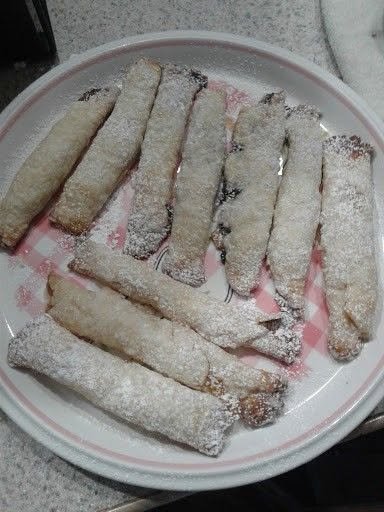
If you love old-fashioned European pastries, Hungarian Kiffles (Kifli) are a treat worth making. These delicate little pastries have been passed down through generations in many Hungarian and Central European families.
Kiffles are made from a tender, buttery dough that’s rolled thin, filled with a sweet walnut mixture, folded or rolled into small crescents, and baked until just lightly golden. A generous dusting of powdered sugar gives them their signature snowy finish.
They’re especially popular around Christmas and other holidays, but they’re delicious enough to enjoy with a cup of coffee or tea any time of year.
The dough is rich without being overly sweet, allowing the nutty filling to shine. Once baked, the pastries have a delicate, melt-in-your-mouth texture that’s hard to resist.
Why You’ll Love Hungarian Kiffles
- Tender and delicate pastry
- Rich buttery flavor
- Sweet walnut filling
- Beautiful crescent shape
- Easy to make ahead
- Wonderful holiday cookie
- Freezer-friendly
- Perfect with coffee or tea
- A classic family-style Hungarian treat
Ingredients
For the Dough
- 4 cups all-purpose flour
- 1 cup unsalted butter, softened
- 8 ounces cream cheese, softened
- 2 tablespoons granulated sugar
- 1/4 teaspoon salt
- 1 teaspoon vanilla extract
For the Walnut Filling
- 2 cups finely ground walnuts
- 3/4 cup granulated sugar
- 1/4 cup milk
- 1 teaspoon vanilla extract
- 1/2 teaspoon ground cinnamon, optional
- 1 tablespoon apricot jam, optional
For Finishing
- 1–1 1/2 cups powdered sugar
How to Make Hungarian Kiffles
Step 1: Prepare the Dough
Place the softened butter and cream cheese in a large mixing bowl.
Beat together until smooth and creamy.
Add the sugar, salt, and vanilla extract.
Mix until well combined.
Gradually add the flour, mixing just until a soft dough forms.
Avoid overmixing.
The finished dough should be soft, smooth, and easy to handle.
Step 2: Chill the Dough
Divide the dough into four equal portions.
Shape each portion into a flat disk.
Wrap each disk tightly in plastic wrap.
Refrigerate for at least 2 hours, or preferably overnight.
Chilling is important because the butter and cream cheese need to firm up before the dough is rolled.
Step 3: Prepare the Walnut Filling
While the dough chills, prepare the filling.
Place the ground walnuts and sugar in a small saucepan.
Add the milk and stir over low heat.
Cook for several minutes until the mixture becomes thick and spreadable.
Remove from the heat.
Stir in the vanilla extract and cinnamon.
If desired, add a tablespoon of apricot jam for a subtle fruity flavor.
Allow the filling to cool completely before using.
The filling should be thick enough to stay in place when spread over the dough.
Step 4: Roll Out the Dough
Preheat your oven to 350°F (175°C).
Line baking sheets with parchment paper.
Take one portion of dough from the refrigerator and place it on a generously powdered-sugar-covered work surface.
Traditional kiffle dough is often rolled in powdered sugar rather than flour. This adds sweetness while helping prevent sticking.
Roll the dough into a thin circle, approximately 1/8 inch thick.
Try to keep the thickness as even as possible.
Step 5: Cut the Dough
Use a round cookie cutter, approximately 2 1/2–3 inches in diameter, to cut the dough into circles.
Gather the scraps, chill them briefly if necessary, and reroll them.
Don’t allow the dough to become too warm.
Step 6: Add the Filling
Place approximately 1 teaspoon of walnut filling near one edge of each dough circle.
Don’t overfill.
Too much filling can cause the pastries to open during baking.
Fold the dough over the filling and gently press the edges to seal.
You can leave them as small half-moon pastries or gently curve them into a crescent shape.
Step 7: Bake
Arrange the filled kiffles on the prepared baking sheets, leaving a little space between them.
Bake for approximately 12–16 minutes, or until the edges are lightly golden.
The pastries should remain relatively pale rather than becoming deeply browned.
Watch them carefully during the final few minutes.
Step 8: Coat With Powdered Sugar
Remove the kiffles from the oven.
Allow them to cool on the baking sheet for a few minutes.
While they are still slightly warm, carefully roll or dust them generously with powdered sugar.
Transfer them to a wire rack to cool completely.
Once completely cooled, dust them again with powdered sugar for that classic snowy appearance.
Tips for Perfect Hungarian Kiffles
Keep the Dough Cold
Cold dough is much easier to roll and shape.
If the dough becomes sticky or difficult to handle, return it to the refrigerator for 15–20 minutes.
Don’t Overfill the Pastries
A small amount of filling is enough.
Overfilling can cause the filling to leak out while baking.
Roll the Dough Thin
The pastry should be delicate rather than thick and heavy.
Aim for approximately 1/8 inch thickness.
Cool the Filling Completely
Warm filling can soften the dough and make assembly difficult.
Always allow it to cool before filling the pastries.
Don’t Overbake
Kiffles should be lightly golden around the edges.
Overbaking can make them dry and hard.
Be Generous With Powdered Sugar
The powdered sugar is part of the classic presentation and adds sweetness to the relatively lightly sweet pastry.
What Are Hungarian Kiffles?
Kiffles, often related to the Hungarian kifli/kifli-style pastry tradition, are small filled pastries commonly associated with Hungarian and broader Central European baking.
Different families and regions have their own versions.
Some are made with yeast dough, while others use butter and cream cheese-based dough. Fillings can include walnuts, poppy seeds, fruit preserves, or other sweet mixtures.
This recipe follows the popular tender, cream-cheese-style kiffle tradition found in many Hungarian-American family kitchens.
Popular Filling Variations
Walnut and Apricot
Combine the walnut filling with a thin layer of apricot jam.
The sweet-tart fruit complements the rich nuts beautifully.
Poppy Seed
Replace the walnut mixture with a traditional sweetened poppy-seed filling.
Prune Filling
Use thick prune or plum preserves for a rich fruit-filled version.
Raspberry
A small amount of thick raspberry preserves creates a bright, fruity pastry.
Hazelnut
Finely ground hazelnuts can be used instead of some or all of the walnuts.
How to Get a Flaky Texture
The key is temperature control.
Butter and cream cheese should be softened enough to mix, but the finished dough needs to be thoroughly chilled before rolling.
When cold dough enters the hot oven, the butter melts gradually, helping create the tender, delicate texture associated with these pastries.
Avoid kneading the dough excessively.
Make-Ahead Instructions
Kiffle dough is excellent for making ahead.
You can prepare the dough up to 2 days in advance and keep it refrigerated.
The walnut filling can also be prepared ahead of time and stored in the refrigerator.
When you’re ready to bake, allow the filling to soften slightly if necessary and roll the chilled dough.
Storage
Store completely cooled kiffles in an airtight container.
Place parchment or wax paper between layers if desired.
They can generally be kept at room temperature for several days.
For the best texture, keep them in a cool, dry place away from moisture.
Can You Freeze Hungarian Kiffles?
Yes.
Kiffles are excellent freezer cookies.
To Freeze Unbaked Kiffles
Assemble the pastries and arrange them in a single layer on a baking sheet.
Freeze until firm.
Transfer them to a freezer-safe container or bag.
Bake from frozen, adding a few extra minutes to the baking time as needed.
To Freeze Baked Kiffles
Allow them to cool completely.
Arrange them in an airtight freezer-safe container with parchment between layers.
Freeze for up to approximately 2–3 months for best quality.
Thaw at room temperature and add a fresh dusting of powdered sugar before serving.
How to Serve Kiffles
Hungarian kiffles are wonderful with:
- Hot coffee
- Espresso
- Black tea
- Herbal tea
- Hot chocolate
- A glass of cold milk
Arrange them on a dessert platter alongside other holiday cookies for a beautiful traditional spread.
Frequently Asked Questions
Are kiffles Hungarian or Polish?
Kiffles are associated with several Central and Eastern European pastry traditions, and similar crescent-shaped pastries appear across the region. The exact recipe and name can vary significantly between families and communities.
What does kifli mean?
“Kifli” is a Central European term used for a crescent-shaped pastry or bread, with versions found in Hungarian and neighboring culinary traditions.
Why did my kiffles open during baking?
The most common causes are overfilling, insufficient sealing, or dough that became too warm. Use a small amount of filling and press the edges firmly.
Can I use jam instead of walnut filling?
Yes. Thick preserves work well, although very thin jam may leak during baking.
Why is my dough sticky?
The dough may have become too warm. Chill it before continuing to roll and shape.
Can I use walnuts without cooking the filling?
You can, but cooking the walnuts with sugar and milk creates a cohesive filling that’s easier to spread and helps prevent the mixture from becoming dry.
Final Thoughts
Hungarian Kiffles (Kifli) are a beautiful example of traditional European home baking. Their delicate dough, sweet walnut filling, and generous powdered-sugar coating create a simple but memorable pastry.
They do require a little patience, especially when rolling and shaping the dough, but the process becomes much easier after making the first few batches.
Prepare them for Christmas, a family gathering, afternoon coffee, or simply when you’re craving an old-fashioned homemade pastry. Once you taste that tender pastry with the rich walnut center, you’ll understand why kiffles have remained a beloved part of many family baking traditions.
Recipe at a Glance
Prep Time: 45 minutes
Chill Time: 2 hours
Bake Time: 12–16 minutes per batch
Total Time: About 3 hours
Servings: Approximately 40–50 kiffles
Category: Cookies & Pastries
Cuisine: Hungarian / Central European
Method: Baking
SEO Details
SEO Title: Hungarian Kiffles (Kifli) Recipe – Traditional Walnut Pastries
Meta Description: Make tender Hungarian Kiffles with buttery cream cheese dough, sweet walnut filling, and a generous coating of powdered sugar. A classic Central European holiday pastry.
Focus Keyphrase: Hungarian Kiffles Recipe