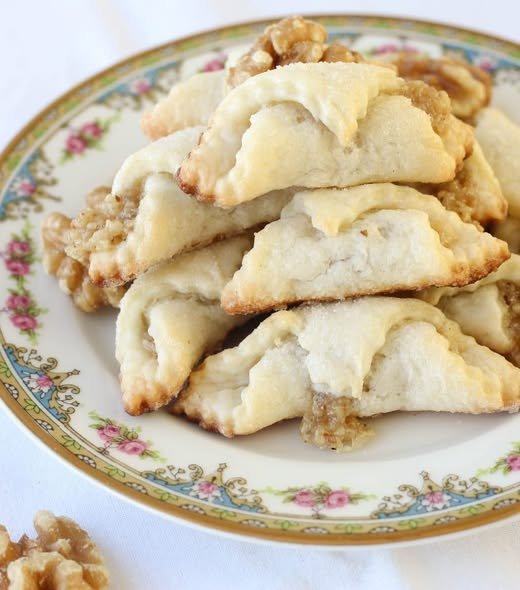
There is something especially comforting about a traditional Hungarian walnut roll. Known as diós beigli, this classic Hungarian pastry features a tender, buttery dough wrapped around a generous layer of sweet, fragrant walnut filling. The finished roll is beautifully golden on the outside, slightly crisp on the surface, and rich and nutty inside.
Hungarian walnut rolls are traditionally associated with Christmas and other special occasions, but they are delicious enough to enjoy with tea or coffee throughout the year. The dough is rolled thin, filled generously, and carefully shaped into a log before baking.
One of the most appealing things about this pastry is the contrast between the delicate dough and the rich walnut filling. A little lemon zest and cinnamon brighten the filling, while vanilla adds warmth and depth.
Ingredients
For the Dough
- 3 cups all-purpose flour
- ¾ cup unsalted butter, cold and cut into small pieces
- ¼ cup granulated sugar
- 1 teaspoon active dry yeast
- ¼ cup warm milk
- 2 large egg yolks
- ½ teaspoon salt
- 1 teaspoon vanilla extract
- 2–3 tablespoons cold water, if needed
For the Walnut Filling
- 2 cups finely ground walnuts
- ¾ cup granulated sugar
- ½ cup milk
- 1 tablespoon honey
- 1 teaspoon vanilla extract
- 1 teaspoon finely grated lemon zest
- ½ teaspoon ground cinnamon
- ¼ cup raisins, optional
For the Egg Wash
- 1 egg yolk
- 1 tablespoon milk
How to Make Authentic Hungarian Walnut Rolls
1. Prepare the Yeast
Warm the milk until it is comfortably warm, not hot.
Add the yeast and a small pinch of the sugar.
Stir gently and allow it to stand for about 5–10 minutes, until the yeast becomes lightly foamy.
2. Make the Dough
Place the flour, remaining sugar, and salt in a large bowl.
Add the cold butter and work it into the flour using your fingertips or a pastry cutter until the mixture resembles coarse crumbs.
Add the egg yolks, vanilla, and activated yeast mixture.
Mix until a soft dough forms.
If the dough seems too dry, add cold water one tablespoon at a time.
The dough should be soft and workable but not sticky.
3. Chill the Dough
Shape the dough into a ball and divide it into two equal portions.
Flatten each portion slightly and wrap them separately.
Refrigerate for approximately 30–60 minutes.
Chilling the dough makes it easier to roll and helps maintain its buttery texture.
Prepare the Walnut Filling
4. Heat the Milk and Sugar
Place the milk, sugar, and honey in a saucepan.
Warm over medium-low heat, stirring until the sugar dissolves.
Do not bring the mixture to a vigorous boil.
5. Add the Walnuts
Remove the saucepan from the heat.
Stir in the ground walnuts, vanilla, lemon zest, cinnamon, and raisins if using.
The mixture should become thick and spreadable.
Allow the filling to cool completely before assembling the rolls.
If the filling is hot when spread onto the dough, it can soften the butter and make the pastry difficult to handle.
Assemble the Walnut Rolls
6. Roll Out the Dough
Remove one portion of dough from the refrigerator.
On a lightly floured surface, roll it into a rectangle approximately 10 × 14 inches.
Try to keep the dough evenly thin.
Repeat with the second portion.
7. Add the Walnut Filling
Spread half of the cooled walnut filling evenly over the first rectangle.
Leave a small border around the edges.
Do not spread the filling all the way to the very edge because it can escape during rolling.
8. Roll the Pastry
Fold the short ends slightly inward.
Starting from one long side, carefully roll the dough into a tight log.
Pinch the seam closed and place the roll seam-side down on a parchment-lined baking sheet.
Repeat with the remaining dough and filling.
The Traditional Beigli Finish
One characteristic feature of Hungarian beigli is its beautiful marbled, slightly cracked surface.
9. Apply the First Egg Wash
Whisk together the egg yolk and milk.
Brush the tops and sides of both rolls with the egg wash.
Allow them to sit uncovered until the coating is dry.
10. Add a Second Wash
For a traditional-looking finish, apply another light egg wash, this time using the remaining mixture.
Allow the surface to dry again.
Before baking, prick the rolls several times with a skewer or thin wooden stick.
Make small holes through the top and sides.
These openings allow steam to escape and can help reduce excessive cracking during baking.
Bake the Walnut Rolls
11. Bake
Preheat the oven to 180°C (350°F).
Bake the rolls for approximately 30–40 minutes, or until the surface is deeply golden brown.
Keep an eye on them during the final minutes because baking times can vary between ovens.
12. Cool Completely
Remove the rolls from the oven and allow them to cool completely on the baking sheet or a wire rack.
Do not slice them while they are hot.
The filling needs time to set, and cutting too early can cause it to spill out.
Once completely cool, slice the rolls into neat pieces with a sharp serrated knife.
Why Does Beigli Crack?
A cracked surface is actually characteristic of traditional beigli, but excessive cracking can indicate that too much steam became trapped inside.
Several factors can contribute:
- Filling that is too wet
- Dough that is rolled too tightly
- Uneven dough thickness
- Insufficient vent holes
- Excess moisture in the filling
- Differences in oven temperature
The goal is not necessarily a perfectly smooth surface. A few attractive cracks are part of the traditional character of Hungarian walnut rolls.
Tips for Perfect Hungarian Walnut Rolls
Grind the walnuts finely: Fine walnuts create a smoother, more cohesive filling.
Cool the filling: Never spread hot filling over chilled dough.
Do not overfill: Too much filling can cause the roll to split while baking.
Roll evenly: An even layer of dough helps the pastry bake consistently.
Do not skip the vent holes: They allow steam to escape during baking.
Chill the dough: Cold dough is easier to work with and helps maintain the buttery texture.
Cool before slicing: Patience produces cleaner slices and a better texture.
Walnut Filling Variations
Raisin Walnut Filling
Raisins are a traditional addition and provide little bursts of sweetness throughout the filling.
Apricot-Walnut Filling
Spread a thin layer of apricot preserves over the dough before adding the walnut mixture.
Orange-Walnut Filling
Replace some of the lemon zest with finely grated orange zest for a sweeter citrus aroma.
Poppy Seed Beigli
For another classic Hungarian variation, replace the walnut filling with a traditional sweet poppy seed filling.
How to Store Hungarian Walnut Rolls
Once completely cooled, wrap the rolls tightly or place them in an airtight container.
They can be stored at room temperature for several days.
For longer storage, refrigerate them in a sealed container.
The flavor often becomes even more developed after resting overnight.
Can You Freeze Beigli?
Yes.
Allow the baked rolls to cool completely before wrapping them tightly in plastic wrap and placing them in a freezer-safe bag or container.
Freeze for up to 2–3 months.
Thaw overnight in the refrigerator or allow the roll to come to room temperature before serving.
Frequently Asked Questions
What is Hungarian walnut roll called?
The traditional Hungarian walnut roll is called diós beigli. It is a well-known Hungarian pastry made with a buttery dough and walnut filling.
Why did my roll split open?
Splitting can happen if the filling is too wet or the roll is too tightly packed. Uneven dough thickness and trapped steam can also contribute.
Should beigli have cracks?
A few cracks are normal and characteristic of traditional beigli. The goal is to prevent excessive splitting rather than demand a perfectly smooth surface.
Can I make the dough ahead of time?
Yes. The dough can be prepared ahead and kept refrigerated until you are ready to assemble the rolls.
Can I use pre-ground walnuts?
Yes, provided they are fresh. Freshly ground walnuts generally have a stronger aroma and richer flavor.
Serving Suggestions
Slice the cooled walnut rolls and serve them with:
- Hot tea
- Coffee
- Warm milk
- Vanilla ice cream
- Whipped cream
- Fresh berries
- A light dusting of powdered sugar
They make a particularly lovely dessert for holiday gatherings and family celebrations.
Final Thoughts
Authentic Hungarian Walnut Rolls, or diós beigli, are a beautiful example of traditional Hungarian baking. The combination of delicate buttery pastry, aromatic walnuts, lemon zest, cinnamon, and vanilla creates a dessert that is rich without needing complicated decoration.
The process does require a little patience, especially when chilling the dough, cooling the filling, and allowing the baked rolls to cool before slicing. But the result is well worth the effort.
Whether you make beigli for Christmas, a special family gathering, or simply to enjoy with afternoon coffee, these classic walnut rolls bring a taste of Hungarian tradition to the table.
Recipe at a Glance
Prep Time: 45 minutes
Chilling Time: 30–60 minutes
Bake Time: 30–40 minutes
Total Time: About 2 hours
Servings: 2 rolls, approximately 12–16 slices each
Difficulty: Moderate
Cuisine: Hungarian
SEO Title
Authentic Hungarian Walnut Rolls (Diós Beigli) – Traditional Recipe
Meta Description
Learn how to make authentic Hungarian Walnut Rolls, or diós beigli, with buttery pastry and a rich walnut filling flavored with lemon, cinnamon, and vanilla.