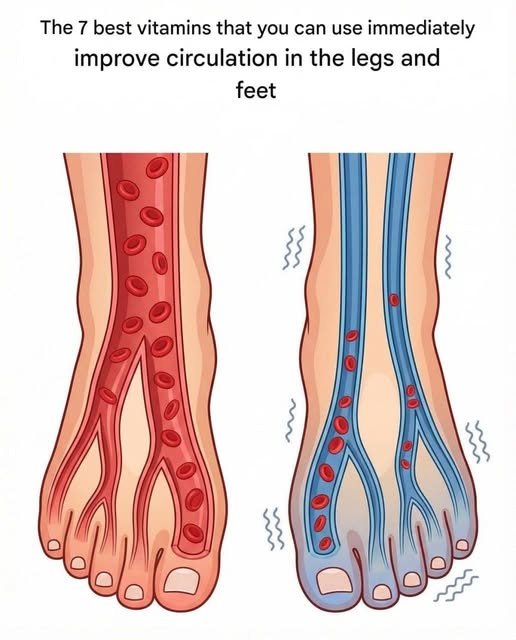
Cold feet, tingling, numbness, leg heaviness, or aching can make people wonder whether they have “poor circulation.” While vitamins are often promoted as a quick solution, circulation problems are not usually something that can be fixed by taking a vitamin for 20 minutes.
One nutrient worth knowing about is vitamin B12, particularly because a deficiency can affect the nervous system and cause symptoms such as numbness or pins-and-needles sensations.
But there is an important distinction: B12 helps correct B12 deficiency; it does not open blocked arteries or instantly improve blood flow.
If your symptoms are caused by an actual circulation disorder such as peripheral artery disease (PAD), the underlying problem needs proper evaluation and treatment.
Why Vitamin B12 Gets Attention
Vitamin B12 is essential for normal red blood cell formation and nervous-system function.
When someone is deficient, they can develop neurological symptoms, including:
- Numbness
- Tingling
- Pins-and-needles sensations
- Weakness
- Balance problems
- Unusual sensations in the hands or feet
These symptoms can sometimes be mistaken for a circulation problem.
This is why identifying the actual cause of the symptoms is more useful than simply taking a supplement.
Can B12 Improve Circulation?
Not directly.
If someone has a confirmed vitamin B12 deficiency, correcting that deficiency can help address symptoms related to the deficiency. But B12 should not be presented as a treatment for narrowed or blocked arteries.
For example, peripheral artery disease occurs when arteries supplying the limbs become narrowed or blocked, commonly because of atherosclerosis. Typical symptoms include aching, cramping, heaviness, or fatigue in the leg muscles while walking that improves with rest.
That type of circulation problem requires a different approach.
What Actually Helps Blood Flow?
For people with PAD, regular physical activity is an important part of treatment. Structured walking or supervised exercise programs can improve walking ability and help manage symptoms.
Other treatment may include:
- Stopping tobacco use
- Managing blood pressure
- Managing cholesterol
- Managing diabetes
- Eating a heart-healthy diet
- Taking prescribed medications
- Structured exercise
- Medical procedures when necessary
The appropriate treatment depends on the underlying condition and its severity.
What About a 20-Minute Walk?
A short walk isn’t a guaranteed “20-minute circulation cure,” but physical activity can be beneficial for people with circulation problems.
For diagnosed PAD, walking programs commonly involve periods of walking followed by rest when symptoms occur, with the goal of gradually improving walking ability.
If walking repeatedly causes significant calf, thigh, buttock, or foot pain that disappears after resting, don’t simply assume it’s normal aging. That pattern can be a sign of PAD and deserves medical evaluation.
Foods That Provide Vitamin B12
If you’re trying to obtain B12 through food, sources include:
- Fish
- Meat
- Poultry
- Eggs
- Milk and dairy products
- Fortified breakfast cereals
- Fortified nutritional products
People following vegetarian or vegan diets may need fortified foods or a B12 supplement because naturally occurring B12 is found primarily in animal-derived foods.
However, supplementation should ideally be based on your dietary needs and, when appropriate, testing or professional advice.
Don’t Ignore These Circulation Warning Signs
Poor circulation shouldn’t always be treated as a nutritional problem.
See a healthcare professional if you repeatedly experience:
- Leg pain while walking that improves with rest
- Persistent numbness or weakness
- One foot consistently colder than the other
- Skin color changes
- Slow-growing toenails
- Hair loss on the lower legs
- Foot wounds that heal slowly
- Persistent pain in the feet or legs
These can occur with PAD and other vascular conditions.
A clinician may assess circulation by examining the legs and feet and, when appropriate, performing an ankle-brachial index (ABI) test to compare blood pressure in the arms and ankles.
The Bottom Line
Vitamin B12 is an important nutrient for healthy nerves and blood cells, but it is not a 20-minute cure for poor circulation.
If a person is B12-deficient, correcting the deficiency can be important. But if symptoms are caused by narrowed arteries or another vascular condition, vitamins alone won’t address the underlying problem.
For genuine circulation problems, regular physical activity, a heart-healthy lifestyle, control of blood pressure, cholesterol and diabetes, and appropriate medical treatment are much more important than searching for a single “magic” vitamin.
SEO Title
Suffering From Poor Circulation? The Vitamin You Should Know About
Meta Description
Wondering which vitamin helps poor circulation? Learn what vitamin B12 can do, what it cannot do, and when circulation symptoms may require medical attention.
Focus Keyphrase
best vitamin for poor circulation
Suggested Slug
best-vitamin-for-poor-circulation