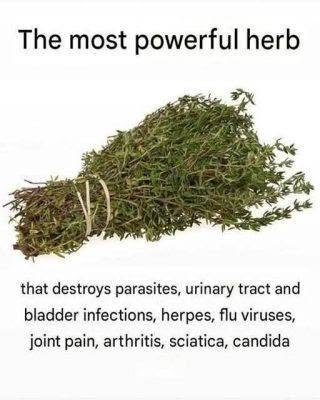
The Most Potent Herb? What Herbal Research Really Says About Parasites, Urinary Infections, Herpes and Flu
For centuries, herbs have been used in traditional medicine for everything from digestive discomfort to respiratory complaints. Some herbs contain powerful plant compounds that researchers continue to investigate for antimicrobial, antiviral, antioxidant, and anti-inflammatory activity.
One herb that frequently appears in traditional wellness discussions is oregano, particularly its aromatic compounds such as carvacrol and thymol.
But viral headlines often go much further, claiming that oregano can “destroy parasites,” eliminate urinary tract and bladder infections, kill herpes viruses, and cure the flu.
The reality is more nuanced.
Oregano contains biologically active compounds that have shown antimicrobial activity in laboratory research, but oregano is not a proven replacement for antibiotics, antiviral medicines, or other medical treatment.
A homemade herbal preparation should therefore be viewed as a food or traditional wellness option—not as a cure for an infection.
Why Is Oregano Considered a Potent Herb?
Oregano (Origanum vulgare) contains a variety of naturally occurring compounds.
Two of the best-known are:
- Carvacrol
- Thymol
These compounds have attracted scientific interest because laboratory studies have demonstrated antimicrobial activity under controlled experimental conditions.
This is one reason oregano and oregano oil are frequently described as “powerful” herbs.
However, laboratory activity does not automatically mean that eating oregano or drinking oregano tea will eliminate an infection inside the human body.
The concentration, absorption, metabolism, and safety of a compound all matter.
1. Oregano and Parasites
Parasites include many different organisms, and the appropriate treatment depends on the specific parasite involved.
Some laboratory and experimental research has examined oregano compounds against microorganisms and parasites. However, that does not establish oregano as a reliable treatment for intestinal parasites in humans.
If you suspect a parasitic infection because of persistent diarrhea, abdominal pain, unexplained weight loss, anemia, or other symptoms, proper testing is much more useful than attempting to treat the condition with an herbal preparation.
Depending on the parasite, specific antiparasitic medicines may be required.
2. Oregano and Urinary Tract Infections
Urinary tract infections are commonly caused by bacteria.
Because oregano compounds can show antibacterial activity in laboratory settings, you may encounter claims that oregano can “flush out” a UTI.
There is not enough clinical evidence to recommend oregano as a treatment for an established urinary tract infection.
Symptoms such as:
- Burning while urinating
- Frequent urination
- Strong urinary urgency
- Lower abdominal discomfort
- Blood in the urine
should not automatically be treated with herbs.
A UTI can sometimes progress to a kidney infection, particularly when treatment is delayed.
3. Oregano and Bladder Health
Oregano may be part of a healthy diet, but drinking oregano tea does not specifically cleanse or disinfect the bladder.
The urinary system has its own mechanisms for eliminating waste, and adequate hydration supports normal urinary function.
If you experience repeated urinary symptoms, it is important to determine the underlying cause rather than repeatedly using herbal remedies.
4. Oregano and Herpes Viruses
Herpes viruses are another area where laboratory research and internet claims can easily become confused.
Certain plant compounds have demonstrated antiviral activity in laboratory experiments. But a laboratory effect does not prove that consuming an herb will eliminate herpes from the body.
There is currently no herbal tea that has been established as a cure for herpes infections.
People with recurrent herpes may have evidence-based antiviral treatment options that can reduce the severity or frequency of outbreaks.
5. Oregano and Influenza
Oregano is also sometimes promoted online as a natural flu treatment.
Although oregano contains compounds with antimicrobial and antioxidant properties, there is no good evidence that a cup of oregano tea can cure influenza.
The flu is caused by influenza viruses, and bacterial infections and viral infections are not treated in the same way.
For people at higher risk of serious influenza complications, timely medical evaluation can be especially important.
How to Make a Simple Oregano Herbal Tea
If you enjoy oregano as a traditional herbal beverage, you can prepare a mild tea.
Ingredients
- 1 teaspoon dried oregano
- 1 cup hot water
- 1 teaspoon honey, optional
- A squeeze of lemon, optional
Directions
1. Heat the water.
Bring approximately 1 cup of water to a boil.
2. Add the oregano.
Place dried oregano in a cup and pour the hot water over it.
3. Cover and steep.
Cover the cup and allow it to steep for approximately 5–10 minutes.
4. Strain.
Strain out the herbs.
5. Add honey or lemon.
If desired, add a small amount of honey or lemon for flavor.
Enjoy the tea warm.
What About Oregano Oil?
This is an important distinction.
Oregano herb and oregano essential oil are not equivalent.
Essential oil is highly concentrated. A few drops can contain a much greater concentration of plant compounds than the amount found in ordinary culinary oregano.
That means you should not assume that taking more oregano oil will provide greater health benefits.
Concentrated essential oils can cause irritation and other adverse effects, and they should not be casually swallowed as a homemade treatment for infection.
Do not put oregano oil directly into the nose, ears, eyes, urinary tract, or other sensitive areas.
Can Oregano Replace Antibiotics?
No.
If you have a bacterial infection that requires antibiotics, oregano should not be used as a substitute.
Stopping or avoiding prescribed treatment can allow an infection to worsen.
This is particularly important with urinary infections, skin infections, pneumonia, and other conditions that can potentially become serious.
What About “Natural Antibiotic” Claims?
You may see oregano described as a “natural antibiotic.”
This phrase can be misleading.
A substance showing antibacterial activity in laboratory research is not automatically an antibiotic treatment for people.
Prescription antibiotics have specific dosing, absorption, safety, and effectiveness data behind their use.
Herbs can contain useful compounds, but that doesn’t make them interchangeable with prescription medicines.
How to Use Oregano as Food
The safest and simplest way to enjoy oregano for most people is as a culinary herb.
Add it to:
- Tomato sauces
- Soups
- Roasted vegetables
- Chicken
- Fish
- Beans
- Salads
- Homemade dressings
- Whole-grain dishes
Using herbs and spices regularly can make healthy meals more flavorful without requiring large amounts of salt or added sauces.
Important Safety Considerations
Even natural products can have side effects.
Oregano may cause digestive discomfort or allergic reactions in susceptible individuals.
Extra caution is appropriate with concentrated oregano supplements or essential oil.
If you are pregnant, breastfeeding, taking prescription medication, preparing to undergo surgery, or managing a chronic medical condition, discuss concentrated herbal products with a healthcare professional before using them regularly.
Don’t Ignore Infection Warning Signs
Herbal tea should never delay medical care when symptoms could indicate a significant infection.
Seek medical attention for symptoms such as:
- High or persistent fever
- Severe abdominal pain
- Severe back or side pain
- Blood in the urine
- Confusion
- Difficulty breathing
- Persistent vomiting
- Signs of dehydration
- Rapidly worsening symptoms
For urinary symptoms accompanied by fever, chills, nausea, or pain in the back or side, prompt medical evaluation is particularly important because the infection may have reached the kidneys.
The Bottom Line
Oregano is certainly an interesting herb.
Its compounds, particularly carvacrol and thymol, have demonstrated antimicrobial activity in laboratory research, which helps explain why oregano has attracted so much scientific and traditional interest.
But the phrase “one herb destroys parasites, UTIs, herpes, and flu viruses” oversimplifies very different diseases and makes claims that have not been established in clinical practice.
Enjoy oregano as a flavorful herb or mild traditional tea if it suits you, but don’t rely on it to replace appropriate diagnosis or treatment.
The most useful approach is to appreciate what herbs can realistically offer while recognizing when a medical condition requires proven treatment.
SEO Title
The Most Potent Herb? Oregano Benefits, Uses and Infection Claims Explained
Meta Description
Explore what research says about oregano, carvacrol and thymol, including claims about parasites, UTIs, herpes and flu, plus a simple oregano tea recipe.
Focus Keyphrase
oregano herb benefits
Suggested Slug
oregano-herb-benefits-infection-claims