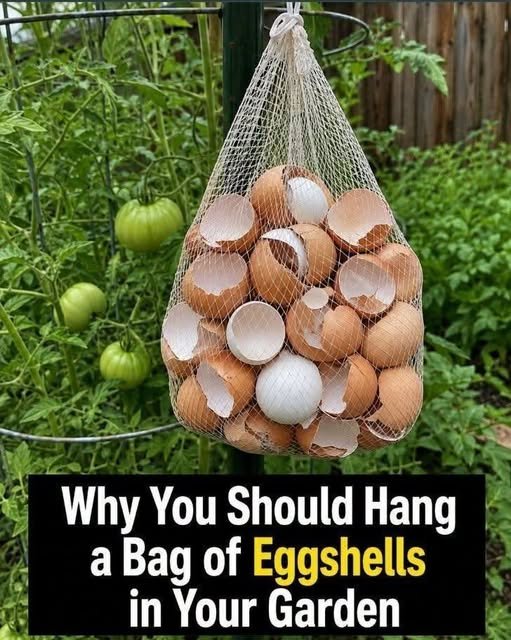
What if something you normally throw into the kitchen trash could become useful in your garden?
Eggshells are often recommended as an old-fashioned gardening trick, and you may have heard that hanging them around plants can keep pests away, improve the soil, or even help plants grow better. Some of these ideas have a practical basis, while others have been exaggerated over the years.
The real value of eggshells comes mainly from their calcium carbonate content. When properly prepared and added to soil, crushed eggshells can contribute calcium. However, eggshells don’t work like an instant fertilizer, and simply hanging whole shells in the garden isn’t a guaranteed pest-control solution.
Still, there are several clever ways to reuse eggshells in your garden instead of throwing them away.
Why Do Gardeners Use Eggshells?
Eggshells are made primarily of calcium carbonate, the same mineral found in agricultural limestone.
Calcium is an important plant nutrient because it contributes to cell-wall structure and normal plant development. Soil already contains varying amounts of calcium, however, so adding eggshells isn’t automatically beneficial for every garden.
The usefulness of eggshells depends on:
- Your existing soil chemistry
- The plants you’re growing
- How finely the shells are crushed
- How much calcium is already present
- Soil pH
- How quickly the shells break down
This is why a soil test is more useful than simply assuming every garden needs more eggshells.
Does Hanging Eggshells Really Keep Pests Away?
This is where the popular internet versions of the trick often go too far.
You may see claims that hanging eggshells scare away birds, stop insects, repel snails, or prevent every garden pest from approaching your plants.
There isn’t strong evidence that simply hanging eggshells around plants provides reliable protection against garden pests.
However, eggshells can still be used as part of some traditional garden strategies.
For example, coarsely crushed shells placed around individual plants have sometimes been used as a physical barrier against soft-bodied pests such as slugs and snails. The idea is that sharp, irregular pieces may make the surface less comfortable to cross.
But this shouldn’t be considered a guaranteed slug or snail treatment. Moisture, shell texture, shell quantity, and the specific pest all matter.
How to Prepare Eggshells for the Garden
If you’re going to recycle eggshells, preparation is important.
Step 1: Rinse the Shells
After using the eggs, rinse the shells thoroughly to remove remaining egg residue.
This helps reduce unpleasant odors and discourages unwanted pests.
Step 2: Dry Them Completely
Place the shells somewhere clean and allow them to dry completely.
You can also put them in a low oven for a short period if desired, but avoid excessive heat or burning them.
Step 3: Crush the Shells
Once completely dry, crush them into smaller pieces.
For soil amendment purposes, the finer the material, the greater the surface area available for gradual breakdown.
You can use a mortar and pestle, food processor, or simply crush them inside a sturdy bag.
Be careful when handling sharp shell fragments.
Three Useful Ways to Use Eggshells
1. Add Crushed Eggshells to Compost
Clean, crushed eggshells can be added to a compost pile.
They don’t break down as quickly as soft vegetable scraps, but over time they can contribute mineral material to the finished compost.
Grinding them more finely can help them break down more readily.
2. Mix Them Into Garden Soil
Finely crushed eggshells can be incorporated into soil as a source of calcium carbonate.
This is a slow process rather than an instant plant boost.
If your soil is already sufficiently supplied with calcium, adding large amounts won’t necessarily make plants healthier.
3. Place Coarse Pieces Around Plants
Larger crushed pieces can be scattered around the base of plants.
Gardeners sometimes use this method as part of a barrier against slugs and snails.
Don’t create a thick layer that prevents water from reaching the soil. A modest amount distributed around the plant is more practical.
What About Hanging Whole Eggshells?
If you specifically want to try the “hang eggshells in your garden” trick, you can turn clean eggshell halves into a simple garden decoration or experiment.
Wash and dry several shells. Make a small hole through the top and thread them onto string or garden twine. Hang them from a branch, trellis, fence, or nearby support.
However, don’t expect the hanging shells themselves to fertilize the soil or reliably eliminate pests.
Their biggest benefit in this form is that you’re reusing kitchen waste rather than throwing it away.
For calcium amendment, putting finely crushed shells into the soil is more directly useful than hanging them.
Eggshells and Tomato Plants
Tomatoes are frequently mentioned in eggshell gardening tips.
Tomatoes need calcium, but adding eggshells isn’t a guaranteed solution to blossom-end rot.
Blossom-end rot is associated with inadequate calcium reaching developing fruit, and inconsistent soil moisture is an important contributing factor. Simply adding more calcium to the soil may not solve the problem if the plant cannot consistently transport calcium to the fruit.
A better approach is to:
- Maintain consistent watering
- Avoid extreme soil moisture fluctuations
- Use appropriate mulch
- Avoid excessive root disturbance
- Test soil when nutrient problems are suspected
- Use appropriate fertilizer based on soil needs
Eggshells can contribute calcium gradually, but they shouldn’t be treated as an emergency treatment for tomato problems.
Can Eggshells Make Plants Grow Faster?
Not necessarily.
Eggshells aren’t a complete fertilizer because they don’t provide plants with all the major nutrients they need.
Plants generally require nutrients such as nitrogen, phosphorus, and potassium along with several secondary and micronutrients.
Eggshells are primarily useful as a source of calcium carbonate.
So if your plants are struggling because they lack nitrogen, adding eggshells won’t solve the underlying problem.
Eggshell Tea: Does It Work?
Some gardeners make “eggshell tea” by soaking crushed shells in water and using the liquid on plants.
The idea sounds convenient, but calcium carbonate isn’t highly soluble in plain water. That means simply soaking eggshells in water isn’t necessarily an efficient way to deliver large amounts of calcium to plants.
If you’re using eggshells specifically as a soil amendment, finely crushed shells incorporated into the soil are a more straightforward approach.
A Simple Eggshell Garden Method
Here’s an easy method for recycling your shells:
You’ll Need
- Clean eggshells
- Water
- A bowl
- A grinder, mortar and pestle, or sturdy bag
- Garden soil or compost
Directions
- Rinse the eggshells thoroughly.
- Allow them to dry completely.
- Crush or grind them into small pieces.
- For a calcium amendment, grind them as finely as practical.
- Mix a modest amount into compost or garden soil.
- For a physical pest-barrier experiment, reserve some coarser pieces and sprinkle them around susceptible plants.
- Water the garden normally and allow the shells to break down gradually.
Don’t Use Too Many Eggshells
More isn’t always better.
Because eggshells are primarily calcium carbonate, adding large quantities can gradually affect soil chemistry and potentially raise soil pH.
This matters because some plants prefer acidic soil.
If you’re gardening in containers, it’s especially important not to repeatedly add large quantities of eggshell powder without understanding the existing soil conditions.
Which Plants Can Benefit?
Eggshells can be incorporated into many garden soils, but their usefulness depends more on soil conditions than on a particular plant.
They’re commonly used around:
- Tomatoes
- Peppers
- Eggplants
- Cucumbers
- Squash
- Leafy vegetables
- Herbs
- Flowering plants
But these plants don’t automatically need eggshells. A soil test can help determine whether adding calcium or changing soil pH is actually appropriate.
Eggshells in Container Gardening
Eggshell powder can also be mixed into potting soil, but be conservative.
Containers have a much smaller volume of soil than garden beds, so repeated amendments can have a larger effect.
If your plant is already growing well in a quality potting mix, there may be little reason to add eggshells.
Instead, focus on:
- Appropriate watering
- Adequate drainage
- Sufficient light
- Proper fertilization
- Suitable pot size
- Good-quality potting mix
Other Kitchen Scraps You Can Reuse
Eggshells aren’t the only kitchen leftovers that can become useful in the garden.
Depending on your composting system, you can also reuse:
- Vegetable peels
- Fruit scraps
- Coffee grounds
- Tea leaves
- Herb stems
- Wilted vegetables
- Certain untreated plant trimmings
Composting these materials can turn kitchen waste into organic matter that benefits soil structure.
Common Eggshell Gardening Myths
Myth 1: Eggshells Kill Every Garden Pest
Not true. They aren’t a universal pest-control method.
Myth 2: Eggshells Are a Complete Fertilizer
Not true. They are primarily a calcium carbonate source.
Myth 3: Eggshells Instantly Add Calcium
Not true. They generally break down slowly, especially when left in larger pieces.
Myth 4: More Eggshells Mean Bigger Plants
Not necessarily. Plant growth depends on many factors, including light, water, temperature, soil fertility, and plant health.
Myth 5: Hanging Eggshells Automatically Protect the Garden
There is no reliable evidence that hanging shells alone provides broad pest protection.
A Better Way to Think About This Trick
The most useful lesson isn’t that eggshells are a magical garden cure.
It’s that ordinary kitchen waste can sometimes be recycled into useful garden materials.
Instead of throwing clean eggshells away, you can:
- Compost them
- Grind them for gradual calcium contribution
- Add them to appropriate garden soil
- Experiment with coarse pieces around plants vulnerable to slugs and snails
Just keep expectations realistic.
Frequently Asked Questions
How long do eggshells take to break down in soil?
Large pieces can remain for a long time. Finely ground shells break down more readily, but they are still relatively slow compared with organic compost materials.
Should I wash eggshells before putting them in the garden?
Yes. Rinsing and drying them helps remove remaining egg material and reduces odor.
Can I put eggshells directly around tomato plants?
Yes, but use them as a gradual soil amendment rather than expecting an immediate treatment for plant problems.
Are eggshells good for houseplants?
They can be added in small amounts, but they aren’t necessary for every houseplant. Container soil should not be repeatedly amended without considering its pH and nutrient balance.
Do eggshells stop slugs?
Crushed shells may be used as one physical-barrier experiment, but they aren’t a guaranteed slug-control method.
Final Thoughts
Hanging eggshells in your garden makes for an interesting old-fashioned gardening trick, but the real story is more practical than magical.
Eggshells are primarily a source of calcium carbonate, and finely crushed shells can be recycled into compost or soil as a gradual mineral amendment. Coarse shell pieces may also be tried around plants as part of a broader approach to managing slugs and snails.
So the next time you crack an egg, don’t automatically throw the shell away. Clean it, dry it, crush it, and give it a second life in your garden.
Just remember: healthy soil, appropriate watering, sufficient light, and proper plant nutrition will always matter more than any single gardening hack.
SEO Title
Hang Eggshells in Your Garden: The Truth Behind This Simple Gardening Trick
Meta Description
Discover why gardeners reuse eggshells, how to prepare them, whether they help soil and plants, and what you should know about the popular eggshell pest-control trick.