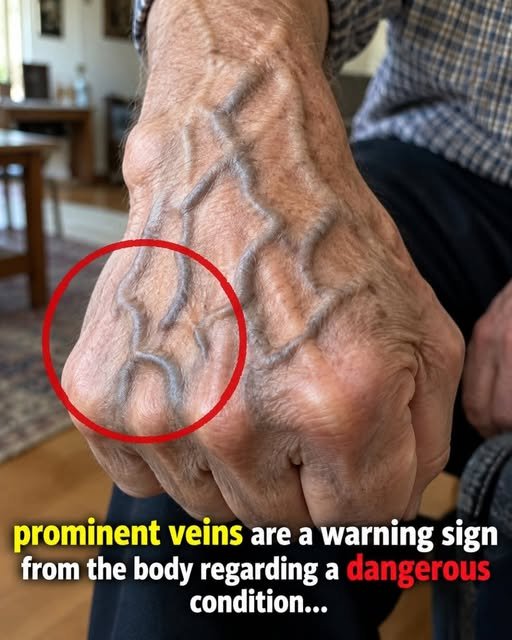
Have you noticed blue or purple veins becoming much more visible on your hands, arms, legs, or feet after the age of 60?
It can be easy to look at those prominent veins and immediately think something is wrong with your circulation. But visible veins are not necessarily a warning sign. As we get older, changes in the skin, connective tissue, body composition, and veins themselves can make veins that were once barely noticeable much easier to see.
However, the appearance of the veins matters less than what comes with them.
A few thin blue veins without pain, swelling, or skin changes may simply be a normal part of aging. On the other hand, enlarged, twisted veins accompanied by aching, heaviness, swelling, itching, skin discoloration, or sores may point toward a vein problem that deserves medical attention.
So, what are those blue veins actually telling you?
Why Do Veins Become More Visible After 60?
Veins carry blood back toward the heart. Veins in the legs have to work against gravity, and tiny valves inside them help prevent blood from flowing backward.
Over time, these valves can become weaker or less effective. When that happens, some blood can pool in the veins, causing them to enlarge and become more noticeable.
Age is one of the factors associated with varicose veins because the valves can experience wear over the years. Long periods of sitting or standing, excess weight, family history, previous deep-vein thrombosis, and limited movement can also increase the likelihood of vein problems.
But there is an important distinction:
A visible vein is not automatically a damaged vein.
Some people simply have veins that sit close to the surface of the skin.
1. Thin Blue or Purple Veins May Be Completely Harmless
Small blue, purple, or reddish veins that appear close to the skin may be spider veins or simply superficial veins that have become easier to see.
Spider veins are usually much smaller than varicose veins and often form web-like patterns. They commonly appear on the legs and feet and are generally considered a cosmetic issue when there are no other symptoms.
They can become more noticeable with age, particularly as the skin becomes thinner.
If a vein is visible but flat, painless, and not associated with swelling or skin changes, there may be no reason to panic.
2. Bulging, Twisted Veins May Be Varicose Veins
If the veins are raised, enlarged, twisted, or look like cords underneath the skin, they may be varicose veins.
Varicose veins most commonly affect the legs because the veins there have to return blood upward against gravity.
Some people have varicose veins without symptoms. Others experience:
- Aching legs
- A heavy or tired feeling
- Burning or throbbing
- Muscle cramps
- Swelling around the ankles or lower legs
- Itching around the veins
- Symptoms that become worse after prolonged standing or sitting
Resting with the legs elevated may make some symptoms feel better.
3. Swollen Ankles Can Be More Important Than the Veins Themselves
One of the things worth paying attention to is whether visible veins are accompanied by swelling.
Swollen ankles or legs, particularly when they repeatedly occur toward the end of the day, can occur with venous problems.
This doesn’t mean every swollen ankle is caused by varicose veins. Heart, kidney, liver, medication-related, lymphatic, and other conditions can also cause swelling.
That’s why persistent or unexplained swelling deserves medical assessment rather than being automatically blamed on aging.
4. Skin Changes Around the Veins Shouldn’t Be Ignored
Your skin can sometimes provide clues that a vein problem has been present for a while.
Watch for:
- Persistent itching
- Dry or flaky skin
- Changes in skin color
- Brownish or darker areas around the ankles
- Thickened or hardened skin
- Recurrent irritation
- Sores that heal slowly
Long-standing venous problems can sometimes contribute to skin changes and leg ulcers.
A new sore on the leg that does not heal normally should be evaluated by a healthcare professional.
5. Aching or Heavy Legs May Be a Clue
Do your legs feel unusually heavy by the end of the day?
Do they ache after standing in the kitchen, walking, shopping, or simply being upright for several hours?
Those symptoms can occur with varicose veins and other venous problems.
The discomfort may be particularly noticeable after prolonged standing or sitting and may improve after resting or elevating the legs.
That pattern is more informative than simply noticing that a vein looks blue.
6. One Suddenly Different Leg Needs More Attention
A gradual increase in visible veins over several years is very different from a sudden change in one leg.
A leg that suddenly becomes swollen, painful, warm, or tender can have several possible causes, including a blood clot.
Deep-vein thrombosis, or DVT, can cause pain and swelling, and the risk increases with age. Being over 60 is one recognized risk factor, although DVT can occur at any age.
Do not massage a suddenly painful, swollen leg while waiting to see what happens. Seek prompt medical evaluation.
7. Chest Pain or Shortness of Breath Is an Emergency
This is one of the most important points.
If leg pain or swelling is accompanied by:
- Sudden shortness of breath
- Chest pain
- Difficulty breathing
- Coughing up blood
- Fainting or feeling extremely unwell
seek emergency medical care immediately.
A blood clot can sometimes travel from the leg to the lungs, causing a pulmonary embolism, which can be life-threatening.
These symptoms should never be dismissed as simply “bad circulation” or part of getting older.
What Can You Do to Support Healthy Leg Circulation?
If your veins are visible but you don’t have concerning symptoms, several everyday habits can support healthy circulation and reduce discomfort.
Keep Moving
Walking is one of the simplest ways to keep the calf muscles active.
The muscles of the lower legs help push blood through the veins toward the heart.
You don’t necessarily need an intense workout. Regular walking and frequent movement throughout the day can be useful.
If you’ve been sitting for a long time, stand up and move around when possible.
Avoid Sitting or Standing for Long Periods
Remaining in one position for hours can make leg symptoms worse.
If your routine requires prolonged sitting, get up periodically and walk around.
If you must stand for long periods, changing position and taking short walking breaks may help.
Movement helps the muscles assist venous blood flow.
Elevate Your Legs
When you’re resting, raising your legs can help relieve some symptoms associated with varicose veins.
You can place your legs on cushions while lying down or elevate them comfortably while sitting.
This is particularly useful if your legs feel heavy or swollen after a long day.
Maintain a Healthy Weight
Extra body weight can place additional pressure on the veins and is associated with an increased risk of varicose veins.
If weight loss is appropriate for you, gradual changes in eating habits and regular physical activity are generally more sustainable than extreme diets.
Don’t Start Compression Stockings Without Advice in Every Situation
Compression stockings can help some people with venous symptoms, but they aren’t appropriate for everyone.
People with certain arterial circulation problems may need a medical assessment before using compression.
If you’re considering compression stockings for significant swelling or varicose veins, ask a doctor or pharmacist about the appropriate type and pressure.
When Should You See a Doctor?
Make an appointment if your visible veins are accompanied by:
- Persistent leg pain or aching
- Significant heaviness
- Repeated swelling
- Itching or skin changes
- A sore that doesn’t heal
- Veins that are becoming increasingly prominent or uncomfortable
- A hard, painful, red, or tender vein
- Symptoms that are interfering with normal activities
A healthcare professional can examine the veins and, when appropriate, use a duplex or Doppler ultrasound to assess blood flow and look for problems such as venous valve dysfunction or a blood clot.
What About Blue Veins on the Hands and Arms?
Not every visible blue vein means there is a circulation problem.
Veins close to the skin’s surface can naturally be visible, and changes in skin thickness and body composition can make them more obvious with age.
If the veins are symmetrical, painless, and have gradually become more noticeable, they may simply be superficial veins.
A sudden change, significant swelling, pain, discoloration, or other new symptoms are more important reasons to seek medical advice.
Common Myths About Visible Veins After 60
Myth: “Blue veins mean your blood isn’t getting enough oxygen.”
Not necessarily.
Veins normally carry blood that has delivered oxygen to tissues back toward the heart, and veins can appear blue through the skin. Their blue appearance does not by itself prove that your body is lacking oxygen.
Myth: “Every visible vein is dangerous.”
No.
Many visible veins and spider veins are harmless and may primarily be a cosmetic concern.
Myth: “Varicose veins always need treatment.”
Not necessarily.
Some people have no symptoms and do not require treatment. Treatment may be considered when symptoms or complications develop, or sometimes for cosmetic reasons depending on the situation.
Myth: “Aging automatically means poor circulation.”
Aging can increase the likelihood of certain vein problems, but visible veins alone don’t establish that your circulation is poor.
The Bottom Line
Seeing more blue veins after 60 can certainly catch your attention, but the color of a vein alone isn’t a reliable measure of your circulation.
Thin, painless veins may simply be more visible because of normal changes in the skin and tissues. Enlarged or twisted veins can be associated with varicose veins, particularly when accompanied by aching, heaviness, swelling, itching, or skin changes.
The most important thing is to notice changes and symptoms, not just appearance.
Keep moving, avoid spending long periods sitting or standing in one position, elevate your legs when comfortable, and seek medical advice if you develop persistent symptoms.
And remember: sudden leg swelling or pain—especially when accompanied by chest pain or shortness of breath—is not something to watch at home. It requires urgent medical attention.
Frequently Asked Questions
Are blue veins normal after age 60?
They can be. Superficial veins may become more noticeable with age, and some visible veins are harmless. However, enlarged, twisted veins accompanied by symptoms should be assessed.
Do visible veins mean poor blood circulation?
Not necessarily. Visible superficial veins don’t by themselves prove poor circulation.
Can walking help with varicose veins?
Regular movement, including walking, can help the calf muscles assist venous blood flow and may improve symptoms for some people.
Should I worry about one swollen leg?
Sudden swelling, especially when accompanied by pain, warmth, or tenderness, warrants prompt medical assessment because DVT is one possible cause.
Can varicose veins disappear on their own?
They generally don’t simply disappear, although symptoms can fluctuate. Treatment options are available when varicose veins cause significant symptoms or complications.
Should everyone with varicose veins wear compression stockings?
No. Compression can be useful for some people, but certain circulation problems can make compression unsuitable. A healthcare professional can help determine whether they’re appropriate.
What is the biggest warning sign?
There isn’t one single appearance that tells you exactly what is happening. A sudden painful or swollen leg, skin breakdown, bleeding, or leg symptoms combined with chest pain or shortness of breath deserve particular attention.
SEO Title
Visible Blue Veins After 60: What They May Mean for Your Circulation
Meta Description
Seeing more blue veins after 60? Learn why veins become visible with age, when they may be harmless, warning signs of varicose veins, and when leg swelling or pain needs medical attention.