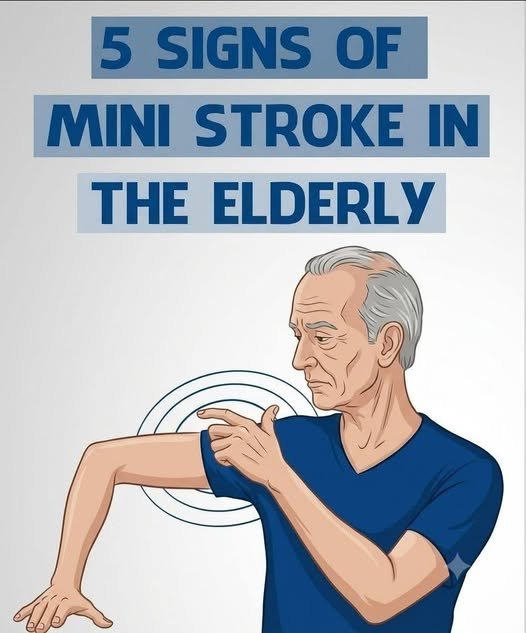
A sudden episode of weakness, dizziness, blurred vision, or difficulty speaking may seem like something that will simply pass. If the symptoms disappear after a few minutes, some people may feel reassured and decide that medical attention is no longer necessary.
That can be a dangerous assumption.
A transient ischemic attack (TIA) is commonly called a “mini-stroke” or “warning stroke.” It happens when blood flow to part of the brain is temporarily interrupted. The symptoms can resemble those of a stroke and may disappear quickly, but a TIA is still a medical emergency and an important warning sign of possible future stroke.
There is also an important limitation: you cannot reliably tell at home whether symptoms are caused by a TIA or an actual stroke. For that reason, sudden neurological symptoms should be treated as an emergency rather than watched at home.
Here are nine warning signs that should never be ignored.
1. Sudden Numbness or Weakness on One Side
One of the most recognizable warning signs is sudden numbness or weakness involving the face, arm, or leg, particularly on one side of the body.
For example, someone may suddenly notice that:
- One arm feels unusually weak
- One side of the face feels numb
- A leg becomes difficult to control
- One side of the body feels strangely heavy
- An arm drifts downward when both arms are raised
The sudden nature of the symptom is particularly important.
A person who develops unexplained one-sided weakness should not simply wait to see whether it improves.
2. Sudden Trouble Speaking
A TIA or stroke can affect the parts of the brain responsible for language and speech.
Someone may suddenly:
- Slur their words
- Have difficulty finding the right words
- Speak in a way that seems unusual
- Have trouble repeating a simple sentence
- Struggle to understand what another person is saying
Sometimes the person knows what they want to say but cannot get the words out properly.
Because speech problems can have several possible causes, they should not automatically be assumed to be a TIA. However, sudden unexplained speech or language difficulty requires urgent medical assessment.
3. Sudden Vision Changes
Temporary vision problems can also occur with TIA or stroke.
A person might suddenly experience:
- Blurred vision
- Double vision
- Partial loss of vision
- Difficulty seeing clearly from one or both eyes
- Temporary loss of vision in one eye
Vision changes may be brief and then disappear, which can make them especially easy to dismiss.
But a temporary neurological symptom is not necessarily harmless simply because normal vision returns.
4. Sudden Dizziness or Loss of Balance
Everyone experiences occasional dizziness, but sudden unexplained dizziness accompanied by difficulty walking or maintaining balance can be a warning sign.
A person may suddenly:
- Feel as though the room is moving
- Have trouble standing
- Stagger while walking
- Lose coordination
- Feel unusually unsteady
Stroke and TIA symptoms can include sudden dizziness, difficulty walking, loss of balance, or loss of coordination.
If severe dizziness appears suddenly, particularly together with weakness, vision changes, speech difficulty, or confusion, emergency assessment is especially important.
5. Sudden Confusion
A person may suddenly become confused or have difficulty understanding what others are saying.
They might:
- Seem unable to follow a conversation
- Have difficulty understanding simple instructions
- Suddenly become disoriented
- Struggle to communicate normally
- Seem unusually confused about where they are
Sudden confusion is one of the recognized warning signs of stroke and may occur during a TIA as well.
Do not assume that sudden confusion is simply tiredness or aging.
6. A Sudden, Severe Headache
A sudden severe headache without a known cause can be a warning sign of stroke, particularly when it occurs abruptly or alongside other neurological symptoms.
This is especially concerning when a severe headache appears together with:
- Weakness
- Numbness
- Difficulty speaking
- Vision problems
- Loss of balance
- Confusion
Not every severe headache indicates a stroke, and many headaches have much more common causes. However, a sudden severe headache that is unusual for the person should receive urgent medical attention.
7. Sudden Difficulty Walking
A person experiencing a TIA or stroke may suddenly find ordinary walking difficult.
They might feel:
- Unsteady
- Weak
- Uncoordinated
- Unable to walk normally
- As though one side of the body is not responding properly
Difficulty walking becomes particularly concerning when it appears suddenly and is accompanied by dizziness, vision problems, weakness, or speech changes.
8. Sudden Loss of Coordination
The brain controls precise movements throughout the body. A sudden disruption in brain function can therefore affect coordination.
Someone might unexpectedly struggle to:
- Pick up an object
- Use one hand normally
- Walk in a straight line
- Coordinate their movements
- Perform an ordinary task they normally handle easily
Again, the key feature is sudden change.
A person does not need to have every classic stroke symptom for emergency evaluation to be appropriate.
9. Symptoms That Disappear After a Few Minutes
This is perhaps the most important warning sign to understand.
Someone may experience weakness, numbness, speech difficulty, vision problems, dizziness, or confusion—and then feel completely normal again.
That does not necessarily mean everything is fine.
A TIA can produce stroke-like symptoms that resolve because the interruption of blood flow is temporary. However, healthcare professionals still need to determine what happened and whether there is an underlying risk of a future stroke.
The disappearance of symptoms is therefore not a reason to ignore them.
Why a Mini-Stroke Is a Serious Warning
A TIA is not simply a harmless episode that can be forgotten once symptoms disappear.
The CDC describes a TIA as a warning sign of future stroke and emphasizes that it requires emergency medical care. The organization also notes that there is no way to know at the beginning whether symptoms represent a TIA or a major stroke.
That distinction matters because early evaluation can allow healthcare professionals to investigate possible causes and address stroke risk factors.
Possible underlying contributors can include problems involving blood vessels, blood pressure, heart rhythm, or blood clots.
Remember B.E. F.A.S.T.
A useful way to remember major stroke warning signs is B.E. F.A.S.T.
B — Balance
Is there sudden dizziness, loss of balance, or difficulty walking?
E — Eyes
Is there sudden trouble seeing?
F — Face
Does one side of the face droop when the person smiles?
A — Arms
Does one arm become weak or drift downward when both arms are raised?
S — Speech
Is speech suddenly slurred, strange, or difficult to understand?
T — Time
If any of these symptoms occur suddenly, seek emergency medical help immediately.
The CDC recommends noting when symptoms first appeared because the timing can help medical professionals determine appropriate treatment.
What Should You Do If Symptoms Disappear?
Do not simply go to sleep or wait until the next day.
If you or someone else experiences sudden symptoms suggestive of a TIA or stroke, seek emergency medical care immediately, even if the symptoms have completely disappeared.
Do not drive yourself to the hospital. Emergency medical services can begin assessment and care while transporting the person.
When speaking with medical professionals, try to remember:
- What symptoms occurred
- Which side of the body was affected
- Whether speech or vision changed
- When the symptoms began
- How long they lasted
- Whether they completely disappeared
These details can be useful during the medical evaluation.
Common Stroke Risk Factors
Several medical conditions and lifestyle factors can increase stroke risk.
Important risk factors include:
- High blood pressure
- Previous stroke or TIA
- Certain heart conditions
- Diabetes
- High cholesterol
- Smoking
- Physical inactivity
- Excessive alcohol use
- Older age
- Certain blood vessel conditions
- Family history and other individual risk factors
Some risk factors cannot be changed, while others can be managed with appropriate medical care and lifestyle changes.
How Doctors Investigate a Possible TIA
A medical team may investigate the person’s symptoms, medical history, blood pressure, heart rhythm, blood vessels, and other possible causes.
Depending on the situation, evaluation may involve:
- Neurological examination
- Blood tests
- Heart rhythm testing
- Brain imaging
- Imaging of blood vessels
- Other cardiovascular testing
The exact tests depend on the person’s symptoms and medical history.
The goal is not only to determine what happened but also to identify factors that could increase the risk of a future stroke.
Can a TIA Be Prevented?
Not every TIA can be prevented, but controlling stroke risk factors can reduce risk.
Helpful long-term habits include:
Monitor Blood Pressure
High blood pressure is an important stroke risk factor. Follow your healthcare professional’s recommendations for monitoring and treatment.
Manage Diabetes
If you have diabetes, keeping blood glucose within your individualized target range can be an important part of reducing vascular risk.
Keep Cholesterol Under Control
High cholesterol can contribute to plaque buildup in arteries. Follow your healthcare professional’s advice regarding diet, activity, and medications.
Don’t Smoke
Smoking damages blood vessels and is an important modifiable stroke risk factor.
Stay Physically Active
Regular physical activity can support cardiovascular health and help manage several stroke risk factors.
Take Prescribed Medicines Correctly
If you have been prescribed medication for blood pressure, cholesterol, diabetes, heart rhythm, or another condition, take it according to your healthcare professional’s instructions.
Do not start or stop blood-thinning medication on your own.
A TIA Is Not Something to Diagnose at Home
Dizziness can come from an inner-ear problem.
Blurred vision can have an eye-related cause.
Weakness can have several possible explanations.
A headache can have many causes.
That is precisely why sudden neurological symptoms should not be self-diagnosed.
The important question is not whether a symptom sounds exactly like a mini-stroke. The important question is whether a sudden neurological change could represent a stroke or TIA and therefore requires urgent evaluation.
Final Thoughts
Mini-strokes can be easy to dismiss because their symptoms may disappear. But temporary symptoms do not automatically mean the event was harmless.
Sudden one-sided weakness or numbness, speech problems, vision changes, dizziness, loss of balance, confusion, severe unexplained headache, coordination problems, or symptoms that quickly disappear can all require urgent medical attention.
If these symptoms are happening now, do not wait for them to go away. Seek emergency medical care immediately.
Recognizing the warning signs and acting quickly can make an important difference in stroke care.
Frequently Asked Questions
Can a mini-stroke last only a few minutes?
Yes. TIA symptoms can be brief and may disappear completely. The short duration does not make them safe to ignore.
Is a TIA the same as a stroke?
No. A TIA is a temporary interruption of blood flow to the brain and is commonly called a mini-stroke. However, its symptoms can resemble those of an actual stroke, and it can signal increased future stroke risk.
What if the symptoms have already stopped?
Medical evaluation is still important. You cannot determine at home whether a temporary episode was a TIA or another medical problem.
Can young people have strokes or TIAs?
Yes. Stroke can occur at any age, although risk generally increases with age.
Should I wait to see whether stroke symptoms improve?
No. Sudden stroke-like symptoms should be treated as an emergency. Do not wait for them to disappear before seeking medical help.
SEO Title
Mini-Strokes Often Go Unnoticed: 9 Symptoms You Should Never Ignore
Meta Description
Learn 9 possible warning signs of a mini-stroke or TIA, why symptoms that disappear still matter, and when sudden stroke symptoms require emergency medical attention.