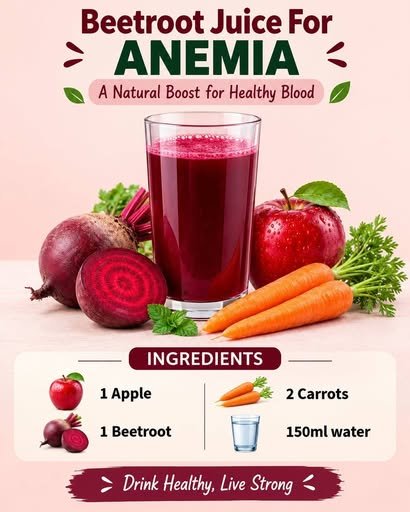
Beetroot juice is often recommended as a natural drink for anemia, especially in traditional wellness advice. Its deep red color has also led to the popular belief that it can “build blood” and quickly raise hemoglobin.
But what does beetroot juice actually do?
The truth is more balanced. Beetroot can be part of a nutritious diet, but beetroot juice alone is not a treatment for anemia. Anemia has many possible causes, and the right treatment depends on why your hemoglobin is low.
Still, beetroot contains useful nutrients and plant compounds, and pairing it with other iron-rich foods can make it a worthwhile addition to a balanced diet.
What Is Anemia?
Anemia occurs when your blood doesn’t have enough healthy red blood cells or hemoglobin to carry oxygen effectively around the body.
Depending on the cause and severity, symptoms may include:
- Tiredness
- Weakness
- Pale skin
- Headaches
- Dizziness
- Shortness of breath
- Feeling unusually cold
- Reduced exercise tolerance
- Fast or noticeable heartbeat
Iron deficiency is one common cause of anemia, but it isn’t the only one.
Anemia can also be related to vitamin B12 or folate deficiency, blood loss, chronic disease, inherited conditions, kidney disease, and other medical problems.
That’s why simply drinking beetroot juice without identifying the cause may not solve the underlying problem.
Does Beetroot Juice Contain Iron?
Yes, beetroot contains some iron, but it isn’t an especially rich source of iron compared with foods such as meat, seafood, beans, lentils, tofu, and iron-fortified foods.
So why is beetroot juice often associated with blood health?
Beetroot contains folate and naturally occurring plant compounds, including nitrates. Folate is important for normal red blood cell production, while dietary nitrates are involved in pathways that can affect blood vessels and circulation.
However, these nutritional benefits should not be confused with a proven ability to cure iron-deficiency anemia.
Can Beetroot Juice Increase Hemoglobin?
Drinking beetroot juice does not reliably correct iron-deficiency anemia on its own.
If blood tests show that you are deficient in iron, your healthcare professional may recommend dietary changes, iron supplementation, or treatment of the reason you became deficient.
Beetroot juice can be included alongside those measures, but it shouldn’t replace prescribed treatment.
A Better Way to Use Beetroot
Instead of thinking of beetroot juice as an anemia cure, think of it as one component of a nutrient-rich diet.
Pair beetroot with foods that provide meaningful amounts of iron and other nutrients.
Good options include:
Lentils
Lentils provide plant-based iron, protein, and fiber.
Beans
Kidney beans, chickpeas, black beans, and other legumes can contribute iron to the diet.
Lean Meat
Beef and other meats provide heme iron, which is generally absorbed more efficiently than the non-heme iron found in plant foods.
Eggs
Eggs provide protein and several nutrients, although their iron content is modest.
Leafy Greens
Spinach and other leafy greens contain iron and folate, although plant-based iron is less readily absorbed than heme iron.
Iron-Fortified Foods
Some cereals, breads, and other foods are fortified with iron and can be useful sources.
Add Vitamin C to Improve Iron Absorption
One of the most useful nutrition tips when eating plant sources of iron is to include a source of vitamin C.
Vitamin C can improve the absorption of non-heme iron from plant foods.
Try combining iron-containing foods with:
- Lemon
- Oranges
- Kiwi
- Strawberries
- Bell peppers
- Tomatoes
- Broccoli
For example, a lentil and spinach salad with lemon juice can provide a combination of iron-containing foods and vitamin C.
Simple Beetroot Juice Recipe
If you enjoy beetroot juice, here’s a simple version that can fit into a balanced diet.
Ingredients
- 1 medium beetroot, washed and peeled
- 1 small apple
- ½ lemon, peeled
- 1 small carrot
- ½–1 cup water
- Small piece of fresh ginger, optional
Instructions
Wash and prepare all the ingredients.
Cut the beetroot, apple, carrot, and lemon into pieces suitable for your juicer.
Juice everything together.
Add water if you prefer a lighter consistency.
If you don’t have a juicer, blend the ingredients with water and strain if desired.
Drink it fresh and avoid adding unnecessary sugar.
Juice or Whole Beetroot?
Whole beetroot has an advantage that juice doesn’t: fiber.
Juicing removes much of the fiber while concentrating the natural sugars and other components into a smaller volume.
For everyday nutrition, consider eating roasted, steamed, or grated beetroot as part of a meal rather than relying exclusively on juice.
A beetroot salad with spinach, chickpeas, bell peppers, lemon, and a protein source can be much more nutritionally complete than beetroot juice alone.
Can Beetroot Juice Replace Iron Tablets?
No.
If a healthcare professional has diagnosed iron-deficiency anemia and recommended iron supplementation, beetroot juice should not be used as a substitute.
Iron deficiency can sometimes result from blood loss, inadequate intake, poor absorption, pregnancy, gastrointestinal conditions, or other causes.
Treating the underlying cause is just as important as replacing the missing iron.
Be Careful With Iron Supplements
Taking large amounts of iron without confirming that you actually need it isn’t a good idea.
Too much iron can be harmful, and anemia caused by something other than iron deficiency may not improve with iron supplementation.
A healthcare professional may use tests such as a complete blood count and iron studies to determine what’s happening.
Who Should Be Especially Careful?
Beetroot is a food that many people can enjoy, but there are a few things to keep in mind.
Beetroot can temporarily turn urine or stool pink or reddish. This is known as beeturia and can be harmless.
Beetroot is also relatively high in dietary nitrate and contains potassium. People with certain medical conditions or dietary restrictions may need individualized advice about how much they consume.
If you have kidney disease, take medications that affect blood pressure or potassium, or have been advised to follow a specific diet, ask your healthcare professional before making large amounts of beetroot juice a daily habit.
When Anemia Needs Medical Attention
Don’t rely on food or juice alone if you have symptoms suggesting significant anemia.
Seek medical advice if you have persistent:
- Severe fatigue
- Shortness of breath
- Dizziness
- Weakness
- Pale skin
- Rapid heartbeat
- Unexplained weight loss
- Unusual bleeding
Black or bloody stools, vomiting blood, very heavy menstrual bleeding, fainting, chest pain, or severe difficulty breathing require prompt medical attention.
Final Thoughts
Beetroot juice can be a colorful, nutritious addition to a balanced diet, but its reputation as a natural anemia cure is overstated.
Beetroot provides folate and other beneficial plant nutrients, but it is not a concentrated source of iron and cannot reliably correct anemia by itself.
If you have anemia, the most important step is finding out what caused it. Once the cause is understood, foods such as lentils, beans, leafy greens, meat, seafood, eggs, and iron-fortified foods can be incorporated appropriately, often alongside vitamin-C-rich foods to support iron absorption.
Enjoy beetroot juice for its nutritional value—not as a replacement for proper diagnosis and treatment.
SEO Title
Beetroot Juice for Anemia: Can It Increase Iron and Hemoglobin?
Meta Description
Can beetroot juice help with anemia? Learn about beetroot’s nutrients, iron content, vitamin C combinations, and why it should not replace proper anemia treatment.