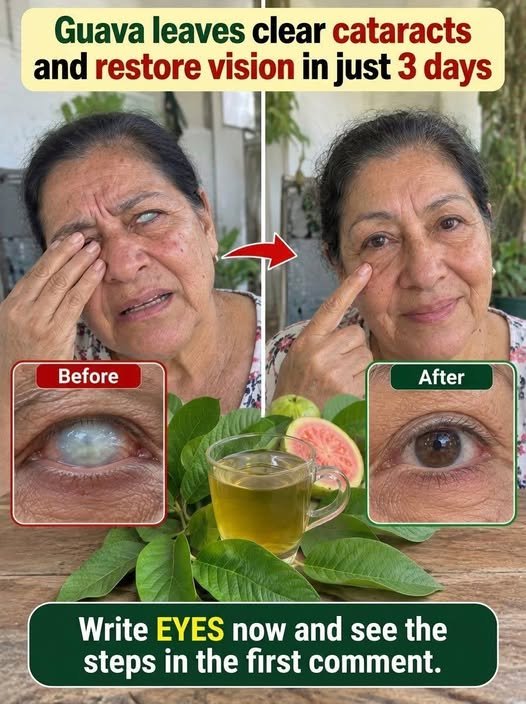
Red, tired, irritated eyes are common, especially after long hours in front of screens, lack of sleep, dry air, allergies, or exposure to dust and smoke. Because natural remedies are often shared online as quick solutions, guava leaves have also gained attention as a traditional home remedy for eye discomfort.
Guava leaves contain plant compounds such as flavonoids, tannins, and other antioxidants, which have been studied for their potential biological effects. However, there is not enough reliable clinical evidence to say that guava leaves can clear eye redness or restore blurred vision within three days.
That doesn’t mean guava leaves are uninteresting. They are a nutrient-rich plant with a long history of traditional use, and researchers have investigated their antioxidant and anti-inflammatory properties. But when it comes to the eyes, safety is especially important.
Can Guava Leaves Improve Red Eyes?
Eye redness happens when small blood vessels on the surface of the eye become more visible or dilated. It can occur for many different reasons, including:
- Dry eyes
- Allergies
- Dust or smoke exposure
- Eye strain
- Lack of sleep
- Contact-lens irritation
- Minor irritation
- Infections
- Inflammation
Because the cause varies, treating redness with a single home remedy may not address the underlying problem.
Guava leaves contain antioxidant compounds, but evidence from laboratory and traditional-use research should not be interpreted as proof that applying guava leaves to the eyes will remove redness.
What About Blurred Vision?
Blurred vision deserves even more caution.
Temporary blurry vision can sometimes occur because of dry eyes, tiredness, an incorrect glasses prescription, or prolonged screen use. But blurred vision can also be associated with conditions that require professional evaluation.
For that reason, guava leaves should not be used as a treatment for persistent or unexplained blurred vision.
A claim that blurred vision will disappear in exactly three days is not supported by good clinical evidence.
Why Are Guava Leaves Traditionally Used?
Guava leaves contain several naturally occurring compounds that have attracted scientific interest.
Antioxidant Compounds
Guava leaves contain polyphenols and flavonoids with antioxidant activity. Antioxidants help protect cells from oxidative stress, although consuming an antioxidant-rich plant does not automatically mean it will treat a particular eye condition.
Traditional Uses
Guava leaves have been used traditionally in different cultures for various purposes, including teas and other preparations. Traditional use can provide interesting starting points for research, but it is not the same as clinical proof.
Plant-Based Nutrition
Guava leaves are part of a plant that contains many bioactive compounds. However, the nutritional properties of the leaves should not be confused with evidence that they can correct vision problems.
A Safer Way to Use Guava Leaves
If you enjoy guava leaves, a food-style preparation such as tea is generally a more sensible approach than putting homemade guava-leaf liquid directly into your eyes.
Simple Guava Leaf Tea
Ingredients:
- 4–5 young guava leaves
- 2 cups water
Directions:
- Wash the leaves thoroughly under clean running water.
- Bring 2 cups of water to a boil.
- Add the leaves.
- Reduce the heat and simmer for approximately 5–10 minutes.
- Strain the liquid.
- Allow it to cool to a comfortable drinking temperature.
- Enjoy as a mild herbal tea.
This tea can be part of a varied diet, but it should not be presented as a treatment for blurred vision or eye disease.
Should You Put Guava Leaf Water Directly Into Your Eyes?
It is better not to.
Homemade herbal preparations are not sterile. Even when leaves have been washed and boiled, the resulting liquid is not equivalent to sterile ophthalmic medication.
Putting non-sterile substances into the eye can introduce microorganisms or irritating plant compounds and potentially make an eye problem worse.
Avoid homemade eye drops made from:
- Guava leaves
- Lemon juice
- Honey
- Tea
- Salt water
- Herbal oils
- Raw plant extracts
The eye is delicate, and products intended for direct ocular use should be manufactured and tested for that purpose.
Gentle Habits That May Help Tired, Irritated Eyes
If your eyes are mildly irritated from everyday factors, simple habits may be more useful than an unproven remedy.
Follow the 20-20-20 Rule
When using a computer or phone for extended periods, every 20 minutes look at something about 20 feet away for at least 20 seconds.
Get Enough Sleep
Insufficient sleep can contribute to tired-looking, dry, or irritated eyes.
Stay Hydrated
Adequate fluid intake supports normal body function and may be helpful when dryness is worsened by dehydration.
Reduce Smoke and Dust Exposure
Smoke, dust, and other airborne irritants can make red or watery eyes worse.
Take Contact Lenses Seriously
If you wear contact lenses and develop significant redness or blurred vision, remove the lenses and seek professional advice rather than trying a homemade remedy.
When Redness May Need Medical Attention
Not every red eye is serious, but certain symptoms should not be ignored.
Seek prompt medical care if redness is accompanied by:
- Significant eye pain
- Sudden vision changes
- Persistent or worsening blurred vision
- Light sensitivity
- Severe headache or nausea
- Injury to the eye
- Chemical exposure
- Pus-like discharge
- Marked swelling
- A sudden loss of vision
Sudden vision loss is an emergency and requires immediate medical attention.
What Can You Realistically Expect in Three Days?
For mild irritation caused by something temporary, the eyes may naturally feel better after removing the trigger, getting adequate rest, and taking care of dryness.
But there is no reliable evidence that guava leaves can guarantee normal vision or eliminate eye redness within three days.
The important distinction is between a traditional wellness remedy and a proven medical treatment.
Guava leaves may be an interesting plant-based ingredient, but they should not replace an eye examination when symptoms persist.
Final Thoughts
Guava leaves contain interesting antioxidant and plant compounds and have a long history of traditional use. However, the popular claim that guava leaves can eliminate eye redness and blurred vision in three days goes beyond the available evidence.
For mild eye discomfort, prioritize rest, screen breaks, hydration, and avoiding irritants. If blurred vision persists, keeps returning, or appears suddenly, finding the cause is much more important than trying a home remedy.
Your eyesight is too valuable to delay proper evaluation for the sake of a quick natural cure.
SEO Title: Guava Leaves for Red Eyes and Blurred Vision: Benefits and Safety
Meta Description: Learn what guava leaves may offer, whether they can help red or blurry eyes, safer ways to use them, and when eye symptoms require professional attention.