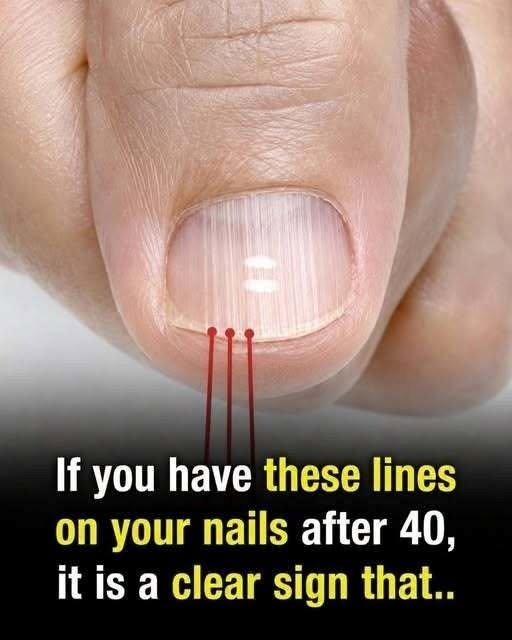
Have you ever looked closely at your fingernails and noticed lines, ridges, grooves, or changes in texture that weren’t there when you were younger? Nail changes can become more noticeable with age, especially after 40, but they are not automatically a sign of a serious disease.
Some nail lines are simply a normal consequence of aging. Others can develop after an injury, illness, nutritional deficiency, medication, or changes affecting the nail itself.
The important thing is learning to recognize what type of nail line you have and whether other symptoms are present.
1. Vertical Ridges Running From the Cuticle to the Tip
Vertical ridges are among the most common nail changes seen with age.
They appear as lines running lengthwise from the base of the nail toward the fingertip. In many people, they become more noticeable over time because nail growth and the structure of the nail plate change with aging.
If the ridges are mild and appear on several nails without other symptoms, they are usually not a reason for alarm.
However, very pronounced ridges accompanied by brittle, splitting, or unusually thin nails may deserve medical attention.
2. Horizontal Grooves Across the Nail
Horizontal lines or grooves are different from ordinary vertical ridges.
One type, called Beau’s lines, can occur when nail growth temporarily slows or stops. This may happen after a significant illness, high fever, major physical stress, injury, or certain medical treatments.
Because fingernails grow slowly, a groove may appear weeks or months after the event that caused it.
A single groove does not tell you exactly what happened. The timing and your medical history are important.
3. A Dark Vertical Line
A brown or black line running lengthwise along a nail can have several possible causes.
It may result from increased pigment, trauma, certain medications, or other harmless conditions. But a new or changing dark streak, particularly one affecting only one nail, should not simply be dismissed as an age-related change.
In uncommon cases, a dark streak can be associated with subungual melanoma, a form of skin cancer that develops beneath the nail.
See a dermatologist if a dark line is new, becoming wider or darker, has irregular coloring, or the pigment appears to extend onto the surrounding skin.
4. White Lines or Marks
White marks on nails are common and are often caused by minor trauma to the nail.
They don’t automatically mean that you have a calcium deficiency.
Depending on their pattern and appearance, however, white lines or widespread nail discoloration can sometimes be associated with certain illnesses, medications, or systemic conditions.
If white bands appear across several nails or repeatedly return without an obvious explanation, mention them to a healthcare professional.
5. Tiny Vertical Splinter-Like Lines
Small reddish-brown or dark lines underneath the nail can resemble splinters.
These are called splinter hemorrhages and can occur after minor trauma. For example, bumping or injuring a finger can damage tiny blood vessels beneath the nail.
When they repeatedly appear without an obvious injury, especially alongside other symptoms, they should be evaluated rather than automatically attributed to aging.
6. Nails That Become Thin, Brittle, or Split
Nails naturally change with age and may become more fragile.
Frequent exposure to water, detergents, cleaning products, nail polish remover, and repeated manicures can also contribute to dryness and splitting.
However, persistent brittle nails can sometimes occur alongside nutritional problems, thyroid disorders, anemia, or other health conditions.
This is why the overall pattern matters more than one nail symptom by itself.
What Your Nails Can—and Cannot—Tell You
Your nails can provide clues about your general health, but they are not a reliable diagnostic test.
For example, a person with vertical ridges may be completely healthy, while another person with a similar-looking ridge may have an unrelated underlying problem.
Likewise, having nail changes after 40 does not automatically mean you have a vitamin deficiency, poor circulation, diabetes, or another serious condition.
Doctors usually consider:
- The appearance and location of the nail change
- Whether one or multiple nails are affected
- How quickly the change developed
- Recent injuries
- Recent illnesses or fever
- Medications
- Skin changes
- Other symptoms
- Medical and nutritional history
When Should You Have a Nail Change Checked?
Consider seeing a doctor or dermatologist if you notice:
- A new dark line that is changing or widening
- Pigment spreading onto the skin around the nail
- A nail becoming detached without an obvious injury
- Persistent pain, swelling, or bleeding
- Significant changes affecting several nails
- Deep horizontal grooves that appear repeatedly
- Sudden changes accompanied by other unexplained symptoms
- A nail that becomes severely distorted or stops growing normally
These signs don’t necessarily mean something serious is happening, but they are worth evaluating.
How to Keep Your Nails Healthy After 40
Simple habits can help protect your nails as they become more fragile with age.
Keep nails clean and trimmed, moisturize your hands and cuticles regularly, and wear gloves when working with water or household cleaning products.
Avoid biting or picking at the nails and don’t aggressively push back or cut the cuticles.
A balanced diet containing adequate protein, iron, zinc, vitamin B12, folate, and other nutrients supports normal nail growth. However, taking supplements simply because you notice ridges isn’t always appropriate. A healthcare professional can determine whether testing or supplementation is actually needed.
The Bottom Line
Lines on your nails after 40 are not a clear sign of one particular disease. Vertical ridges are often a normal age-related change, while horizontal grooves, dark streaks, unusual discoloration, or sudden nail changes can have many different causes.
Instead of diagnosing yourself from a nail line, pay attention to new, persistent, changing, or unusual patterns and consider having them checked when appropriate.
Your nails can sometimes provide useful clues about your health—but they are only one small part of the picture.