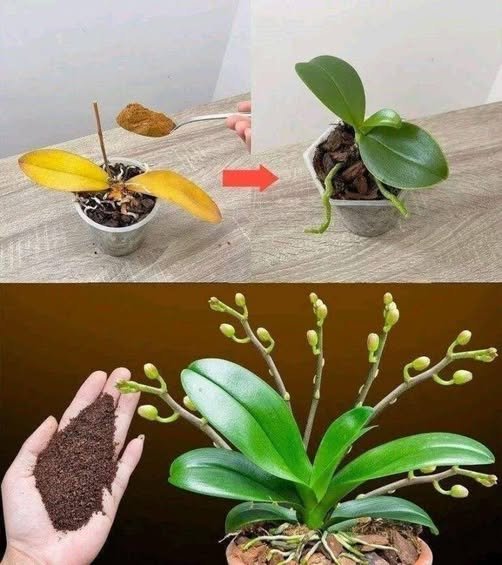
The idea that adding just one teaspoon of a homemade ingredient can suddenly make an orchid produce lots of flowers is popular online, but orchids don’t have a magic fertilizer that guarantees instant blooming.
Flowering depends on the orchid’s species, maturity, light, temperature, watering routine, roots, and overall nutrition. However, a simple homemade feeding approach can support healthy growth when used carefully.
A Gentle Homemade Option: Diluted Rice Water
One commonly used household option is plain, unsalted rice water.
Ingredients
- 1 cup uncooked white rice
- 2 cups water
How to Prepare It
- Rinse the rice briefly with clean water.
- Soak the rice in 2 cups of water for about 20–30 minutes.
- Strain the water.
- Dilute it further with an equal amount of clean water before using it on the orchid.
Use a small amount around the growing medium rather than soaking the leaves or flowers.
But Don’t Expect Instant Flowers
Rice water contains small amounts of nutrients, but it isn’t a complete orchid fertilizer. Using too much can also encourage unwanted microbial growth or leave residues in the potting medium.
For reliable flowering, a balanced orchid fertilizer used according to its label directions is generally a better choice.
5 Things That Actually Encourage Orchid Blooms
1. Give It Bright, Indirect Light
Orchids generally need plenty of light to flower, but harsh direct afternoon sunlight can scorch their leaves.
A bright window with filtered light is often a good location.
2. Avoid Constantly Wet Roots
Orchid roots need both moisture and air. Allow the growing medium to dry appropriately between waterings rather than keeping it continuously soggy.
3. Use Orchid-Specific Fertilizer
A diluted fertilizer formulated for orchids can provide nutrients that homemade mixtures may not supply in the right proportions.
Follow the manufacturer’s dilution instructions rather than assuming that more fertilizer will produce more flowers.
4. Give Mature Orchids the Right Temperature
Some orchids benefit from a modest difference between daytime and nighttime temperatures as part of their flowering cycle. Sudden or extreme temperature changes, however, can stress the plant.
5. Be Patient
Even a healthy orchid won’t necessarily bloom immediately after feeding. Orchids have their own growth and flowering cycles, and sometimes the plant simply needs time.
Avoid These Viral Orchid “Miracles”
Be cautious with recipes recommending concentrated sugar, baking soda, vinegar, hydrogen peroxide, or undiluted kitchen ingredients. These can damage roots, disrupt the growing medium, or create conditions that encourage problems.
A teaspoon isn’t automatically safe simply because the amount is small—the concentration and ingredient matter.
Final Thoughts
There isn’t a scientifically reliable one-teaspoon miracle recipe that makes an orchid suddenly explode with flowers. If you want abundant blooms, focus on the basics: bright indirect light, appropriate watering, healthy roots, suitable temperatures, and balanced orchid fertilizer.
Homemade rice water can be used occasionally as a mild supplement, but it shouldn’t replace proper orchid care or a complete fertilizer.