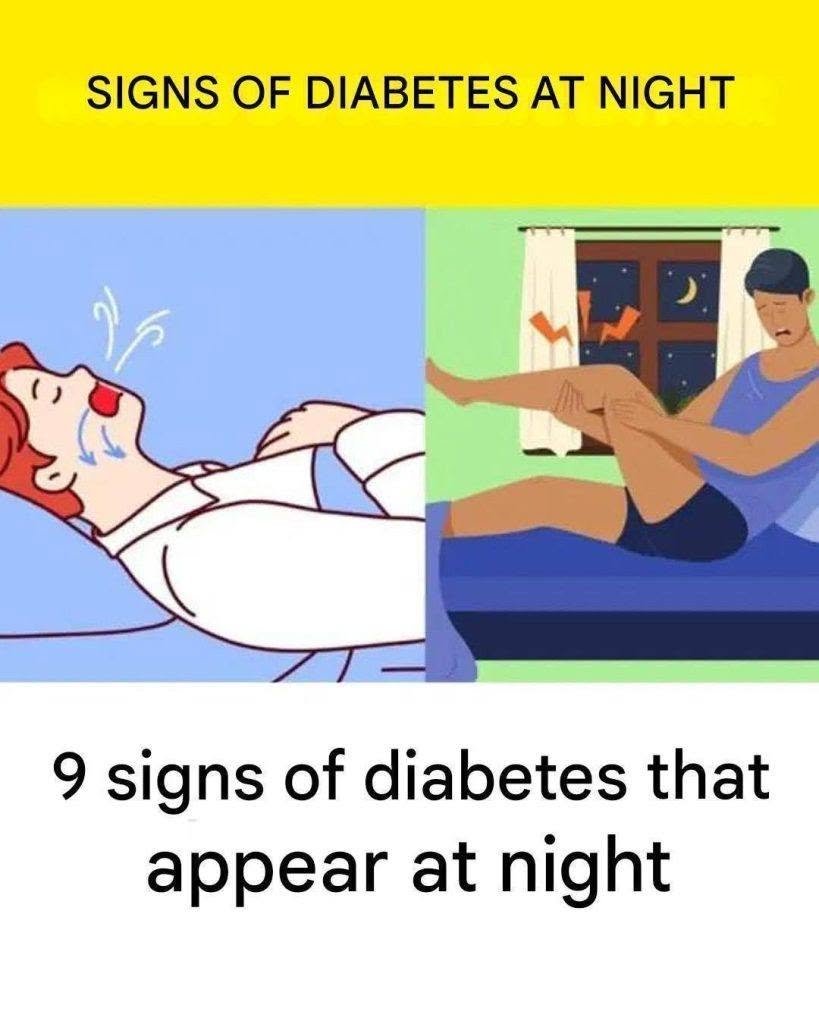
9 Signs of Diabetes That May Appear at Night
Some symptoms associated with diabetes can become more noticeable at night. However, these symptoms do not necessarily mean you have diabetes because many other conditions can cause them. The only way to know is through appropriate blood-glucose testing and medical evaluation.
🌙 1. Frequent Urination During the Night
High blood glucose can cause the kidneys to remove more glucose and water through urine. This can lead to increased urination, including waking up several times at night.
💧 2. Increased Thirst
If you’re losing more fluid through frequent urination, you may feel unusually thirsty and wake up needing water.
😴 3. Difficulty Sleeping
Changes in blood glucose, frequent urination, thirst, or other diabetes-related symptoms can interfere with sleep.
🦵 4. Leg or Foot Cramps
Some people with diabetes experience nerve or circulation problems that may contribute to discomfort in the feet or legs, although nighttime cramps have many possible causes.
🥵 5. Night Sweats
Sweating during sleep can sometimes occur when blood glucose becomes too low, particularly in people taking insulin or certain glucose-lowering medications. Night sweats can also have many other causes.
😵 6. Morning Headaches or Feeling Unusually Tired
Poor sleep from repeated nighttime urination or glucose fluctuations can leave you feeling tired or experiencing headaches when you wake up.
👁️ 7. Blurred Vision
High blood glucose can temporarily affect the shape of the eye’s lens, causing changes in vision. Persistent or sudden vision changes should be evaluated by a healthcare professional.
🦶 8. Tingling or Numbness in the Feet
Persistently high blood glucose can damage nerves over time, causing tingling, burning, numbness, or pain in the feet. These symptoms are more commonly associated with established diabetes rather than being an early sign in everyone.
🍽️ 9. Unusual Hunger
Increased hunger can occur when glucose isn’t being used effectively by the body’s cells. Persistent excessive hunger, especially when combined with increased thirst and urination, warrants medical evaluation.
🩺 When to Get Tested
If you’re experiencing several of these symptoms—particularly frequent urination, excessive thirst, unexplained weight loss, fatigue, or blurred vision—consider speaking with a healthcare professional about diabetes testing.
Common tests include fasting blood glucose and HbA1c (A1C).
⚠️ Important
Symptoms alone cannot diagnose diabetes. If you develop severe weakness, vomiting, abdominal pain, confusion, difficulty breathing, or rapidly worsening symptoms, seek urgent medical care.
Bottom line: Nighttime symptoms can sometimes be associated with diabetes, but they are not specific to it. Testing is the reliable way to determine whether blood glucose is elevated.