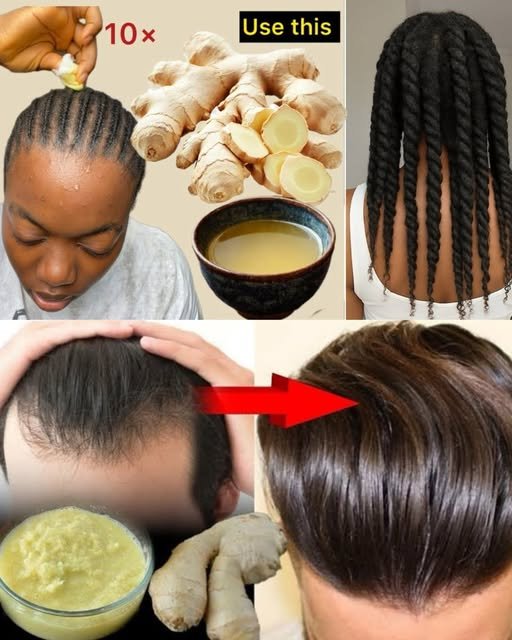
Ginger Hair Remedy: A Simple Scalp Treatment for Dandruff and Hair Care
Ginger is commonly used in traditional hair-care routines because it contains plant compounds with antioxidant and anti-inflammatory properties. However, there is not enough reliable evidence to show that applying ginger to the scalp makes hair grow faster or reverses gray hair.
If you’d like to try ginger as a scalp-care treatment, use it gently and stop if you experience irritation.
Ginger Scalp Remedy
Ingredients
- 1 tablespoon fresh ginger juice
- 2 tablespoons aloe vera gel
- 1 teaspoon coconut oil or jojoba oil, optional
Directions
- Peel and finely grate a small piece of fresh ginger.
- Place the grated ginger in a clean piece of cheesecloth and squeeze out about 1 tablespoon of juice.
- Mix the ginger juice with the aloe vera gel. Add the coconut or jojoba oil if your scalp tends to feel dry.
- Apply a small amount to the scalp, concentrating on areas that feel dry or flaky.
- Gently massage with your fingertips for 2–3 minutes. Don’t scratch or vigorously rub the scalp.
- Leave the mixture on for 10–15 minutes.
- Wash thoroughly with a gentle shampoo and rinse well.
How Often Should You Use It?
If your skin tolerates the mixture, you can try it once or twice a week. More frequent application isn’t necessarily better and may increase the chance of irritation.
Can Ginger Remove Dandruff?
Ginger shouldn’t be considered a proven treatment for dandruff. Persistent dandruff is often better managed with an evidence-based anti-dandruff shampoo containing ingredients such as ketoconazole, selenium sulfide, zinc pyrithione, or salicylic acid, depending on the cause.
What About Gray Hair?
Unfortunately, ginger cannot reliably turn gray hair back to its original color. Gray hair is commonly related to the natural loss of pigment-producing cells with aging and genetics.
Important Safety Tips
- Patch-test first: Apply a small amount to an inconspicuous area of skin and wait to see whether irritation develops.
- Don’t apply ginger juice to cuts, scratches, or an irritated scalp.
- Stop immediately if you experience burning, redness, swelling, or significant itching.
- Avoid getting the mixture in your eyes.
- Don’t leave concentrated ginger juice on your scalp overnight.
- If you have persistent hair loss, severe dandruff, scalp sores, or sudden changes in hair color or texture, consider seeing a dermatologist.
Bottom Line
A diluted ginger-and-aloe treatment can be used as an occasional scalp-care remedy, but it should not be promoted as a guaranteed hair-growth treatment. For noticeable or persistent hair loss, identifying the underlying cause is much more important than relying on a home remedy.
Meta Description
Learn how to make a gentle ginger and aloe scalp remedy for occasional hair and scalp care, plus what ginger can and cannot realistically do for hair growth, dandruff, and gray hair.