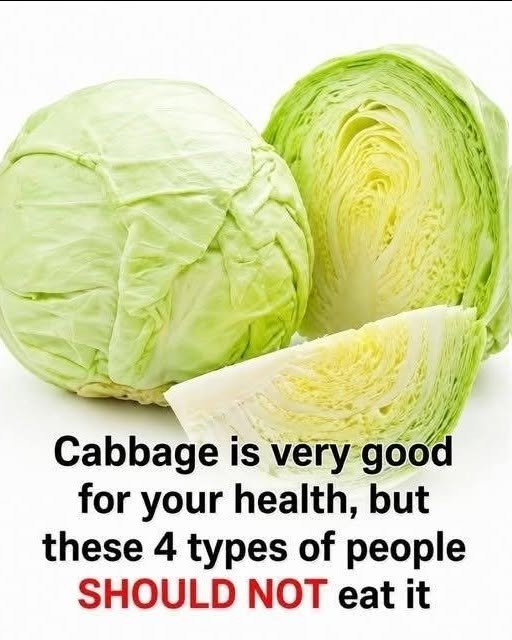
4 Types of People Who Should Be Careful With Eating Cabbage
Cabbage is a nutritious vegetable that provides fiber, vitamin C, vitamin K, and other beneficial nutrients. However, some people may need to limit or modify how they eat cabbage because of digestive issues, medication interactions, or certain medical conditions.
1. People Who Have Trouble Digesting Cruciferous Vegetables
Cabbage can cause gas, bloating, abdominal discomfort, or excessive burping in some people because it contains fermentable carbohydrates and fiber.
If cabbage regularly causes digestive symptoms, try eating a smaller portion and choose well-cooked cabbage instead of raw cabbage.
2. People Taking Warfarin
Cabbage contains a significant amount of vitamin K, which plays an important role in blood clotting.
People taking warfarin generally do not need to completely avoid cabbage, but they should keep their vitamin K intake relatively consistent from day to day. Sudden large changes in cabbage or other vitamin-K-rich foods can affect warfarin treatment.
If you take warfarin, discuss your diet with your healthcare professional rather than eliminating vegetables unnecessarily.
3. People With Certain Thyroid Conditions
Cabbage belongs to the cruciferous vegetable family and contains compounds sometimes described as goitrogens. Very large amounts of raw cruciferous vegetables may interfere with thyroid hormone production in certain circumstances.
For most people, normal servings of cooked cabbage are considered safe. People with thyroid disease should follow their clinician’s dietary advice rather than automatically avoiding cabbage.
4. People With Sensitive Digestive Systems
People with conditions such as irritable bowel syndrome (IBS) may find cabbage difficult to tolerate, particularly in larger portions. It can increase gas and digestive discomfort in sensitive individuals.
If cabbage triggers symptoms, try a smaller serving, cook it thoroughly, and keep track of which foods cause problems.
Should You Completely Avoid Cabbage?
For most healthy people, there is no reason to avoid cabbage. It can be part of a balanced diet and provides useful nutrients and fiber.
The key is moderation and paying attention to how your body responds. If you have a medical condition or take medication that may interact with dietary vitamin K, speak with your healthcare professional before making major dietary changes.
Meta Description
Learn which four groups may need to limit or be cautious with cabbage, including people with digestive sensitivities and those taking warfarin.