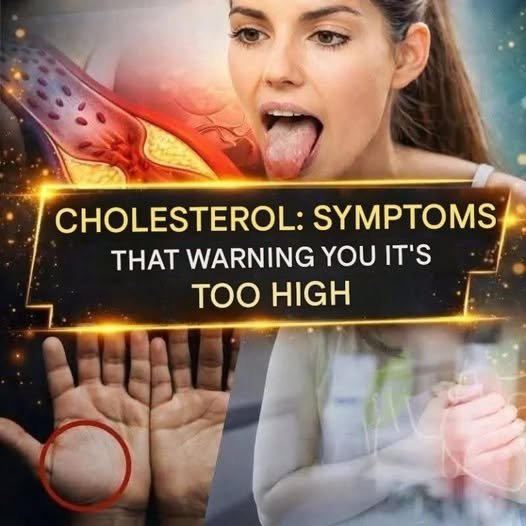
Cholesterol: 5 Symptoms That May Warn You It’s Too High
High cholesterol is often called a “silent” condition because it usually causes no symptoms. Many people can have significantly elevated cholesterol for years without feeling anything unusual. The only reliable way to know your cholesterol level is through a blood test.
However, very high cholesterol can sometimes be associated with certain visible or physical signs, particularly when cholesterol deposits develop in the body.
1. Yellowish Bumps Around the Eyes
Small yellowish patches or bumps around the eyelids can sometimes be xanthelasma, which are cholesterol-rich deposits beneath the skin.
They don’t necessarily mean your cholesterol is high, but they can be a reason to have your cholesterol checked.
2. Cholesterol Deposits on the Skin
Firm, yellowish bumps or nodules around tendons, joints, hands, elbows, or other areas can occur with certain inherited forms of very high cholesterol.
These deposits are known as xanthomas and should be evaluated by a healthcare professional.
3. A Grayish-White Ring Around the Cornea
A gray, white, or bluish ring around the outer edge of the cornea is called corneal arcus.
It can occur naturally with aging, but when it appears in a younger person, it may be associated with high cholesterol or an inherited cholesterol disorder and deserves medical evaluation.
4. Chest Pain
High cholesterol itself generally doesn’t cause chest pain. However, over time, excess LDL cholesterol can contribute to plaque buildup inside arteries.
If the arteries supplying the heart become narrowed, it can lead to angina, which may feel like pressure, squeezing, heaviness, or pain in the chest, particularly during physical activity.
Chest pain should never be assumed to be caused by cholesterol. New, severe, or unexplained chest pain requires urgent medical attention.
5. Leg Pain During Walking
Plaque buildup can also affect arteries supplying the legs, a condition called peripheral artery disease (PAD).
One possible symptom is aching, cramping, or tiredness in the legs when walking that improves after resting.
Again, this is not a direct symptom of high cholesterol itself but can be a consequence of cholesterol-related artery disease.
The Most Important Point: High Cholesterol Usually Has No Symptoms
The first three signs above can sometimes be associated with cholesterol deposits, while chest or leg symptoms can indicate complications from artery disease. None of these signs can confirm high cholesterol on their own.
A lipid panel can measure:
- LDL (“bad”) cholesterol
- HDL (“good”) cholesterol
- Triglycerides
- Total cholesterol
Your healthcare professional can interpret these results alongside your age, blood pressure, medical history, family history, and other cardiovascular risk factors.
How to Help Manage Cholesterol
Healthy lifestyle habits can help improve cholesterol levels:
- Eat more vegetables, fruits, whole grains, beans, and other high-fiber foods.
- Choose unsaturated fats such as those found in olive oil, nuts, seeds, and fish.
- Limit foods high in saturated and trans fats.
- Exercise regularly.
- Maintain a healthy weight if recommended for you.
- Avoid smoking.
- Take cholesterol medication exactly as prescribed if your doctor recommends it.
When to Get Medical Help
Seek emergency medical care for chest pressure or pain that is severe, persistent, or accompanied by shortness of breath, sweating, nausea, fainting, or pain spreading to the arm, shoulder, back, neck, or jaw.
Meta Description
High cholesterol usually has no symptoms. Learn about five possible warning signs linked to cholesterol deposits or artery disease and why a blood test is important.