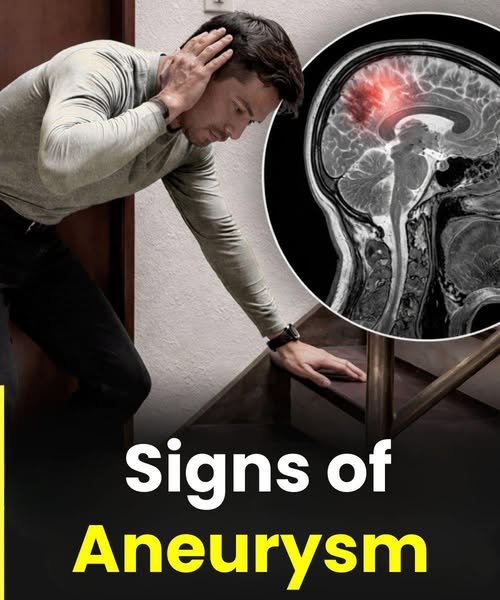
Aneurysm: Signs You Shouldn’t Ignore
An aneurysm is a weakened area in the wall of a blood vessel that can enlarge and, in some cases, rupture. Many aneurysms cause no symptoms until they become serious, which is why knowing the warning signs matters.
🚨 Signs of a Ruptured Aneurysm
A ruptured aneurysm is a medical emergency. Call your local emergency service immediately if someone develops:
- Sudden, extremely severe headache—especially a headache that reaches maximum intensity within seconds or minutes
- Sudden loss of consciousness or fainting
- Severe neck stiffness
- Nausea or vomiting accompanying a sudden severe headache
- Sudden weakness, numbness, difficulty speaking, or confusion
- Seizure
- Sudden severe abdominal or back pain
- Pale, clammy skin, rapid heartbeat, or severe weakness
A brain aneurysm that ruptures can cause subarachnoid hemorrhage, a type of bleeding around the brain that requires immediate treatment.
⚠️ Possible Warning Signs of an Unruptured Brain Aneurysm
Most unruptured brain aneurysms don’t cause symptoms. Larger aneurysms can sometimes press on nearby nerves and cause:
- Pain above or behind one eye
- A dilated pupil
- Changes in vision or double vision
- Drooping eyelid
- Numbness or weakness on one side of the face
- Difficulty moving an eye
These symptoms need medical assessment, particularly if they’re new or worsening.
Possible Symptoms of an Abdominal Aortic Aneurysm
An abdominal aortic aneurysm may cause no symptoms. When symptoms occur, they can include:
- Persistent or deep pain in the abdomen
- Back pain
- A pulsating feeling near the belly button
If an abdominal aneurysm ruptures, sudden severe abdominal or back pain, dizziness, fainting, rapid heartbeat, and weakness can occur. This requires emergency care.
When to Seek Emergency Help
Don’t wait to see whether severe symptoms improve.
A sudden “worst headache of my life,” sudden collapse, or sudden severe abdominal/back pain can have several causes, but a ruptured aneurysm is one of the dangerous possibilities.
Remember
Not every headache or backache indicates an aneurysm. Most people with ordinary headaches or occasional back pain do not have an aneurysm.
If you have risk factors such as high blood pressure, smoking history, a strong family history of aneurysm, or a known aneurysm, discuss appropriate screening and monitoring with your healthcare professional.
If you or someone around you suddenly develops severe symptoms suggestive of a ruptured aneurysm, seek emergency medical care immediately.