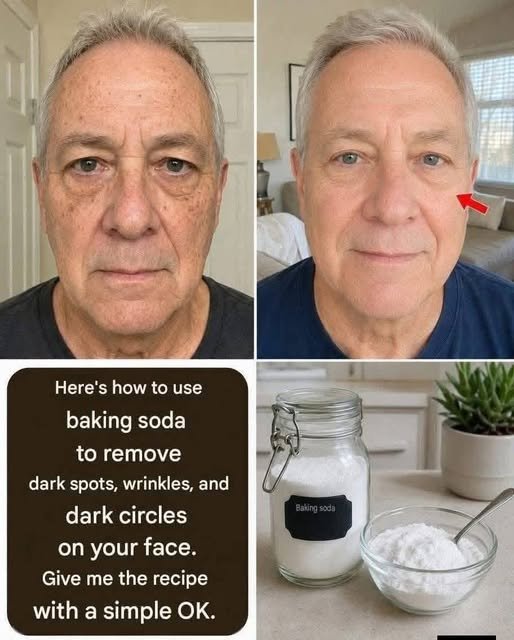
Baking Soda on the Face: Benefits, Risks, and How to Use It Safely
Meta Description: Is baking soda good for your face? Learn about its possible benefits, skin risks, why it may cause irritation, and safer alternatives for gentle facial care.
Baking Soda on the Face: Is It Really Safe?
Baking soda is a common household ingredient that has made its way into countless DIY beauty remedies. It’s often promoted as a natural exfoliant, cleanser, acne treatment, or solution for dark spots.
But there’s an important question to ask before putting it on your skin: Does baking soda actually benefit your face, or can it do more harm than good?
The answer isn’t as simple as many social-media beauty hacks suggest. Baking soda has mildly abrasive properties and is alkaline, while healthy facial skin has a naturally acidic environment. Applying it repeatedly or leaving it on the skin can potentially disrupt that balance and cause irritation.
So if you’re considering using baking soda on your face, it’s important to understand both the potential benefits and the risks.
What Is Baking Soda?
Baking soda, also called sodium bicarbonate, is a mildly alkaline compound commonly used in cooking and household cleaning.
Its alkaline nature is one reason it appears in DIY skincare recipes. However, facial skin isn’t simply a surface that needs to be “cleaned.” It has a protective barrier and a naturally acidic pH that helps maintain healthy skin function.
Changing that environment too much can lead to dryness, irritation, and increased sensitivity.
Possible Benefits of Baking Soda for Skin
There is limited evidence that baking soda provides meaningful skincare benefits when applied directly to the face. Still, several properties explain why it has become popular in homemade skincare.
1. Mild Physical Exfoliation
Baking soda has a fine, powdery texture that can physically remove some surface debris when rubbed against the skin.
However, this doesn’t necessarily make it a good facial exfoliant. Scrubbing with baking soda can be too harsh, particularly for sensitive or acne-prone skin.
Gentler exfoliating ingredients are generally a better choice.
2. Temporary Removal of Excess Oil
Because baking soda is alkaline and absorbent, it may temporarily reduce the feeling of oiliness.
However, removing too much oil or irritating the skin barrier can leave the face feeling dry and tight.
3. Odor Neutralization
Baking soda is well known for its ability to neutralize odors. This property has legitimate household uses, but it doesn’t mean that applying it to facial skin is beneficial.
4. Cleansing Properties
Some DIY recipes use baking soda as a homemade facial cleanser.
While it may remove surface oils and debris, a properly formulated facial cleanser is generally a safer and more predictable option because it is designed specifically for the skin’s barrier.
The Risks of Putting Baking Soda on Your Face
This is where caution becomes especially important.
1. It Can Irritate the Skin
Baking soda is alkaline, while healthy skin normally has a mildly acidic pH.
Frequent application may interfere with the skin’s protective barrier and cause:
- Burning
- Stinging
- Redness
- Dryness
- Flaking
- Increased sensitivity
People with sensitive skin may notice irritation particularly quickly.
2. It Can Cause Excessive Dryness
Baking soda can remove oils from the surface of the skin.
Although this may initially make oily skin feel cleaner, excessive removal of oils can leave the skin dry and uncomfortable.
3. Scrubbing Can Damage the Skin Barrier
Using baking soda as a scrub can create mechanical irritation.
If you vigorously rub it into the skin, you may cause microscopic irritation that can make redness and sensitivity worse.
4. It May Make Existing Skin Problems Worse
If you already have irritated, dry, or inflamed skin, baking soda may aggravate the problem.
This is particularly important for people dealing with conditions such as eczema, rosacea, or a compromised skin barrier.
5. It Isn’t a Proven Treatment for Acne
Baking soda is sometimes recommended online for pimples because of its drying and alkaline properties.
However, that doesn’t make it an evidence-based acne treatment.
Using harsh DIY ingredients on acne can irritate the skin and potentially make inflammation worse.
Does Baking Soda Remove Dark Spots?
One of the most common claims is that baking soda can lighten:
- Dark spots
- Acne marks
- Uneven skin tone
- Sun-related discoloration
There isn’t good evidence that applying household baking soda to the face safely removes these concerns.
In fact, irritation from DIY treatments can sometimes contribute to post-inflammatory hyperpigmentation, particularly in people whose skin tends to develop dark marks after inflammation.
For pigmentation concerns, ingredients specifically formulated for skin—such as sunscreen, niacinamide, azelaic acid, or vitamin C—are generally more appropriate.
Can Baking Soda Remove Blackheads?
Baking soda may temporarily make the skin feel smoother because of its abrasive texture.
However, it doesn’t safely dissolve the material inside clogged pores.
Repeated scrubbing can irritate the skin without addressing the underlying cause of blackheads.
A gentle cleanser and properly formulated salicylic acid product are usually better options for clogged pores.
If You Still Want to Try It
The safest approach is not to use baking soda as a regular facial treatment.
If you decide to experiment with it despite the potential risks:
- Patch-test first on a small area.
- Don’t use it on broken, irritated, sunburned, or freshly shaved skin.
- Don’t scrub aggressively.
- Don’t leave it on for long periods.
- Avoid the eye area and lips.
- Stop immediately if you experience burning, swelling, or significant redness.
- Don’t combine it with other potentially irritating treatments.
If your skin reacts badly, rinse thoroughly with lukewarm water and avoid additional irritating skincare products until the skin settles.
Safer Alternatives for Common Skin Concerns
Instead of reaching for baking soda, consider ingredients designed specifically for facial skin.
For Dry Skin
Look for moisturizers containing:
- Ceramides
- Glycerin
- Hyaluronic acid
- Petrolatum
For Oily Skin
A gentle cleanser and products containing salicylic acid can help manage excess oil and clogged pores.
For Acne
Evidence-based options include ingredients such as:
- Benzoyl peroxide
- Salicylic acid
- Adapalene
For Dark Spots
Daily broad-spectrum sunscreen is particularly important. Depending on the cause of the pigmentation, ingredients such as azelaic acid, vitamin C, or niacinamide may also help.
For Rough Skin
A gentle chemical exfoliant can be preferable to physically scrubbing the face with baking soda.
What About Baking Soda and Lemon?
This combination is frequently promoted as a DIY brightening treatment.
It’s best avoided.
Lemon juice is acidic and can irritate the skin, while baking soda is alkaline. Combining household ingredients doesn’t create a scientifically balanced skincare treatment.
Lemon juice can also make skin more sensitive to sunlight and potentially contribute to irritation and discoloration.
Don’t use baking soda and lemon juice as a facial treatment.
How Often Should You Use Baking Soda on Your Face?
There isn’t an evidence-based frequency that makes household baking soda a recommended facial skincare ingredient.
For that reason, regular use isn’t advisable.
Your facial skin generally benefits more from a simple routine consisting of a gentle cleanser, moisturizer, and daily sunscreen, with targeted active ingredients added when appropriate.
When Should You See a Dermatologist?
Consider professional advice if you have:
- Persistent acne
- Severe or worsening redness
- Unexplained facial rash
- Painful or inflamed skin
- Persistent dark patches
- Significant peeling or burning
- A reaction that doesn’t improve after stopping the product
A dermatologist can determine what’s actually causing the problem and recommend treatments supported by evidence.
Final Thoughts
Baking soda may be inexpensive and useful around the house, but that doesn’t automatically make it a good skincare ingredient.
While it can temporarily remove surface oil or provide physical exfoliation, its alkaline nature and abrasive texture can irritate the skin and interfere with the protective skin barrier.
For facial care, products specifically formulated for skin are generally a safer choice. If your goal is clearer, smoother, or more even-looking skin, a simple routine with a gentle cleanser, moisturizer, sunscreen, and appropriate evidence-based treatments is a much better long-term approach.